A Serbian Film Lands in Venice's Horizons Section
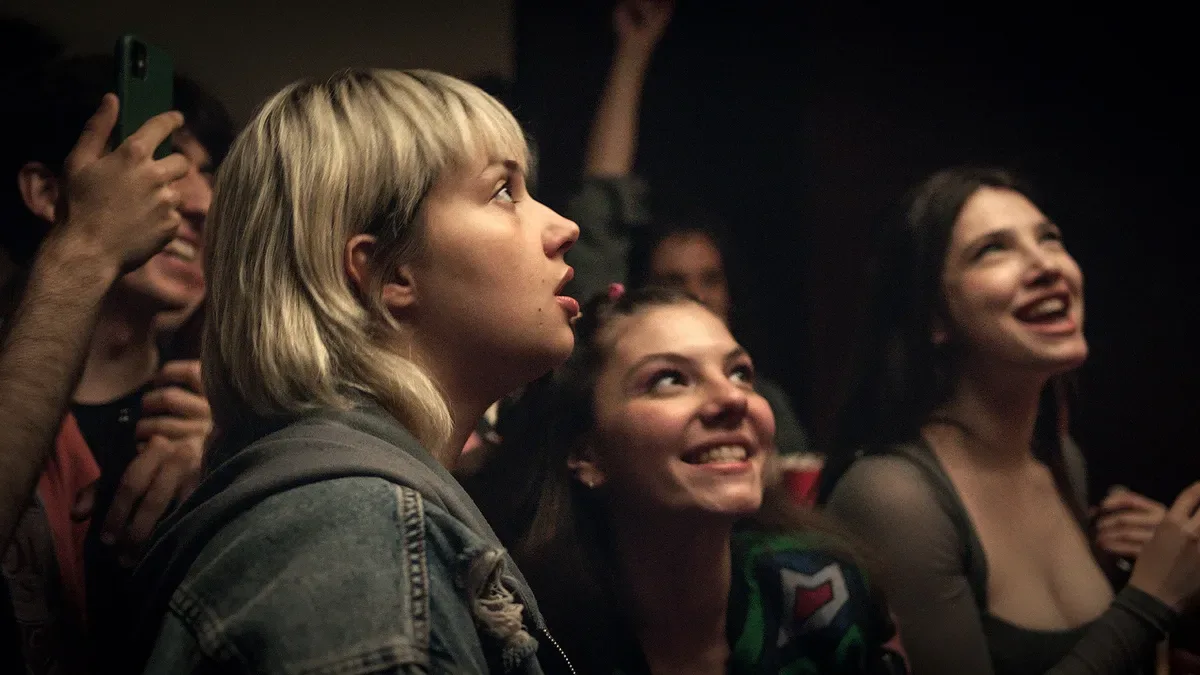
The 83rd Venice Film Festival program includes one home title: Do kraja dana by director and editor Jelena Maksimovic, the only Serbian entry in the official selection, screening in the Horizons competition.

- The program of the 83rd Venice Film Festival was unveiled on July 23, with the event opening on September 2.
- Do kraja dana, directed and edited by Jelena Maksimovic, is the only Serbian title in the official selection.
- It screens in the Horizons competition, the section Venice reserves for newer aesthetics and younger authorial voices.
- The festival opens with Denny Boyle's Ink, and the jury is chaired by actress Maggie Gyllenhaal.
There is a moment, as Alberto Barbera reels off the titles of the coming Mostra, when the Serbian ear tenses and waits for a single name somewhere among the Hollywood ones. This year it arrived from Horizons: Do kraja dana by Jelena Maksimovic, the only home film in the official selection of the 83rd Venice Film Festival, which opens on September 2.
The program was announced on July 23, and it already hints at the shape of this year’s festival roster. The main competition is led by resonant names, Wild Horse Nine with John Malkovich and Sam Rockwell, Prime Time with Robert Pattinson, and a new Werner Herzog film, while the event opens with Denny Boyle’s Ink and the jury is chaired by Maggie Gyllenhaal. In that crowd, the Serbian title sits not in the glare of the main red carpet but a step to the side, in Horizons.
The only one from Serbia, but not by accident
It is worth pausing on who signs the film. For years Jelena Maksimovic has been one of the most reliable names in Serbian editing, the hand that shaped the rhythm of other people’s films before she began directing her own. That path, from the editing table to the director’s chair, is rarely accidental and almost never a simple change of job description. An editor thinks in duration, in what is left out, in the silence between two shots, and when such an author steps behind the camera we usually get a film that trusts the image more than the explanation.
That is why the fact that Do kraja dana landed precisely in Horizons is less an administrative footnote than a marker of poetics. That section in Venice has traditionally gathered voices that push at form, authors still writing their body of work, and film cultures that rarely find a place in the main competition. For Serbian cinema, which in the post-Yugoslav context has spent years looking for room between regional production and the big European funds, an invitation to Horizons is not consolation but confirmation that there is something worth seeing.
Why does Horizons mean more than it sounds?
It is easy to reduce a selection to a hierarchy, the main competition as the first division, everything else as a waiting room. That reading misses what the Mostra actually does through its sidebar programs. For decades Horizons has been the place where audiences first saw authors who, only a few years later, would fill the main selections of Cannes, Berlin and Venice itself. It is a space where risk still pays off, where the festival buys the future rather than merely rubber-stamping the present.
For our cinema that means something concrete. One film in the official selection of one of the world’s three biggest festivals is not a statistic for a press release, but a ticket into international distribution, into the critical conversation, into the kind of visibility that domestic box office numbers cannot secure on their own. Success here is not measured by an award, welcome as one would be, but by whether, after Venice, the film will have a life on other screens and at other festivals, and whether audiences at home will get to see it on a big screen at all.
What remains, of course, is the one thing no program reveals, the film itself. By September we know the title, the section and the name behind them, but not whether Do kraja dana will justify the invitation it received. And perhaps that is the most interesting thing in this news, how much do we still believe that a single Serbian name on a Venice list can mean something more than a line in the papers?