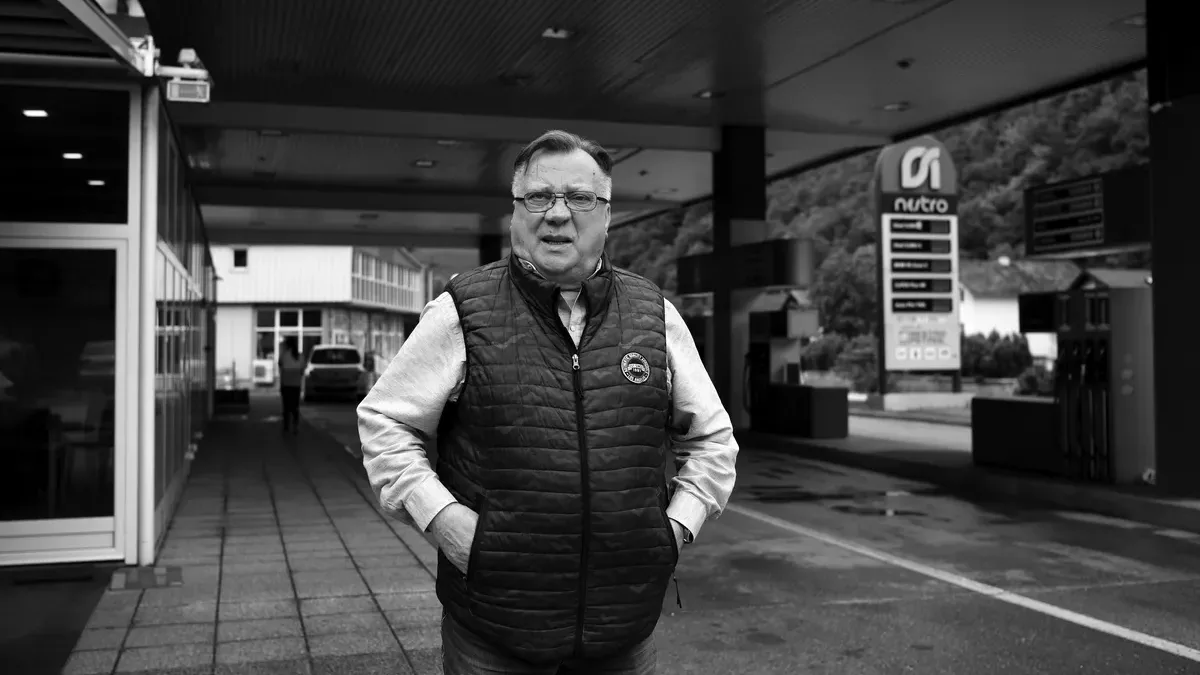
Dusan Vesic: Wake Saturday, Funeral Monday
Journalist and rock chronicler, creator of the Rockovnik series, will be laid to rest in Belgrade: a wake Saturday at the SOKOJ club, a funeral Monday at Topcider Cemetery.

“I’ve always listened to all kinds of music, both domestic and foreign. I was never genre biased in my life, and I think that’s my greatest quality.” That’s how Dusan Vesic described himself, a man who spent nearly half a century listening to, documenting and interpreting the Yugoslav and Serbian rock scene, and who turned that refusal to pick a side into an entire career: from the editor’s desk at the magazines Rock and Pop Rock, through books on Bijelo Dugme and Ekatarina Velika, to the series Rockovnik, which remains the most complete television record of domestic rock in the country’s cultural memory.
Now the public knows when it will be able to pay its respects. A wake for Dusan Vesic, rock journalist, writer and creator of Rockovnik, has been scheduled for Saturday, September 12, at 6 p.m., at the SOKOJ club, at Misarska Street 12 to 14 in Belgrade. The funeral follows two days later, on Monday, September 14, at Topcider Cemetery, where the funeral rite begins at 12:30 p.m. and the burial at 1 p.m. The dates were first reported by Telegraf, at 9:50 a.m., and Blic, both on September 11, nearly a week after news broke that Vesic had died following a long battle with a serious illness.
Sources disagree on the exact date of death. Nova.rs states that Vesic died on September 6, the outlet Mondo puts it two days later, on September 8, while Laguna, the publishing house behind all three of his books, announced the news on September 7, writing:
Rock journalist and writer Dusan Vesic passed away at the age of 67, after a long battle with a serious illness.
He died in Novi Sad. He was born in Belgrade, on the feast day of Sveta Petka, October 27, 1959.
Who Dusan Vesic Was
He began his media career at the turn of the 1980s and quickly became, as Laguna describes him:
one of the most important rock journalists in Yugoslavia between 1980 and 1990.
He served as editor for the domestic scene at the magazines Rock and Pop Rock, and, as the publisher adds, “he wrote for nearly all the relevant newspapers and magazines of that era, promoting rock culture.” From 1992 to 1995 he directed the pop music festival Beogradski slager (Menadzer), and during that period he also worked in management: he managed Marina Perazic and worked as a music producer for the band Instant Karma, alongside organizing rock concerts. In 1996 he turned his career toward video production, the field in which his best known work would emerge. He lived between Belgrade and Pula.
His deepest mark was left in documentary film. Rockovnik, a 40 episode series he co-created with Sandra Rancic, is still regarded as the most comprehensive television chronicle of Yugoslav rock, built on testimonies from its participants that would likely have gone undocumented without that team. Using the same method, combining archival footage with statements from those involved, he made both the film and television version of EKV, Kao da je bilo nekad, dedicated to Ekatarina Velika, while his book Magi, Kao da je bila nekad painted a portrait of Margita Stefanovic outside the frame of the band she belonged to.
Through Laguna he also published a portrait of Bijelo Dugme, in the book Sta bi dao da si na mom mjestu, and a survey of the first generation of new wave bands in the book Bunt dece socijalizma, released in Croatia under the title Zamisli zivot. Both books belong to the same work he pursued his entire career: building the canon of Yugoslav rock at a moment when that canon, after the breakup of the country in which it was created, could easily have been scattered across separate national shelves. Vesic did not defend it ideologically but documentarily, through names, dates and the words of those who were there, a distinction rarely made in the post Yugoslav context, and one that makes his body of work archival above all, not polemical.
He spoke bluntly about how much he missed that same spirit of rebellion he had dedicated a book to, on the occasion of Bunt dece socijalizma’s release:
Our contemporary literature is a catastrophe, I’ve been trying for years to read a good domestic novel. It puzzles me that there’s no rebellion today, because there’s so much injustice that it’s hard to believe no one is protesting. There’s no one left to sing about it, and no one to rise up against it, the way Stulic once did. I can’t explain to myself why there’s still no answer to that important question.
The line was said about a single book, but it reads like the conclusion of an entire career: even while writing about other people’s rebellion, Vesic rarely missed a chance, even in his own texts, to note its absence in the generations that came after him.
In a journalism that today rarely remembers its own past beyond a single season, Vesic was, above all, a chronicler rather than a critic in the narrow sense: he did not pass judgment on the scene, he recorded it, so that someone after him could judge based on the material he had preserved. That is work measured not by a single article or a single series, but by the archive left behind, the standard against which anyone who tries to tell the same story about Yugoslav rock will be measured from now on.