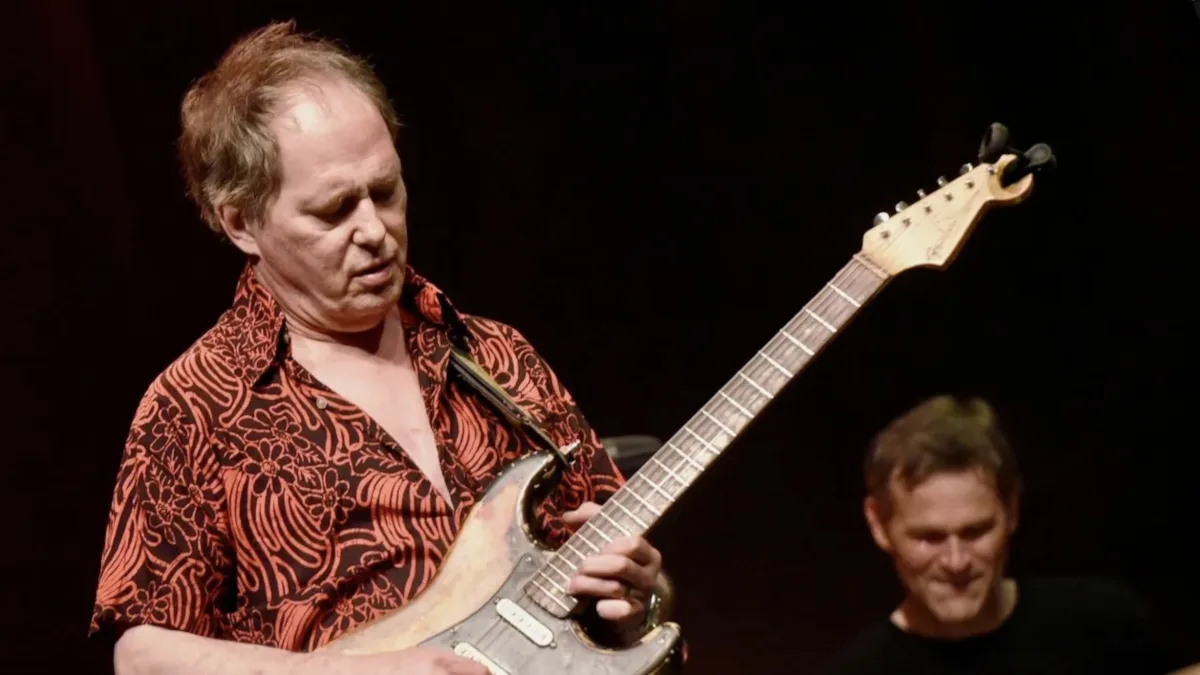
Dusan Vesic, Chronicler of Yugoslav Rock, Dies at 66
Rock journalist Dusan Vesic, author of the Rockovnik series, died at 66. Colleague Sandra Rancic announced his death, with tributes from Djordje Matic and the band Bajaga i Instruktori.

The news that Dusan Vesic had died after a long and difficult illness, at 66, was first announced by his longtime collaborator and friend Sandra Rancic on Monday, September 7, on her own social media. Alongside a brief message, she quoted a line from the Bijelo Dugme song “Sanjao sam nocas da te nemam” (I dreamed last night that I no longer had you), and added: “Travel safely. I will miss you more than my own parents. Everything I am today, I learned from you.”
Others from the industry who knew him paid tribute the same day. Writer and poet Djordje Matic bid farewell to Vesic, saying he “still had great books left to give,” and did not hold back in describing Vesic’s biography of Bijelo Dugme:
“The author of by far the best rock biography ever written here, no contest. Physically worn out, beaten down by circumstance, slapped around by life, yes. But as an author, completely fresh and undiminished.”
The band Bajaga i Instruktori bid farewell to “a great music journalist and critic, director, writer and analyst,” as they called him in their own post.
Sources differ on where Vesic died. Sandra Rancic did not name a location in her post, while rock journalist Bogomir Mijatovic wrote that his friend “went among the stars yesterday, in Novi Sad,” calling him “the author of numerous articles and several excellent books on rock music.” Belgrade has so far been mentioned only as his birthplace and as the city where he lived, alternating with Pula.
Dusan Vesic was born on October 27, 1959, in Belgrade, according to the portal Headliner, on the feast day of St. Petka. He began his career in the 1980s: from 1980 to 1990 he wrote about rock culture for a number of Yugoslav newspapers and magazines, and as an editor covering the domestic scene he put his name to the magazines Rok and Pop Rok. From 1992 to 1995 he was director and manager of the Beogradski slager festival, and after 1996 he worked in video production.
He is best remembered as the author of Rockovnik, a 40-episode documentary television series in which he assembled the Yugoslav rock scene into one continuous story rather than a set of isolated anecdotes about individual bands. He repeated the same principle, archiving rather than mere nostalgia, in the series and film EKV, Kao da je bilo nekad, and he also wrote the screenplay for the 2009 documentary about Bajaga i Instruktori, Muzika na struju.
The books he published afterward carry the same method, only in a different medium. Bijelo Dugme, Sta bi dao da si na mom mjestu, from 2014, is a biography of a band whose influence has been recounted so many times that saying anything new about it seems impossible, and Matic’s assessment, that it is the best domestic rock biography, no contest, is not an industry colleague’s exaggeration but an acknowledgment that Vesic succeeded exactly where others had written only discography and anecdotes. Magi, Kao da je bila nekad, from 2018, brought Margita Stefanovic back into focus, after her contribution to Ekatarina Velika had systematically remained in Milan Mladenovic’s shadow in writing about the band. Bunt dece socijalizma, from 2020, pushed the same archiving method further back, to the new wave generation that preceded both Bijelo Dugme and EKV.
What sets Vesic apart from most rock journalists of his generation is that he did not stay confined to one medium or one generation of bands. He started with a newspaper column, moved to television, then to books, and in each of those three formats he tracked a different decade of Yugoslav rock, from the punk scene of the 1980s to the band that chewed up that same punk for the pop charts of the 1990s. The result is not a single masterpiece but an archive, built from three different crafts, and in a scene where rock history is most often rehashed in social media arguments, that is rare work.