Richard Lloyd, Television Guitarist, Dies at 75
The Television co-founder died November 7 in Chattanooga, eight months after being diagnosed with cholangiocarcinoma, a cancer of the bile ducts.
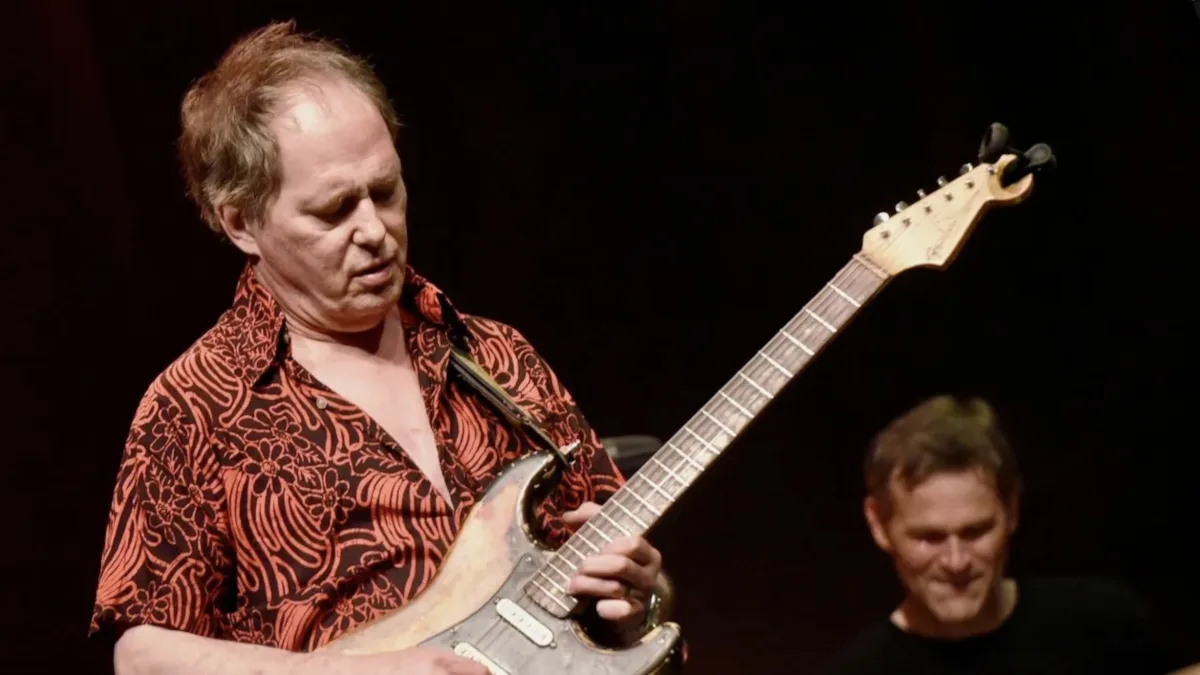
Richard Lloyd, guitarist of Television, died on Saturday, November 7, at his home in Chattanooga, Tennessee. He was 75. In a statement, his family said his wife, Sheila, and his dog, Willie Mays, were with him to the end, in these words: “His loving wife Sheila and his dog Willie Mays were with him at the end.”
Lloyd was a member of the original lineup of Television, the New York band formed in 1973 that was among the first to play at the club CBGB. He is survived by his wife, Sheila O’Keefe Lloyd, his son, Dylan, and his brother, Eric.
What did Richard Lloyd die of?
The cause of death was cholangiocarcinoma, a cancer of the bile ducts. His family told The New York Times. The illness was found in March 2026 and made public in August, when a GoFundMe campaign was launched to pay for his treatment.
A member of his band, the Richard Lloyd Group, described his condition at the time: “He has tumours in his liver, including one located dangerously close to a major blood vessel.” Lloyd then appealed for help himself:
“I am usually a pretty upbeat person and I am taking this in stride, but it has become very difficult on our own and financially we are strapped. That’s why I’m asking for your help.”
The boy who wanted drums
Lloyd was born in 1951 in Pittsburgh. According to Far Out, drums were what first drew him in, and he moved to guitar after a “hallucinatory experience” that he described in his 2018 memoir Everything Is Combustible: Television, CBGB’s and Five Decades of Rock and Roll. He grew up in New York, dropped out of high school and went to Boston, where he played alongside blues legend John Lee Hooker. He returned to New York, saw Tom Verlaine playing in a club, and the partnership, as the story goes, began almost at once.
Television was founded by Verlaine, Richard Hell and Billy Ficca, and Lloyd joined in 1973. Hell left in 1975 and was replaced by Fred Smith.
The club he said he built
The following year the band got a booking at CBGB and was among the first acts to play there. For years Lloyd claimed that he was the one who turned the place into a punk club: he came across the newly opened venue and, together with the band’s manager, secured a slot. Ramones, Blondie, Talking Heads and Patti Smith followed. In a 2007 interview he put it bluntly: “CBGBs is the most famous rock ‘n’ roll club to have ever existed and I fucking created it!”
Whether that is an exaggeration is for historians of the scene to settle, but his guitar work is easier to measure. On the title track of the 1977 debut album Marquee Moon, Lloyd’s melodic lead lines and his rare use of power chords, in a genre built on them, set the template for the angular melodies and dissonance of post-punk, according to Consequence. Consequence ties that template to post-punk bands such as Fugazi and also finds its influence in R.E.M. and the Pixies. B92 reports that the album ranked No. 107 on Rolling Stone’s list of the 500 greatest albums of all time.
Television’s first run lasted from 1973 to 1978 and produced two albums, Marquee Moon and 1978’s Adventure. After the band reunited in the 1990s, a self-titled album followed in 1992. Lloyd left the band in 2007, without a falling out, to concentrate on his own music.
What did he do after Television?
He built his solo career with 1986’s Field of Fire and 1987’s Real Time. The sources do not count his solo releases the same way: Consequence lists nine albums, Far Out seven. The last was The Countdown in 2018, the same year the memoir came out. He also played on Matthew Sweet’s 1991 album Girlfriend and worked with Sweet again later.
He did not see his career as the achievement of a goal. In a 2000 interview he explained why he became a musician:
“I’m a musician by refusing to grow up, and not wanting to undertake any of the other disciplines that might have been necessitated by having a goal. I lived in absolute terror of growing up, and I found the one thing that you could actually do and do well and it prevented you from growing up.”