€4,610 per Square Metre: How Savski Venac Is Becoming Another Country
The new-build price on Savski venac of €4,610 per square metre is not just an economic number. It is a line inside Belgrade that divides residents into two administratively identical, sociologically different cities.

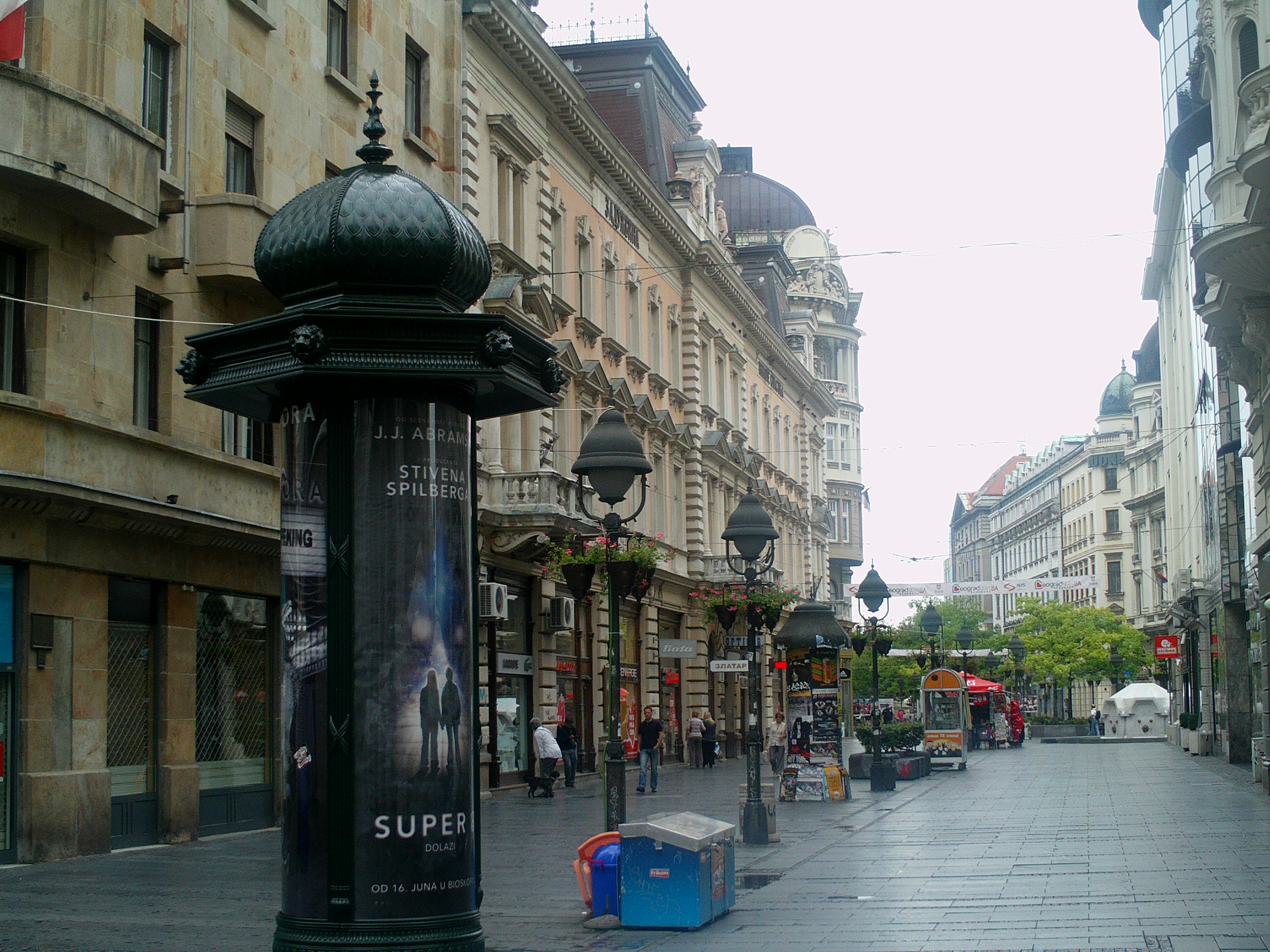
Last Wednesday, while I was waiting for a friend in a cafe on Karadjordjeva Street, a man of about forty-five sat next to me with his laptop open to the portal of a real estate agency. He was scrolling listings.
From two metres away, I could read the figures:
- a 66 square metre flat in a building under construction on Vojvode Misica Boulevard, €305,000
- a 58 square metre flat on Karadjordjeva, €285,000
- a 28 square metre studio on Savski venac, €142,000
After ten minutes, the man closed his laptop, finished his espresso, got up and left. He did not call an agent. He did not leave his contact. I left the cafe with a question that has stayed with me for weeks.
A brutal arithmetic
The question runs roughly like this. If the average monthly net wage in Serbia in the first quarter of 2026 is around 105,000 dinars, and the average wage in Belgrade around 138,000 dinars, which is about €1,180 a month, how many people in Belgrade can buy a 66 square metre flat on Savski venac at €4,610 per square metre.
The arithmetic is brutal. Assuming a buyer saves their entire monthly wage, which no one does, it would take twenty-six years to buy that flat in cash. Under normal conditions (the bank requires a 30 percent down payment, mortgage instalments cannot exceed 40 percent of income), an income of at least €3,500 a month is needed, above the 90th percentile of all Belgraders.
Belgrade on Savski venac, then, is being built and sold to a population that exists outside the administrative borders of the Belgrade we know.
Sassen and the dual city
This is not just a financial problem. It is the sociological point at which one city ceases to be one city. In her book “The Global City” (Princeton University Press, 1991), sociologist Saskia Sassen describes a process in which metropolises with high investment in luxury housing become “dual cities.”
In dual cities, two parallel populations live side by side:
- one global, mobile, with international incomes, using the city as a base for business movement
- one local, tied to the city economically and through family, but completely separated economically from the property prices that global population pays
Sassen’s distinction is valuable for understanding Savski venac in 2026. The flats are not built for Belgraders. They are built for those who can, but need not, live in Belgrade, with capital that need not be earned in Belgrade.
A 211 percent gap
Here is a figure from the Statistical Office of the Republic. According to its index of housing prices for the first quarter of 2026, the average price per square metre of new-build housing in Belgrade is €3,245. The gap between the city-wide average and the Savski venac average of €4,610 is therefore 42 percent.
On the other hand, on Banovo brdo the same quarter, the average is €2,190 per square metre, and in Zeleznik €1,485. The gap between Savski venac and Zeleznik is 211 percent. Belgrade as an administrative unit has prices that vary by a factor of three within its own borders.
Sociologically, that is not one city with different neighbourhoods. They are three cities sharing one administrative name.
What we lose when we lose the common city
When a sociologist says “three cities sharing one administrative name,” it is not a figure of speech. It is a description of functional reality. The Savski venac resident:
- does not use the same shops as the Zeleznik resident
- does not attend the same primary schools
- does not go to the same doctors (private clinics on Bulevar oslobodjenja versus the Zeleznik health centre)
- does not share the same bus routes (rides Bolt more often, with nearly 27,000 active users in Belgrade in 2026, per Bloomberg Adria research)
- does not read the same newspapers
- does not watch the same TV channels
Residents of two parts of the city, sharing about 7 percent of their lived experience, live in two completely different symbolic universes. That has consequences for everything, from election outcomes to what children take as normal.
Bourdieu and the spatial form of class isolation
Pierre Bourdieu, in his last book “Misère du monde” (Seuil, 1993), writing with his collaborators on French disadvantaged suburbs, described the phenomenon he called “class isolation in spatial form.”
Bourdieu’s thesis:
When the wealthiest and poorest parts of a city are physically separated, the consequence is not only income inequality, but the disappearance of the shared experience that could turn an economic difference into a political question.
While the Zeleznik resident passes by a shop on Karadjordjeva where a waiter works who also lives in Zeleznik, there is a minimum of shared scenography. When Karadjordjeva becomes a scenography only for Savski venac, that shared scene is lost. Then Zeleznik and Savski venac become two mental spaces without physical contact. That is the point at which inequality stops being a subject of debate, because it stops being a subject of encounter.
A counter-argument that misses the social cost
A counter-argument standard in Serbian public discourse. There is a reading, often heard in media close to the ruling party, that high housing prices are a sign of development, not segregation. By that logic, Belgrade Waterfront and Savski venac at €4,610 per square metre are not a sociological problem but a success, because they attract international capital, raise budget revenues, bring in taxpayers.
The argument has its weight, and in terms of pure capital it is accurate. But it is incomplete, because it ignores the social cost of dismantling the common city. The capital that enters Belgrade on Savski venac does not flow into schools on Vozdovac, because the tax system is not organised so that civic capital circulates between municipalities.
The local citizen levy has been abolished, municipal budgets are heavily constrained, and republic-level taxes are redistributed centrally on political, not social, criteria. So Savski venac as a space contributes to international earnings, but does not contribute to the development of the municipalities around it.
No one asked the residents of Zeleznik
One more thing should be said, one Serbia’s clientelist system mostly discourages us from saying. The price per square metre on Savski venac is not the impartial result of market forces. It is the result of regulatory decisions (detailed regulation plans, amendments to urban planning acts, city subsidies for Belgrade Waterfront infrastructure) of a political character.
In other words, someone decided that Savski venac would become another country. No one asked the residents of Zeleznik whether they agreed to remain in the same administrative Belgrade, but in a different economic system. The sociologist is obliged to note this, even when noting does not change the decision.
A boundary the worker crosses daily
I return to Karadjordjeva. After the man with the laptop, the cafe was tended by a waiter who cleared the table and pocketed the tip the customer had left. I asked him, casually: “What does your employer want from you to give you a flat here?”
He answered: “I don’t ask. I share a place with my girlfriend in Mirijevo, sixty minutes by bus. I come here, I leave here.”
Then everything became clearer. The waiter who works on Karadjordjeva every day knows that Karadjordjeva is not his city. He does not lament it. He does not contest it. He simply crosses the boundary between two cities each day, and returns to his own.
That is the sociological definition of segregation. The question that remains, and which belongs to all of us, is: how long can a city exist when the majority of its workers are in it only during the day, but live nowhere within it.