Meloni wants Dalmatia, Zagreb cheers those who gave it away
Italy's right has spent years openly laying claim to Istria and Dalmatia. The answer is not in Rome but in 1915 and 1918, and Croatia does not like how it reads.

Two years ago, at a conference in Trieste, an Italian colleague told me over the break about something that had stuck with him. He had taken his children to the sea in Istria, to the small town his father had left as a boy. That evening his older son asked him why they did not live there any more.
My colleague shrugged. He told me he had no idea where to begin, so he said what people say at such moments: it was long ago, it is complicated.
It is not complicated. It is written down, and very precisely. It just has to be read from both ends.
The sentence this column exists for was written by Giorgia Meloni while she was still in opposition. She had always been against Croatia joining the European Union, she said, until property was returned to the esuli, and she would not even start on the return of Istria and Dalmatia themselves.
Her party repeated it out loud in Trieste. Croatian members of the European Parliament asked her to disown it. She never did. She became prime minister, lowered the volume, and every February 10, on Italy’s day of remembrance for the foibe and the exodus, she speaks of hundreds of thousands of Italians forced to leave their homes because they were Italian. She comes to Zagreb and shakes hands.
Zagreb says nothing, and it has a good reason.
Because if the question is followed all the way through, that is, why Istria and Dalmatia are not Italian today, the answer leads to two places that get mentioned at no commemoration in Croatia. The first is the year 1918. The second is May 18, 1941.
The 1915 bill somebody else paid
The Treaty of London, signed on April 26, 1915, promised Italy a great deal in exchange for entering the war: Trentino and South Tyrol up to the Brenner, Trieste, Gorizia and Gradisca, the whole of Istria down to the Kvarner, the islands of Cres and Losinj, part of northern and central Dalmatia including Zadar and Sibenik, and the islands from Pag to Mljet.
So everything Meloni now describes as lost had already been promised to Italy once. In writing, signed by the powers that won the war.
Why it was not carried out in full is a question Zagreb has no answer to that it would enjoy saying aloud. After the war Italy received Trieste, Istria, some of the islands, Zadar, Lastovo and Palagruza, and it walked into part of that with an army. The rest stayed out of reach because in December 1918 a state appeared that was on the winning side, and it took Dalmatia under its wing.
Serbia did not have to enter into any of it. It came out of the war as an ally of the victors, with its war aims recognised and no need to invite anyone into a union. Zagreb, on the other hand, was emerging from a collapsed Austria-Hungary, that is from the losing side, with an Italian army over the hill holding a signed treaty.
Who was rescuing whom there, and who was doing whom a favour, is not a matter of interpretation.
The same thing happened a second time in 1945. The coast came back, including what Italy had taken, again through a joint state and again after a war in which the Croatian entity had been on the losing side. Rijeka, Zadar, the islands. None of that arrived from the west.
Today that coast carries roughly twenty percent of Croatian gross domestic product, with tourism revenue projected at about 15.1 billion euros in 2025. That is by far the largest tourism share of any economy in the European Union. The country lives off a gift that reached it twice from the east, and whose origin does not exist in public conversation.
They already gave Dalmatia away once, and it was them
Here the story takes a turn that gets mentioned at no commemoration in Zagreb.
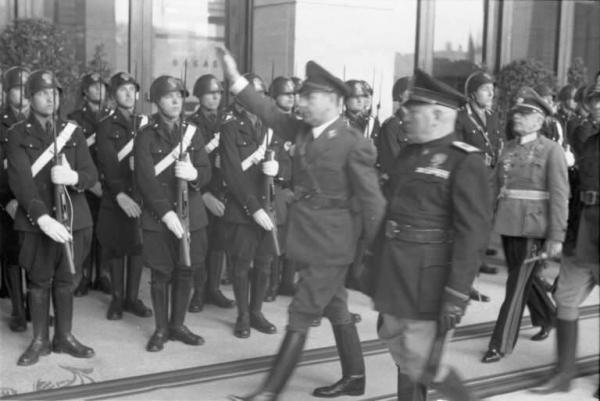
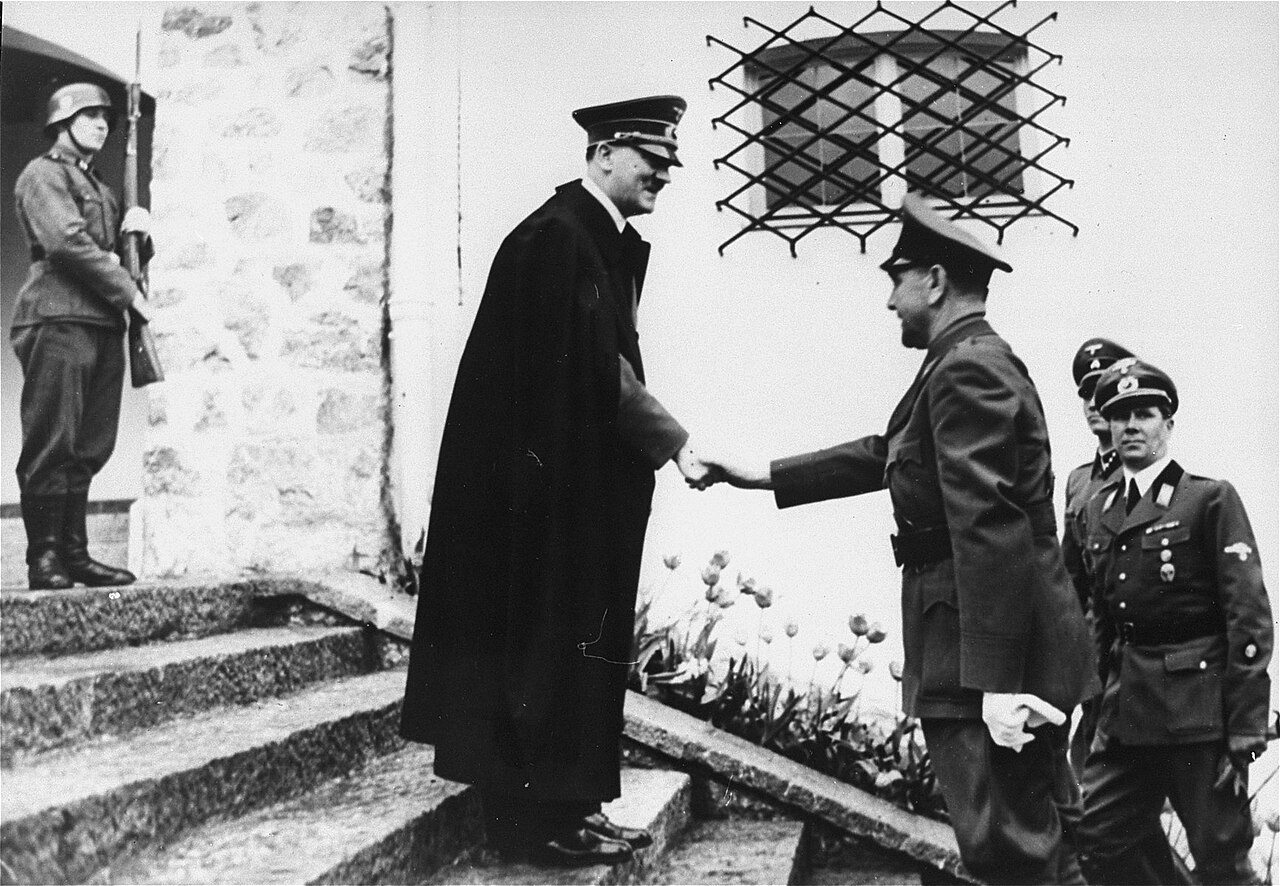
On May 18, 1941, in Rome, Ante Pavelic and Benito Mussolini signed the Treaties of Rome. Under them the Independent State of Croatia handed Italy the areas of Zadar, Sibenik and Split, the islands of Vis, Korcula and Mljet along with many smaller ones, the Bay of Kotor, and parts of the Croatian Littoral and Gorski Kotar.
So the very Dalmatia Meloni now brings up, the Ustasha state handed to Italy itself, with a signature, without a shot being fired. Croatian outlets do not soften it either. One of them still calls that day the day of Croatia’s greatest betrayal, when the coast and the islands were handed to the fascists with a single signature.
And one more date, seven years earlier. On October 9, 1934, King Alexander Karadjordjevic was assassinated in Marseille, the ruler of that same state which had kept Dalmatia in 1918. The shots were fired by Vlado Chernozemski of the VMRO, but the French court named Ante Pavelic and Eugen Kvaternik as the main organisers and sentenced them to death in absentia.
So the order of events is this. First they killed the king of the state that had kept the coast for them. Seven years later they gave that coast to Italy. Today their songs are sung in front of half a million people.
What happened when that joint state first broke
In April 1941 Croatia got its own state, and showed what it meant by that.
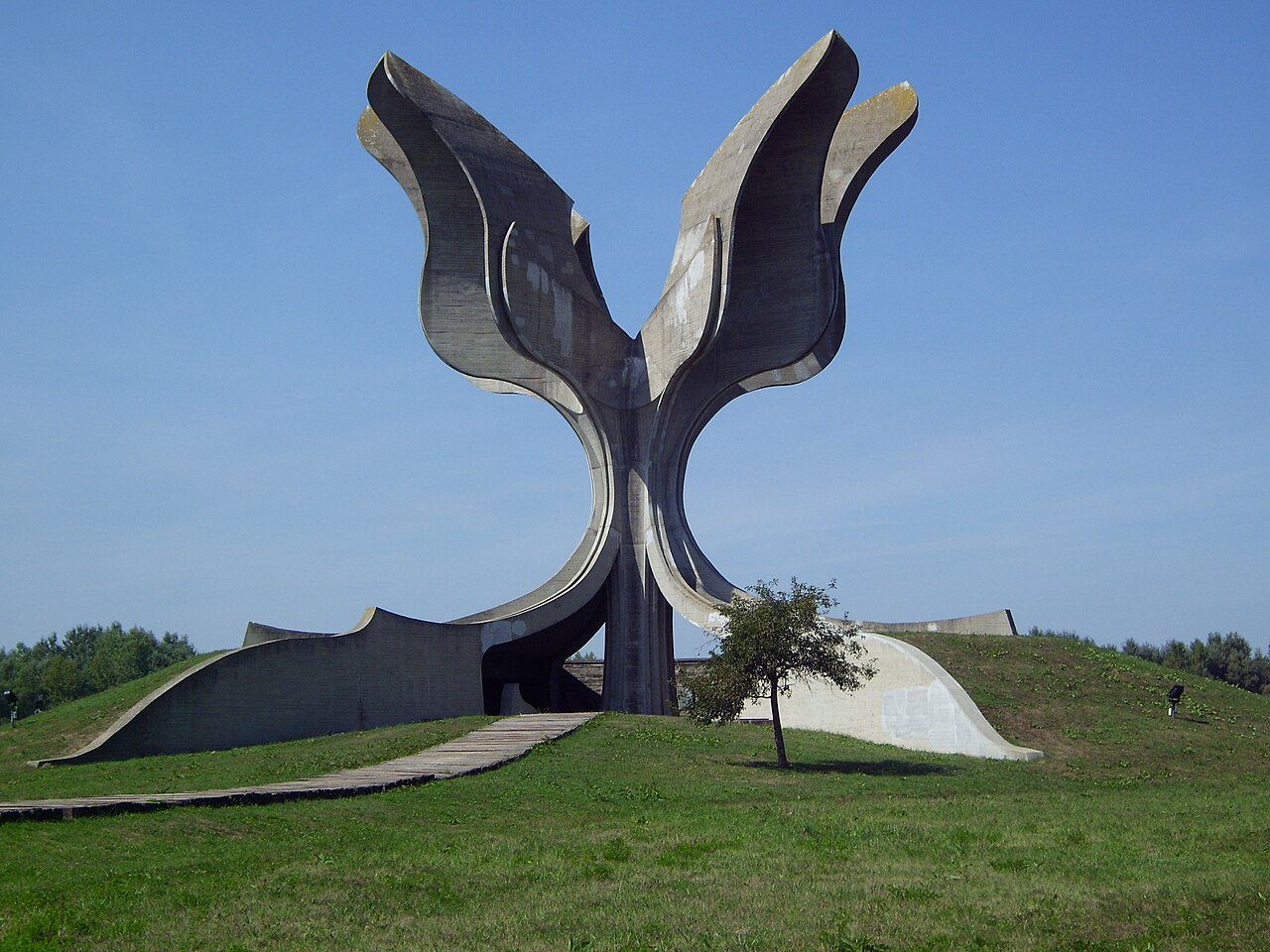
I do not need to cite Serbian sources. The victim list of the Croatian Jasenovac Memorial Site, an institution funded by the Croatian state, is enough. It holds 83,145 victims recorded by name. Of those, 47,627 Serbs, 16,173 Roma, 13,116 Jews, 4,255 Croats and 1,128 Muslims.
The camps came with expulsions. According to German reports, by August 1941 104,000 Serbs had been expelled from the Independent State of Croatia into Serbia, and by the end of September that figure had passed 200,000. From the autumn of 1941 mass forced conversions were carried out as well.
And one figure that is rarely spoken in full: 20,101 children under the age of fourteen. By name. With a first name and a surname.
A camp built for children
There is one item in that history that is hard to compare with anything else in Europe during that war.
On August 3, 1942, the Ministry of Social Welfare of the Independent State of Croatia established an institution in Sisak under the name “Shelter for Refugee Children”. It operated until January 8, 1943. About six thousand children passed through it, aged from a few months to ten years. About twelve hundred of them died.
It was not a wing of some adult camp. It was set up for children on purpose, by ministerial decision.
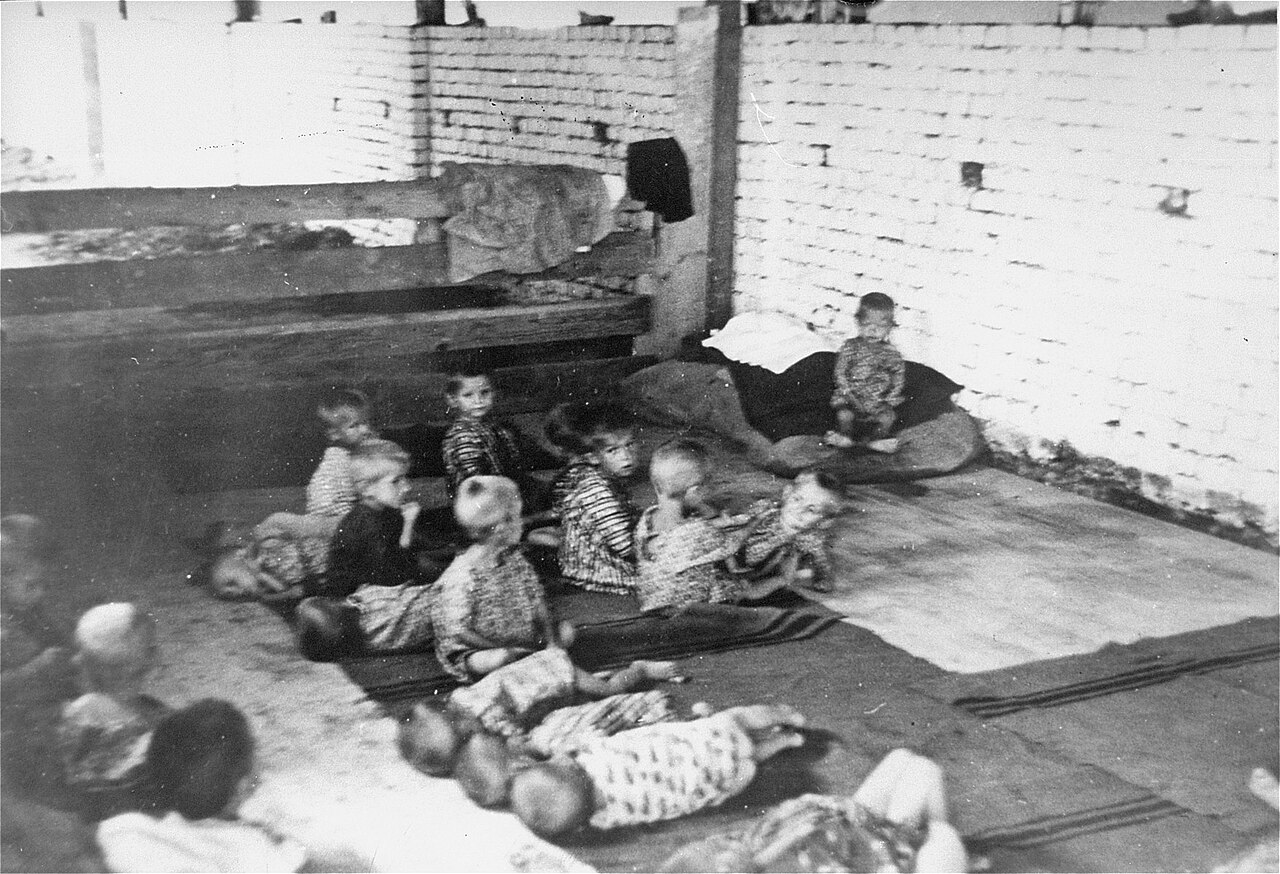
What makes that story bearable is Diana Budisavljevic, an Austrian married to a Serb, who with her collaborators pulled children out of the camps and kept a card index. Her campaign saved around ten thousand children, and by the end of the war the index held records on twelve thousand. Croatia took that index over after the war and left it unused for decades.
How August 1995 is remembered
Four days ago Croatia celebrated the thirty-first anniversary of Operation Storm.
In that operation, by estimates ranging between two hundred and two hundred and fifty thousand, the population of the Krajina was driven out. Around two thousand Serbs were killed. August 5 is Victory and Homeland Thanksgiving Day in Croatia, a public holiday, with a military parade and the president on the stand.
The result of that policy does not need estimating, because the Croatian Bureau of Statistics measured it itself.
In 1991 there were 581,663 Serbs in Croatia, or 12.16 percent of the population. In 2021 there were 123,892, or 3.2 percent.
In thirty years more than three quarters of a community disappeared. Croatia thereby became one of the most ethnically uniform countries in Europe, and every August that is marked as an achievement.
The state does not sing, but it does not punish either
Here one has to be precise, because the distinction matters.
The Croatian state does not pursue the policy of 1941. Nobody serious claims that it does. What it does is something else, and in its consequences it is not harmless: it tolerates.
The Constitutional Court has ruled more than once that the salute “Za dom spremni” is an Ustasha salute and unconstitutional. Josip Simunic was convicted for it in a final judgment, and the European Court of Human Rights confirmed that such a ban does not violate freedom of expression.
On July 5, 2025, Marko Perkovic Thompson sang “Bojna Cavoglave” with that salute at the Zagreb Hippodrome, in front of roughly half a million people. Public broadcaster HRT carried the concert. The media council concluded that no law had been broken.
There is no need to look for a conspiracy. The explanation is mundane and therefore worse: half a million people is too many to prosecute. Punishing what is popular costs elections, and no government in Zagreb intends to pay that price. So a distinction is drawn between the salute in a song and the salute in a square, and then that distinction is not applied.
Society accepted it, and the state decided not to look.
Slavonia empties without a single shot
And then comes the part that has nothing to do with either Serbs or Italians.
Between the 2011 and 2021 censuses Croatia lost 413,056 inhabitants, that is 9.64 percent, falling to 3,871,833. There was no war. There was the European Union and open borders.
The east came off worst. Vukovar-Srijem County lost 20.28 percent of its population, Sisak-Moslavina 19.04, Pozega-Slavonia 17.88, Brod-Posavina 17.85 and Virovitica-Podravina 17.05 percent. In ten years, one person in five.
Those are precisely the areas the Serb population left in 1995 and never returned to. It turns out the Croatian population did not want to stay either. A country that was ethnically cleansed did not repopulate its east, it emptied it the rest of the way.
Borders are not a vow
That leaves a question polite company does not ask, so I will ask it.
No border on this continent is as old as the people living inside it. They have changed through war, marriage, purchase, the collapse of empires and, increasingly, the plain absence of people. At least three times on this ground in the last two hundred years, and in every one of those rearrangements there were people certain that their map was the final one.
Joint NATO membership settles none of that. The alliance guarantees that nobody will come in from outside. It does not guarantee that anyone will be left inside to live there. An empty county does not fill up because it belongs to a military alliance.
I had no answer for that colleague in Trieste. Now I would: his father left because a border moved, and the border moved because Italy lost a war it had entered at a price that included his home town. That is half the answer. The other half is that Dalmatia, which Rome still brings up, was once handed to it as a gift, by Zagreb.
What is left is to add it up. The coast was won and kept because twice a union was entered into with a state that was on the winning side. The very people whose songs stadiums now sing killed the king of that state, then handed it Dalmatia, then built Jasenovac. The union was finally dissolved with a celebration and with two hundred thousand people on tractors.
So far that has paid off. The bill from Rome arrives every February and Zagreb returns it unopened. Nobody sends the bill from Vukovar-Srijem County, because there is no one left to sign it.