Croatia Marks Storm in Knin, Serbia in Mrkonjic Grad
Plenkovic confirmed Croatia's leadership will be in Knin on August 5, while Serbia and Republika Srpska hold their day of remembrance a day earlier in Mrkonjic Grad.

Croatian Prime Minister Andrej Plenkovic confirmed on July 30, after the last cabinet session at Banski dvori before the summer recess, that Croatia’s state leadership will be in Knin on August 5. That closes a calendar Belgrade set two weeks earlier: this year Operation Storm gets two state ceremonies, on two consecutive days, under two different official names.
For Serbia this is not a distant story. Serbian institutions record that the operation, which began on August 4, 1995 across Banija, Lika, Kordun and northern Dalmatia, drove out more than 220,000 Serbs, with 1,903 people registered as killed or missing, 1,247 of them civilians. That is why the first week of August in Belgrade, Zagreb and Banja Luka reads as a political schedule rather than a protocol one.
What is on the programme in Knin?
The Croatian Interior Ministry, known as MUP, published the hour-by-hour schedule on July 24, six days before Plenkovic spoke. The Croatian government is the organiser, and the coordinator of the organising committee is Darko Nekic, state secretary at the Ministry of Croatian Veterans.
- 6.30 a.m., a reveille march through Knin, from the 4th Guards Brigade barracks past Oluja Square to the bridge over the Krka
- 7.30 a.m., mass at the Church of Our Lady of the Great Croatian Baptismal Covenant
- 9 a.m., wreath-laying at the Croatian Victory Operation Storm 95 monument on Dr Ante Starcevic Square
- 9.40 a.m., the central ceremony at the NK Dinara stadium and the Knin fortress, broadcast live by Croatian Radio-Television
- Noon, reception for marathon runners, cyclists and motorcyclists
- 9 p.m., a concert hosted by the town of Knin
A display of military equipment and weapons runs from 8 a.m. to 4 p.m. on Dr Franjo Tudjman Street. At the central ceremony the names of those killed and missing in Operation Storm are read out by the sons of fallen Croatian soldiers. The date carries three titles at once: the 31st anniversary of the operation, Victory and Homeland Thanksgiving Day, and Croatian Defenders Day.
Plenkovic called it one of the defining dates of recent Croatian history.
“All preparations are underway and of course we will be there with Croatian defenders, the Croatian army and police. This is one of the most important days in modern Croatian history.”
The session where he said it was the last before the recess, and the next one with ministers physically present is scheduled for August 20. Until then, Knin is effectively the only fixed point on the Croatian political calendar.
Banja Luka answered the same day
Nenad Stevandic, speaker of the National Assembly of Republika Srpska, responded on July 30 in a statement to the Srna news agency, describing Operation Storm as a pogrom, an expulsion and the killing of the Serbian people.
“At the same time, numerous lies and manipulations about Serbian guilt were launched in order to create an alibi for the greatest pogrom and ethnic cleansing after the Second World War.”
Stevandic also argued that Serbs were the ones mostly convicted of ethnic cleansing before the Hague tribunal, even though, as he put it, they suffered the largest one themselves.
Mrkonjic Grad, one day earlier
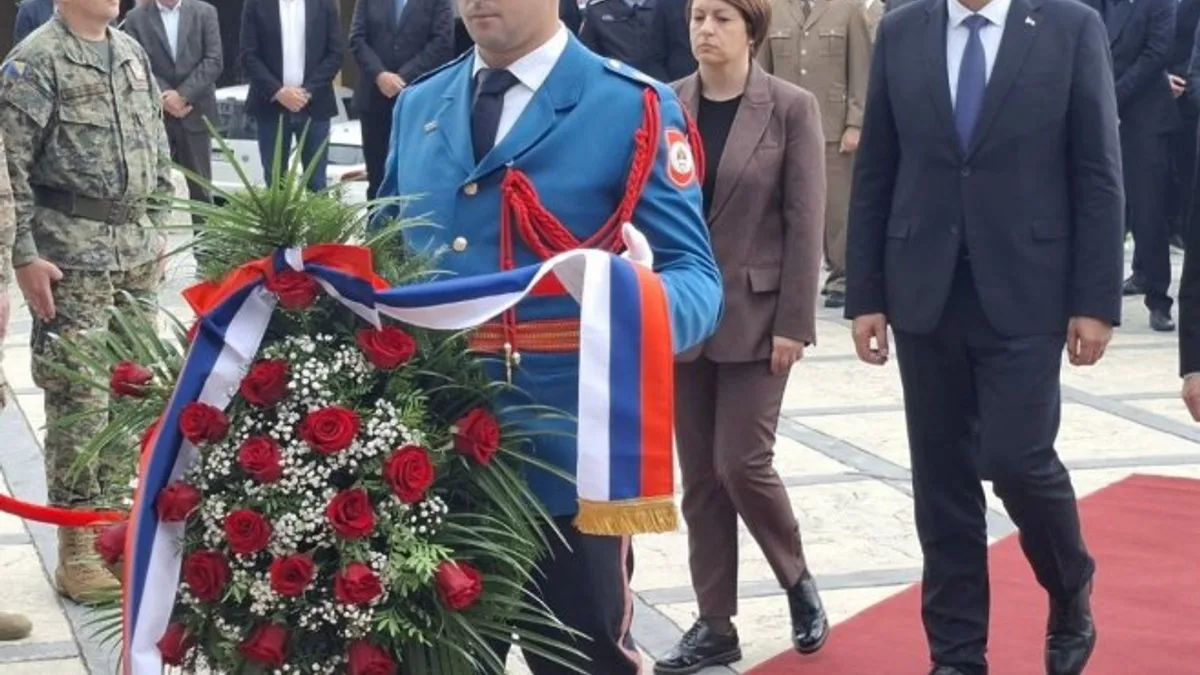
Serbian President Aleksandar Vucic announced back on July 18 that Serbia and Republika Srpska would mark the day of remembrance for Serbs killed and expelled in Operation Storm on August 4 in Mrkonjic Grad. “We call on all Krajina Serbs and everyone else to join us at this commemoration,” he said at the time, adding that he would try to visit his rebuilt family house in Cipuljic beforehand.
The order of the announcements is itself a data point. Belgrade fixed its date first, the Croatian ministry published its schedule six days later, and the political exchange came only on July 30, when Plenkovic and Stevandic spoke hours apart.
What the court ruled, and what it did not
On February 3, 2015 the International Court of Justice rejected both the Croatian and the Serbian genocide claims, finding that genocidal intent had not been proven. The court did record that crimes were committed against Serbs and that forced displacement took place, but it issued no formal legal finding classifying Operation Storm as ethnic cleansing. That distinction routinely disappears in regional debate, and it explains how both sides read the same judgment as confirmation of their own version.
The profile of the victims remains the hardest part of the ledger. Figures compiled by the Veritas association show that older people made up the majority of civilians killed, around 66 percent, and roughly three quarters of those were over 60. Tanjug puts the number of expelled Serbs at between 220,000 and 250,000, with about 2,000 killed or still listed as missing.
One day and about a hundred kilometres separate the two ceremonies. The difference in substance is clearest in what each one is called: in Knin it is Victory and Homeland Thanksgiving Day, in Mrkonjic Grad a day of remembrance for the killed and the expelled.