

A Cairo papyrus has revealed 30 previously unknown verses by the Greek philosopher Empedocles
A papyrologist at the University of Liège has identified a fragment from the archive of the French Institute for Oriental Archaeology as a previously unknown excerpt from Empedocles' Physica, containing 30 lines on perception and particles.
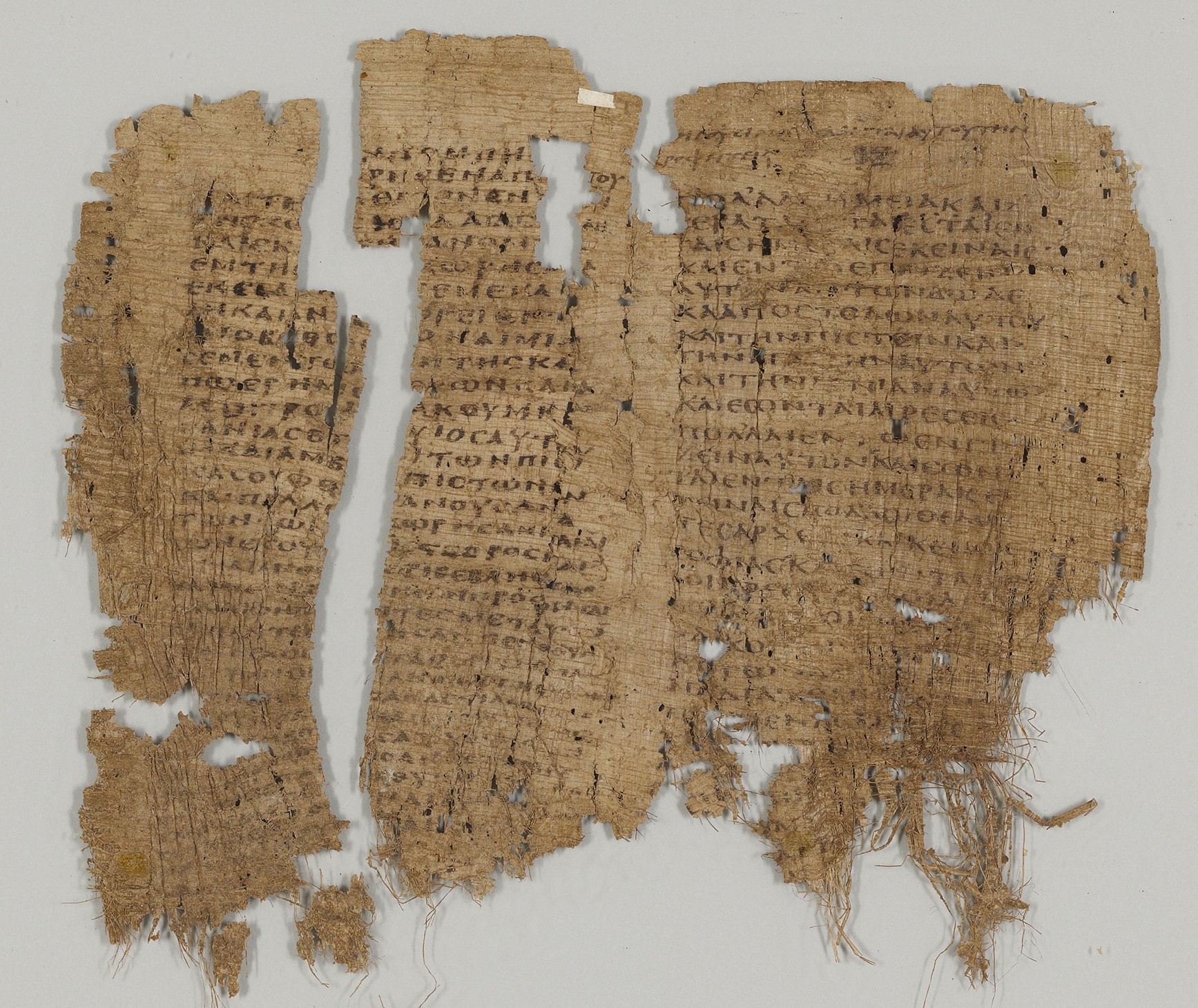
Nathan Carlig, a papyrologist at the University of Liège in Belgium, has identified the papyrus fragment P. Fouad inv. 218, kept for centuries in the archives of the French Institute for Oriental Archaeology (IFAO) in Cairo, as a hitherto unknown passage of the philosophical poem Physica by the ancient Greek philosopher Empedocles of Acragas (c. 490-430 BC), the University of Liège announced in April 2026. The papyrus, roughly 2,000 years old, preserves 30 previously unknown verses, the largest single addition to the corpus of Empedocles’ work in several decades. The story was carried by the American journal Archaeology Magazine on 7 April.
Empedocles’ work has so far been known almost exclusively at second hand, through quotations and paraphrases by later authors including Plato, Aristotle and Plutarch. The most significant direct survival of Empedocles’ writing is the so-called Strasbourg Papyrus, discovered in 1990, which preserves around 70 verses of his poem On Nature. The new find from Cairo, according to Carlig’s paper, considerably expands the picture of Empedocles’ understanding of sensory perception, especially sight, a theme that the philosopher addressed within his broader theory of the four elements (fire, water, air, earth) and two forces (attraction and repulsion), around which he built his cosmological system.
Methodologically, Carlig identified the papyrus during a systematic review of the IFAO archive, which contains many thousands of unsorted fragments mainly from the necropolises of the Fayyum and Oxyrhynchus (Egypt). The identification was made on the basis of linguistic features and the Ionic dialect form that Empedocles used, and on the basis of the metre (hexameter), which matches that of the Strasbourg Papyrus. The University of Liège said the text is written in the Greek majuscule script typical of the Roman period (around the 1st century BC to the 2nd century AD), suggesting that the work was still being read and copied in the early Roman Empire.
What the find means for the history of philosophy
If Carlig’s reading is confirmed in the peer review that is currently under way, the additional 30 verses could significantly affect where Empedocles is placed within the history of Greek philosophy. In his initial analysis Carlig argues that the verses deal with the “efflux of particles” from the surface of objects and the interaction of those particles with the eyes of the observer, a theory of perception close to the later atomists Leucippus and Democritus. That could shift the philosophical historiography to date, which has traditionally placed Empedocles as a transitional figure between Parmenides and the atomists, opening up the possibility that he was a direct precursor of atomistic thought in the 5th century BC.
The limits of the find, as Carlig himself notes, do exist. The fragment is damaged in several places, and about 12 verses contain lacunae (gaps) that have been reconstructed on the basis of the metre and context, leaving room for alternative readings. The attribution to Empedocles rests on several stylistic markers, but there is no direct authorial formula in the surviving part of the papyrus. The next phase of research, already in progress, involves high-resolution multispectral imaging of the fragment that may reveal more text in the damaged areas.
Other papyrologists not involved in the research, among them Dirk Obbink, a researcher at Oxford, told Archaeology Magazine that Carlig’s attribution was “convincing but not without doubts”, because several other Greek philosophers of the period used a similar metre and terminology. The definitive peer review in the journal Zeitschrift für Papyrologie und Epigraphik is expected at the end of 2026.


