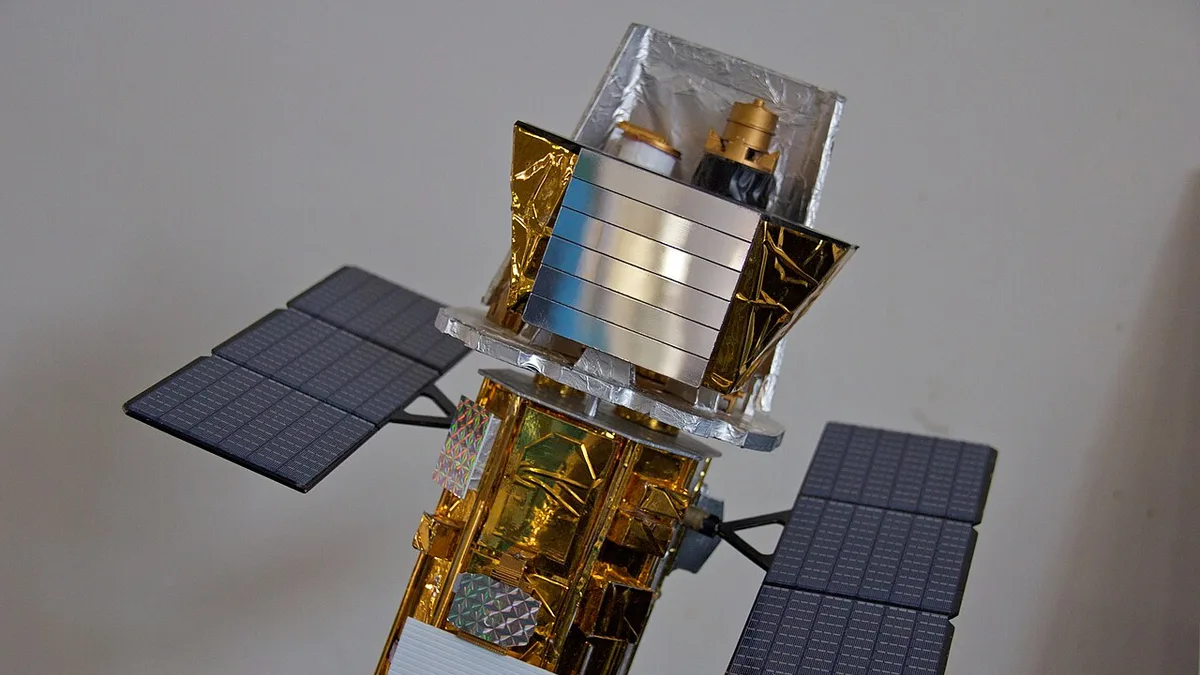
Tianwen-2 enters orbit around asteroid Kamooalewa
China's Tianwen-2 probe performs orbit insertion around asteroid Kamooalewa after 13 months in flight, as a new study challenges the idea that it is a chunk of the Moon.

- China's Tianwen-2 probe performs orbit insertion around asteroid Kamooalewa, after 13 months in flight since launch in May 2025.
- Study runs from ever lower altitudes, from 20 kilometres down to just 600 metres, with sampling starting on July 4.
- A capsule with at least 100 grams of material is due to land in the Gobi desert on November 29, 2027.
- A new study in Nature Communications questions the assumption that Kamooalewa is a piece of the Moon.
China’s Tianwen-2 spacecraft has reached its first target. After 13 months in flight, since its launch in May 2025, the craft is performing orbit insertion around asteroid 469219 Kamooalewa, a small body that follows Earth on its path around the Sun and is often called a quasi-moon. This begins a year of detailed study before the probe attempts to collect a surface sample.
The mission plan calls for a gradual approach and observation from ever lower altitudes, from about 20 kilometres down to just 600 metres above the surface, using 11 scientific instruments. Sampling is scheduled for July 4, 2026, with the goal of collecting at least 100 grams of material. The probe then leaves the asteroid on April 24, 2027, while the sample capsule would separate on November 29, 2027, and descend into the Gobi desert.
The mission does not end there. After the return near Earth, an extended phase is planned in which Tianwen-2 would continue towards the active asteroid 311P/PanSTARRS, with orbit insertion expected in 2035. It is one of China’s most ambitious efforts to study small bodies in the Solar System.
Is Kamooalewa really a piece of the Moon?
As the probe enters orbit, the science around the asteroid itself is becoming more interesting. A new study published in Nature Communications says that the spectrum of Kamooalewa looks more like a so called LL chondrite, a type of stony meteorite, than like material from the surface of the Moon. That challenges the earlier assumption that this asteroid is in fact a fragment of the Moon, thrown off by some ancient impact.
The authors of the study remain cautious. They note that the surface of Kamooalewa is probably covered by fine grained regolith exposed to space weathering, but they do not fully rule out a lunar composition either. That is exactly why the sample Tianwen-2 is meant to bring back is so important, as it would for the first time provide direct material for laboratory analysis.
What does the mission mean for science?
If all goes to plan, China would become only the third power to bring an asteroid sample back to Earth. Such material helps to better understand how small bodies formed in the early Solar System and what role they play in Earth’s history. It is also notable that amateur radio astronomers independently decoded the probe’s telemetry for the first time, showing the growing interest of the wider community in this mission.
What do you think, will the sample from the Gobi finally solve the puzzle of Kamooalewa’s origin?