Ada Yonath, Nobel Chemistry Laureate, Dies at 87
The Weizmann Institute announced that Ada Yonath, who won the 2009 Nobel Prize in Chemistry for discovering the structure of the ribosome, died on Monday, August 31.

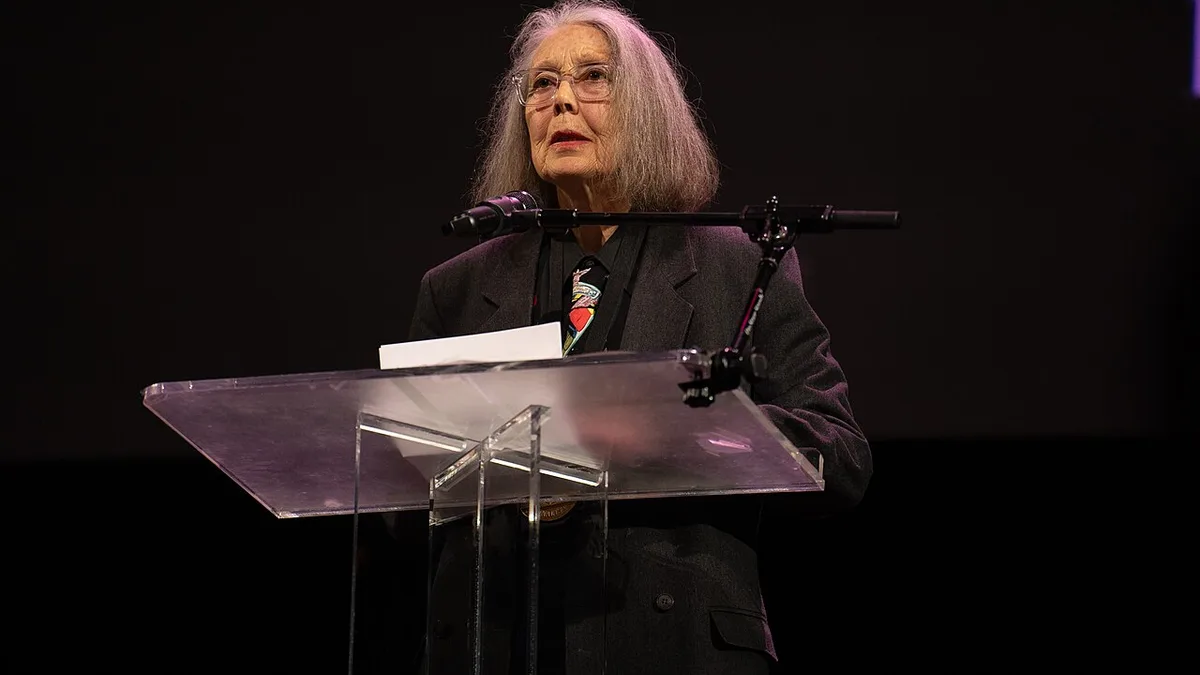
The Weizmann Institute of Science announced that Prof. Ada Yonath, who won the 2009 Nobel Prize in Chemistry, died on Monday, August 31, 2026, at the age of 87. Yonath spent decades in the institute’s Department of Chemical and Structural Biology in Rehovot, where as a young researcher she set out to decode the structure of the ribosome, the intricate cellular machinery that manufactures proteins. Her discovery later helped scientists understand how certain antibiotics act on bacteria, opening the way to new drugs against bacteria resistant to existing treatment.
Born in Jerusalem in 1939, she grew up in a poor family in the Geula neighborhood after losing her father at a young age. She began working before she turned 12, and after the family moved to Tel Aviv she tutored other students in mathematics to pay for high school. She earned a degree in chemistry at the Hebrew University of Jerusalem, then completed a doctorate in X-ray crystallography at the Weizmann Institute in 1968. After her PhD, she pursued postdoctoral research in the United States, at Carnegie Mellon University and the Massachusetts Institute of Technology, before returning to Israel in the 1970s and founding the country’s first protein crystallography laboratory.
The goal she set for that laboratory, producing crystals of the ribosome, was considered nearly impossible by the science of the time: the complex was so large and unstable that leading teams around the world had tried and abandoned the effort before her. According to the Weizmann Institute’s statement, Yonath and her collaborators did not obtain the first crystals until 1980, after roughly 25,000 attempts. Over the next two decades, her teams refined the method, including a crystal freezing technique that reduced the damage caused by X-rays. In 2000, her teams at the Weizmann Institute and at a Max Planck Society research unit in Hamburg determined the complete three dimensional structures of both subunits of the bacterial ribosome, and the following year they showed how antibiotics bind to the bacterial ribosome and block it from producing new proteins.
That research earned her the 2009 Nobel Prize in Chemistry, making her the first Israeli ever to win a Nobel Prize and the first woman in 45 years to be honored in that field. She served for many years as director of the Mazer Center for Structural Biology at the Weizmann Institute, was a member of the US National Academy of Sciences, the American Academy of Arts and Sciences and the Israel Academy of Sciences and Humanities, and held honorary doctorates from roughly 40 universities worldwide, including Oxford, New York University and Moscow State University.
Weizmann Institute President Prof. Alon Chen said in a statement on her death:
Ada was an extraordinary scientist who never hesitated to choose the path others considered impossible, and to follow it for decades with determination, curiosity and courage.
The institute’s statement also said her discovery helped “pave the way for the development of more advanced antibiotics and the fight against antibiotic resistant bacteria.”
In recent years, Yonath also spoke out beyond the laboratory. In 2023, she signed an open letter with six other Nobel laureates warning about proposed judicial changes in Israel and their possible impact on science and higher education. According to the Weizmann Institute, she ran an active laboratory, published papers and maintained scientific collaborations until her final days. She is survived by her daughter, Hagit, and granddaughter, Noa.