

Alpoge says Claude helped prove the Riemann Hypothesis
The Lean proof passed machine checks, but mathematicians have not read it yet. A human-only draft posted the same day has reported gaps.
Levent Alpoge, a mathematician at Anthropic, posted a four-page note on his website alpo.ge on Friday, November 20, 2026, claiming that he found a proof of the Riemann Hypothesis while working with Claude. A computer has already accepted the proof, written in the Lean programming language, but no mathematician has fully understood it yet, so the most famous open problem in mathematics remains formally open.
What does Alpoge claim?
In the introduction to the note, Alpoge writes:
“I believe I have, working with Claude, discovered a proof of the Riemann Hypothesis. In fact, the method easily extends much further, resolving the so-called Generalized Riemann Hypothesis, and I expect, with more time, the Extended Riemann Hypothesis too.”
In other words, he believes the method resolves the Generalized Riemann Hypothesis as well, and he expects the extended version to fall given more time.
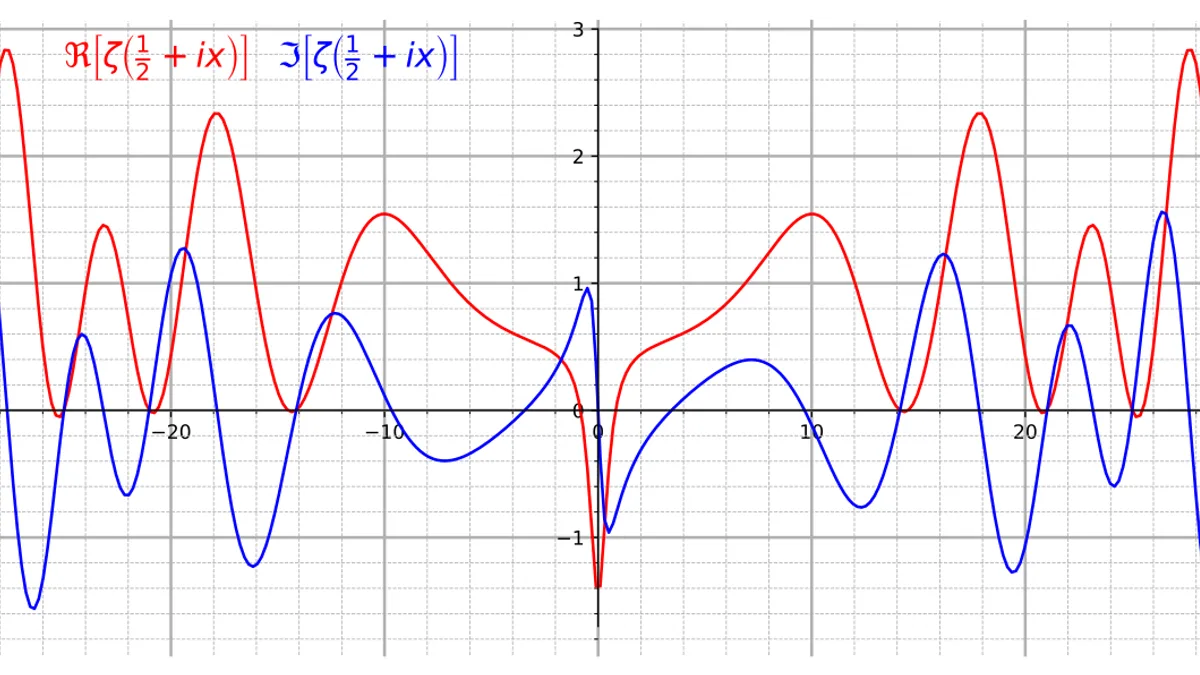
Bernhard Riemann posed the hypothesis in 1859. It states that all nontrivial zeros of the Riemann zeta function lie on a single line, where the real part is exactly 1/2, and those zeros determine how evenly the prime numbers are distributed. The Clay Mathematics Institute offers a million dollars for a solution. The generalized hypothesis makes the same claim for a whole family of related functions, the Dirichlet L-functions.
Alpoge did not publish a conventional paper. He released a formal proof in Lean, split across 14 parts of an archive. Written out in ordinary language, he says, it would run past 250,000 pages, so he chose not to post an unreadable document. The outlet Fello AI, which downloaded and counted the archive, reports 175,187 Lean files and about 17 million lines of code. The note does not say which Claude model was used, and Anthropic had issued no statement on the claim as of the morning of November 21.
The note ends with a 20-step timeline running from October 6 to November 16, 2026. Alpoge says the breakthrough came late on Sunday evening, November 15, and that he then contacted Anthropic chief executive Dario Amodei. Because the claim appeared one day after the company went public, Alpoge addressed the suspicion about timing in the note:
“There is an obvious cynical view, to do with the timing, but it is false, and I am pleased that I am in circumstances where it is obviously false.”
What has been checked so far?
The first question for any Lean proof is whether the code actually states what its author claims. Elliot Glazer of Principia Labs confirmed the same day that the formalized statement matches the Generalized Riemann Hypothesis. Compilation came next. Andrew Sutherland, a professor at MIT, independently compiled Alpoge’s proof. He told Scientific American:
“This is indeed an historic moment.”
According to Sutherland’s report, as relayed by Fello AI, the proof relies on only the three standard axioms that nearly every Lean proof uses: “The Lean proof has been compiled and independently rechecked by the Lean kernel with only the three standard axioms.”
One automated check was still pending. Kevin Buzzard of Imperial College London wrote on the Lean community forum Zulip that a successful run of the comparator tool, which verifies that the code does not change the meaning of symbols in the statement, was still awaited. As of 10:30 UTC on November 21, that run had not been confirmed.
Even a successful run would only show that the formal statement is correct. Human review has not begun, because there is nothing to read: Alpoge only plans to write a readable version, and he expects the argument to shrink considerably. Thomas Bloom of the University of Manchester said he is equally surprised by the claim that AI proved the hypothesis and by the claim that the proof, written out for humans, runs past 250,000 pages.
How is the mathematical community reacting?
The community has not accepted the proof. Hector Pasten of the Pontifical Catholic University of Chile told Scientific American:
“If the proof is correct and understood, this completes a dictionary between different branches of math where the connections were only partial, something like a Rosetta Stone.”
Carlo Pagano of Concordia University in Quebec added that the new ideas in the proof, if confirmed, could open new directions in number theory.
A second attempt appeared the same day. Ravi Vakil, a Stanford professor and president of the American Mathematical Society, posted on his blog an independent draft proof of the generalized hypothesis by mathematician Alessandro Masullo. Vakil wrote:
“It is all human, with no AI.”
The draft had been reviewed for months by Stanford number theorist Brian Conrad, and Masullo had originally been expected to refine it for a year before publication. Eight hours later Vakil updated his post: several people had written to him with objections to gaps in the draft, and they found them with the help of various AI models. Vakil explicitly does not claim that the proof strategy is correct.
Could the million-dollar prize follow?
Not soon. Under the Clay Institute’s rules, a solution must be published in a suitable journal, at least two years must pass after publication, and the solution must gain general acceptance in the global mathematical community. Alpoge’s archive on a personal website meets none of those conditions yet. Earlier claims of a proof of the Riemann Hypothesis have collapsed before, the best known being Michael Atiyah’s 2018 presentation in Heidelberg, which experts doubted right away.
This is also not the first Claude result near the hypothesis. In August, Anthropic announced that the lower bound for the share of zeta function zeros on the critical line had been raised from 41.6 to 67.2 percent. That was limited progress toward the hypothesis, not a proof of it.
What remains open: whether the comparator confirms the code, whether experts can follow the argument once a shortened version appears, and whether the Vakil and Masullo draft survives scrutiny. Machine checking says the formal statement is correct, but it says nothing about whether anyone has understood why.


