Veselin Milic: a career from Uzice to two terms heading Belgrade police
From a beat officer in Uzice in 1998 to two terms heading Belgrade's police and adviser to the President of the Republic, a profile of the man now held in 30-day pre-trial detention.

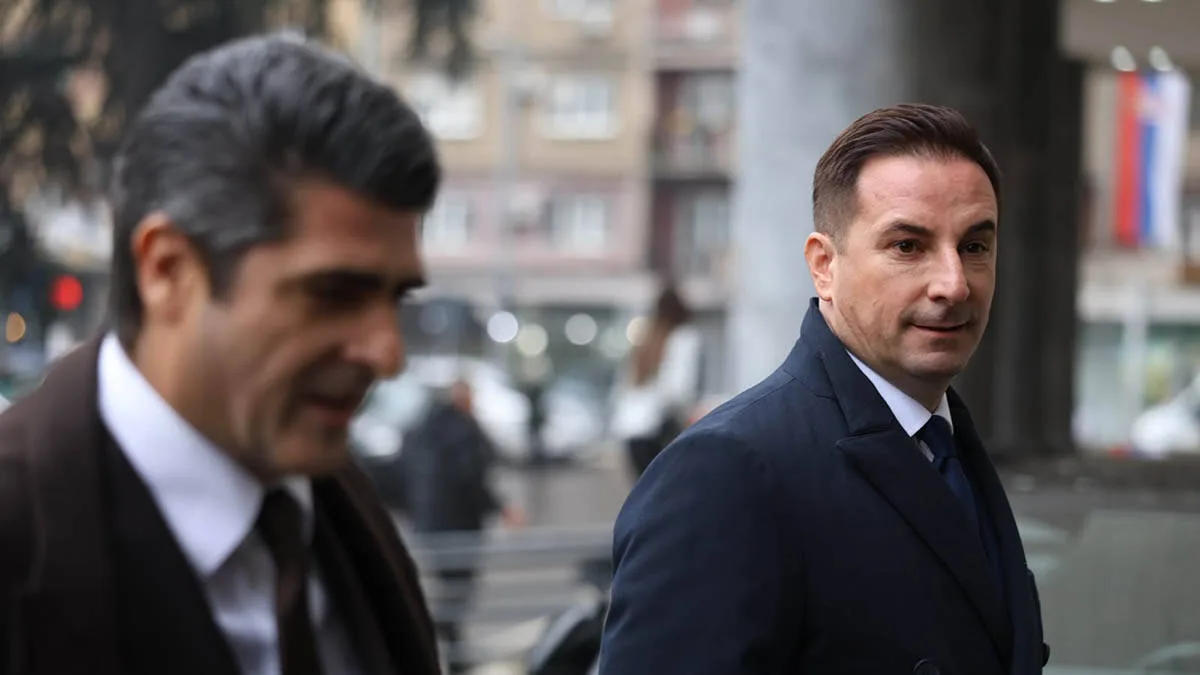
Veselin Milic, head of the Belgrade City Police Administration, was removed from office on May 15, and the Belgrade Higher Court ordered up to thirty days of pre-trial detention in the investigation into the disappearance of Aleksandar Nesovic after the shooting at the Senjak restaurant on May 12. According to official Interior Ministry data, Milic is suspected of failing to report a criminal offence and the perpetrator and of aiding the perpetrator after the act. The order on his removal was signed by Interior Minister Ivica Dacic.
Milic was born in 1979 in Priboj. He completed the Secondary School of Internal Affairs in Sremska Kamenica, then the Police Academy in Belgrade. He joined the police in 1998 in the Secretariat of Internal Affairs in Uzice, as a beat officer. He was transferred to Belgrade in 2003 as deputy commander of the Savski Venac Police Station, and at the end of 2006 became the head of the Security Department in the Belgrade police administration. From 2011 he worked at the Police Directorate.
What about the two terms heading the Belgrade police?
He was first appointed head of the Belgrade police administration on September 19, 2013 by order of the then Interior Minister. He held the role until 2018, when the incident in Hercegovacka Street, known as the Savamala case, took place. During that night in April 2016, the Belgrade police did not respond on the ground as a group of masked men demolished buildings. The then Republic Ombudsman Sasa Jankovic openly named the responsibility of the police administration’s leadership. Milic never assumed responsibility in legal terms.
From September 2018 to November 2020 he served as adviser to the President of the Republic, Aleksandar Vucic, for the fight against corruption and crime, and concurrently as deputy police director for organisational improvement and functioning. In November 2020 he was returned to the head of the Belgrade police administration, where he remained until his arrest.
What are the turning points in public perception?
In public, after the May 2023 attack at the Vladislav Ribnikar school, Milic held a press conference and showed a list of names of children the attacker had allegedly planned to kill. The footage at the time triggered a debate in the professional community about the limits of the public interest and the ethical standards of investigations. The weekly Vreme published a piece titled “A Very Awkward Witness for the Regime,” in which journalist Filip Svarm asserts that Milic possesses knowledge that, if presented in court, would have political consequences exceeding the framework of any individual case.
According to Vreme, Milic was formally removed by Minister Dacic’s order, but already by the Higher Public Prosecutor’s Office in Belgrade he has been released from official duty until the proceedings end. Police Director Dragan Vasiljevic has not publicly addressed the 2020 appointment when he reinstated Milic. Vasiljevic signed the decision as director.
Opposition reactions in the Assembly came quickly. The People’s Movement of Serbia demanded the dismissal of Vasiljevic and Minister Dacic. The Party of Freedom and Justice submitted an initiative for an urgent session of the Defence and Internal Affairs Committee. The Green-Left Front qualified the case as proof of the links between the leadership of the security services and organised crime.
The ruling coalition’s top response came from President Vucic, who on May 23 on RTS announced a law that would remove from the police all who “work for someone outside the service.” By his estimate, the mechanism would cover “perhaps even 2,000 people.” Minister Dacic, interviewed on Prva TV on May 24, refused resignation by saying: “Why would I resign? I do not run the police.”
According to data from Interior Ministry registers, during his two terms heading the Belgrade police Milic oversaw more than two thousand operational organised crime cases, with about a quarter linked to the territory of Savski Venac municipality, where Senjak is located. A source close to the Prosecutorial Council says cases under Milic’s competence from the start of his second term in 2020 will be the subject of routine review by the relevant department of the Republic Public Prosecutor’s Office, which does not mean automatic opening of new investigations but creates room for them to be opened.
The next important date is June 12, when, according to its spokesperson, the Higher Public Prosecutor’s Office in Belgrade should decide on extending detention and the qualification of the offence. Will the opposition in the meantime succeed in forcing an urgent Defence Committee session?