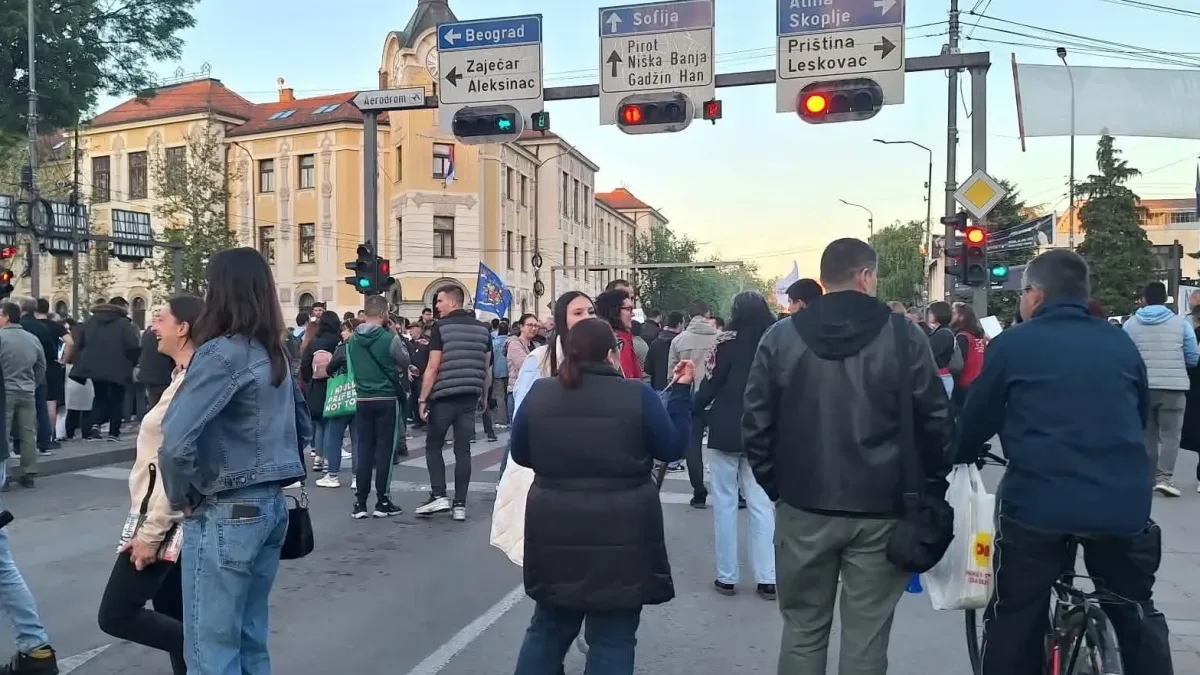
Before Vidovdan, No Deal: Students and Opposition Apart
Ahead of the Vidovdan protest and expected elections, students in blockade and the opposition still have no deal on a joint ticket, leaving a likely scenario of three separate columns.

- Days before Vidovdan, a deal between students in blockade and the opposition on a joint ticket is still not finalized.
- Sources see a realistic scenario of three separate columns at the next elections.
- Students say they will not publish the names on their list until elections are formally called.
- Opinion polls show the student list would win more than any other single list.
A few days before Vidovdan, the date around which both the announced protest and the expected calling of elections cluster, the central question of Serbian politics still lacks an answer: will students in blockade and the opposition parties go to the polls together or apart. For a country that keeps its European perspective as a formal goal, and which Brussels watches closely through the lens of the rule of law, how this alternative is articulated is not a domestic technicality but a test of political seriousness.
Sources familiar with the talks describe them as sincere yet unfinished. The idea of a single list exists; the agreement does not. The closer the deadline, the stronger the assessment that the most likely outcome is a run in three separate columns: the student list as a distinct political actor, the pro-European opposition gathered around the grouping known as EU5, and parties of the national, right-leaning orientation that see themselves as a third pole.
Why the deal is hard to reach
The reasons for caution are not only tactical. For a year and a half, students in blockade have built their legitimacy precisely on distance from party politics, so merging too quickly with established actors could erode what makes them recognizable. Hence their decision to withhold the names on their list until elections are formally called, keeping control of the tempo and avoiding having candidates become campaign targets before the campaign even begins.
On the other side stands arithmetic that no serious actor can ignore. Opinion polls consistently show that, were elections held today, the student list would win more than any other single list, whether of the government or the opposition. That changes the logic of the talks: students do not need to dissolve into a broader coalition to remain relevant, while opposition parties fear that running apart could scatter votes and, through the electoral threshold and the allocation of seats, ultimately benefit the authorities.
The pro-European opposition around EU5 reckons that a joint run with the students would bring both credibility and mobilization, yet it knows the price would be ceding primacy to a movement that did not emerge from its own ranks. The right-leaning parties, for their part, insist on a separate identity and refuse to be an appendage to either the student or the pro-European column. For all those reasons, what at first glance looks like a natural alliance of three against one breaks down, in practice, into three calculations that do not align.
What would three columns mean for the result?
A scenario of three separate lists carries a clear risk of fragmentation. If the opposition vote splits across the student, pro-European and right columns, the electoral system and the threshold can turn a combined majority of discontent into a minority of seats, an outcome that suits the authorities. On the other hand, three columns may also widen the overall reach, since each speaks to voters the other two struggle to win, from disillusioned pro-European voters to those who find a national note closer than the students’ above-party tone.
Much will depend on when elections are formally called and how much time remains for any technical arrangements on non-overlap, joint candidates in particular districts, or an understanding on conduct after the vote. The Vidovdan protest, in that sense, is not only a symbolic marker but also a mobilization test: the size of the crowd will be read as a signal of how much room there is for an independent run and how much for compromise.
For now the picture is of three columns moving toward the same goal by different paths, while voters watch whether three separate calculations can yield a single result. Do you believe three lists together would deliver more than one, or would a divided run ultimately serve those against whom all three are aimed?