Kosovo Bans Serbian Minister Over Ethnic Cleansing Remark
Pristina declared Paunovic persona non grata after she told Kurir television that, had she been Milosevic, she would have ethnically cleansed Kosovo in 1998. Brussels condemned it, Belgrade is silent.

- Pristina has imposed a permanent ban on Snezana Paunovic, Serbia's minister of state administration and local self-government, barring her entry and transit through Kosovo.
- The trigger was her remark on Kurir television that, had she been Slobodan Milosevic, she would have "ethnically cleansed Kosovo in 1998".
- The decision was announced by caretaker Kosovo police minister Xhelal Svecla; EU Enlargement Commissioner Marta Kos also condemned the statement.
- The opposition is demanding her dismissal and a criminal inquiry, while Vucic and the Serbian government have stayed silent for a second day.
Snezana Paunovic, Serbia’s minister of state administration and local self-government and deputy leader of the Socialist Party of Serbia, has been declared persona non grata in Kosovo. The decision was announced on Tuesday evening by Xhelal Svecla, Kosovo’s caretaker interior minister, and carries a permanent ban on entry and transit through Kosovo’s territory. The cause was a remark Paunovic made on Kurir television: had she been Slobodan Milosevic, she said, “I would have ethnically cleansed Kosovo in 1998.”
Svecla described her rhetoric as the continuation of a policy that for decades produced violence, crimes and attempts to remove Albanians from their territory, and said the era in which Albanians were subjugated is definitively over. The ban is an administrative measure with no legal force beyond Kosovo, but it is a political signal Belgrade cannot dismiss as a procedural detail: a sitting member of the Serbian government has been barred from territory Serbia constitutionally claims as its own.
Why are Vucic and the government silent?
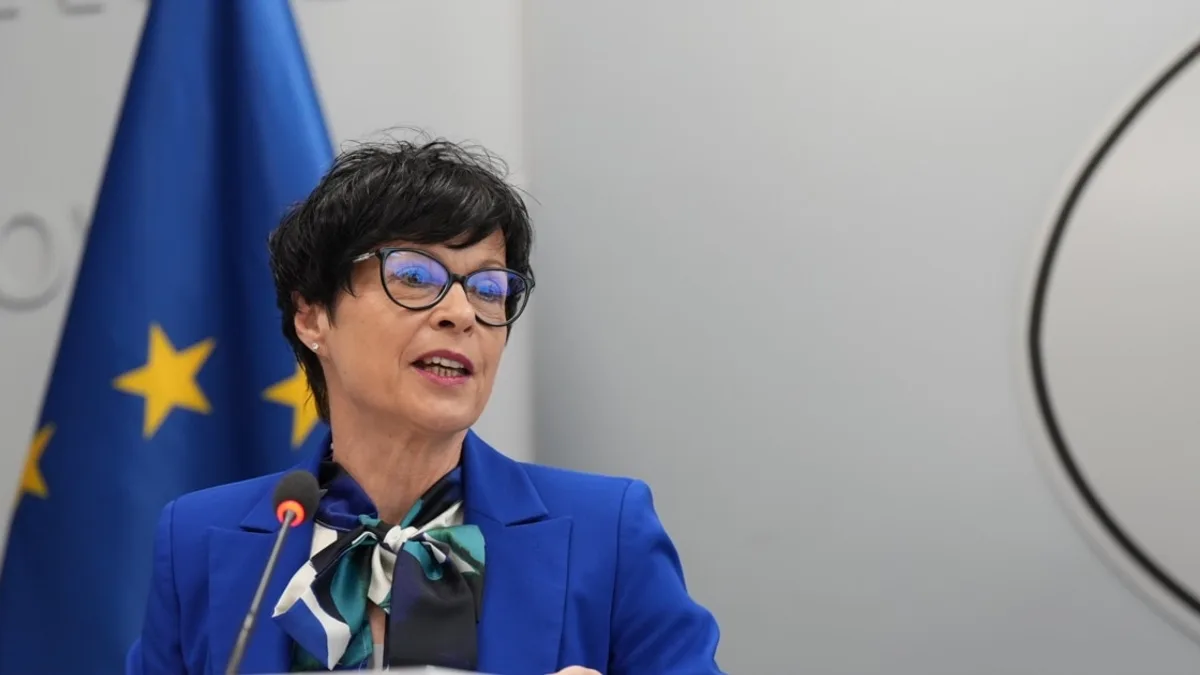
Brussels responded quickly. Marta Kos, the EU commissioner for enlargement, said that “there is no place in Europe for rhetoric that justifies, advocates and glorifies ethnic cleansing”, adding that she was personally truly appalled that this even had to be said. Kos specified that such statements stand in direct contradiction to the values of human dignity, reconciliation, responsibility and good neighbourly relations on which the European Union is founded and without which the accession process cannot proceed, and that they also contradict Serbia’s obligations towards the Union and the facilitated dialogue on normalisation. She noted she could only assume this was the view of one minister and not the position of the Serbian government.
That last sentence is, in fact, the sharpest part of her statement. It leaves Belgrade an exit, but attaches a condition: the assumption that the government does not stand behind its minister holds only for as long as the government says so. Two days on, neither President Aleksandar Vucic nor the government has spoken. At that point silence stops being tactics and starts being an answer.
The domestic opposition filled the gap. The Green-Left Front demanded political and criminal accountability, the Movement of Free Citizens is calling for her dismissal, and Shaip Kamberi of the Party of Democratic Action has asked for an official position from the Serbian government. Sandro Gozi, a member of the European Parliament, called on Vucic to condemn the remark and ensure she is removed. Students in blockade said a democratic society offers no justification for calling for ethnic cleansing, neither as a historical hypothesis, nor as a political message, nor as a personal view.
One party, two incompatible answers
Paunovic has not retracted anything. She said she does not renounce her party’s policy, nor her right to analyse what might have been done differently, and maintained that she had spoken about voluntary resettlement rather than violence. Ivica Dacic, her party colleague and deputy prime minister, called the attacks on her shameful and hypocritical, recalling that Pristina had between 40,000 and 50,000 Serbs in 1991 and has roughly 400 today.
From the same party leadership, however, came the opposite tone. Branko Ruzic, deputy leader of the Socialists, said he was convinced that ethnic cleansing was never the policy of the Socialist Party of Serbia and that no such decision was ever taken in party bodies, in the 1990s or later, and that preserving territorial integrity and fighting terrorism were constitutional obligations of the leadership at the time. Reopening old wounds without grounding in any part of state or party policy, he said, helps no one in 2026.
Two deputy leaders of the same party, two irreconcilable answers to a single sentence. How long can the government keep pretending this is not its problem?