REM Council Fails to Elect President, New Vote by Month-End
The newly constituted REM Council did not elect a president after candidates Milos Garic and Mileva Malesic received an equal number of votes. A new session is announced for late July.

- The REM Council failed to elect a president at its constitutive session as two candidates received an equal number of votes.
- The candidates were Milos Garic and Mileva Malesic; acting chair Dubravka Valic Nedeljkovic said "the nuances decided" the outcome.
- The council is operating with 8 of 9 members, as the seat for the national minorities' representative remains vacant.
- A new session to elect a president and vice president is announced by the end of July.
Serbia’s Regulatory Authority for Electronic Media (REM) failed to elect a president of its council at the constitutive session held in Belgrade on Monday, around 1:31 p.m., after two candidates received an equal number of votes. Milos Garic and Mileva Malesic competed for the post, and the tie leaves the country’s chief oversight body for television and radio without a head for now.
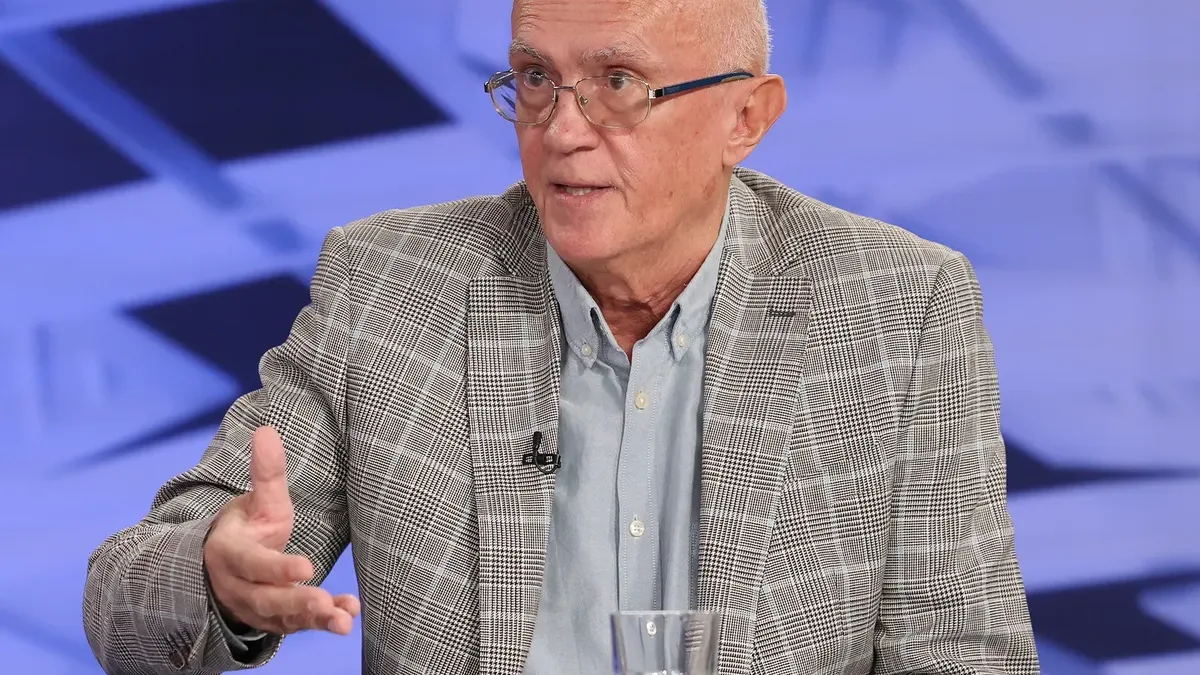
The session was chaired by Dubravka Valic Nedeljkovic as the oldest member of the council, a role she will keep until a president is chosen. She said the vote was so close that “the nuances decided” the result. She added that she had seen constructiveness among all members and that they had agreed, without dispute, on the professional and educational criteria for the president.
Why is the regulator left without a head before the election season?
The answer is procedural first, but the consequences are political. The council is currently operating with a reduced roster of eight of nine members, because the seat reserved for the national minorities’ representative has not yet been filled. In a body with an even number of votes, a tie is no surprise, and that is exactly what produced the deadlock on the first ballot.
The timing adds further strain. The mandate of the previous council expired back in November 2024, so the regulator functioned for months with a questionable capacity to make decisions. Now that a new membership has finally been constituted, the absence of a president means the body still lacks full operational strength at a moment when talk of the next electoral cycle is growing louder in political circles.
REM is the institution that grants and revokes broadcasting licences, monitors compliance with advertising law, and oversees media reporting, including during campaign periods. Without an elected president, the body formally functions, but every decision it makes becomes easier to challenge. Valic Nedeljkovic herself admitted that the new membership faces “so many unresolved problems that it is unbelievable”.
What comes next before the end of the month
The acting chair announced that a new session, at which a president and vice president should be elected, will be convened quickly, by the end of July. That leaves only a few days to agree on a candidate who could gather a majority, since a repeated tie would resolve nothing.
Council members are expected to look for a model that breaks the blockade in the meantime, either through the withdrawal of one of the two candidates or by winning an additional vote within the current membership. Filling the ninth seat, reserved for the minorities’ representative, could change the arithmetic, but that process does not depend on the council alone.
The regulator will, in any case, have to work through the summer. The backlog of cases awaiting a decision allows no pause, and public pressure over how REM responds to rule violations in the media space only grows as the new political season approaches. The first test for the new membership will be precisely how quickly it manages to elect a leader.
Will the REM Council manage to elect a president by the end of the month, or does a fresh tie and prolonged uncertainty await at the top of the media regulator?