DNA report splits brothers in Ibar-Lepenac blast trial
A forensic biologist told the Pristina court that DNA linked to Jovan Vicentijevic turned up on 20 of 24 exhibits, while nothing recovered at the Ibar-Lepenac canal matched his brother Dragisa.

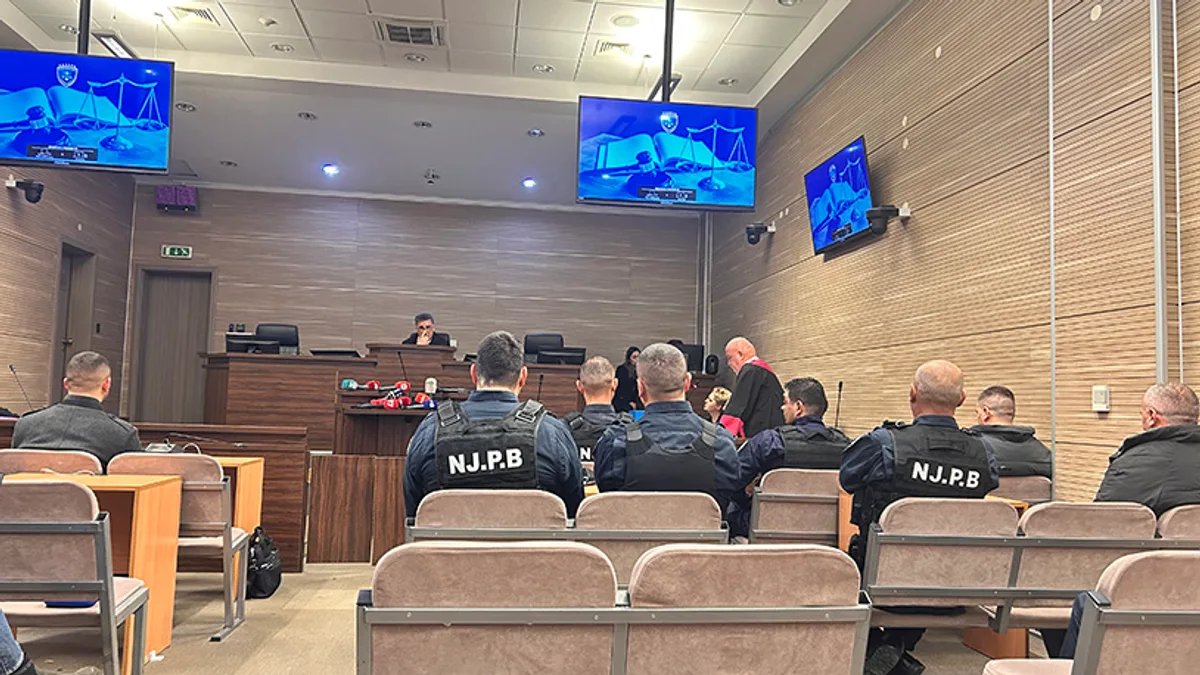
The Basic Court in Pristina resumed the trial over the explosion at the Ibar-Lepenac canal on July 28, and for the first time the panel heard forensic evidence that pulls the two accused brothers apart. Fatmir Ademi, a biologist with the Kosovo Agency for Forensics, testified that traces coded S1, which correspond to Jovan Vicentijevic, were found in 20 places across a total of 24 exhibits, and that not a single item recovered at the scene matches the sample taken from Dragisa Vicentijevic.
The blast, carried out on November 29, 2024, disrupted water supply across several municipalities. Brothers Jovan and Dragisa Vicentijevic have been in detention since November 2024. The third defendant, Igor Dimovic, is being tried at liberty and is charged with unlawful possession of weapons. Jovan Vicentijevic also faces an espionage count.
What the expert actually told the court
Ademi examined 51 items handed over by the police and the prosecution. Seven of them came from the scene itself, and none of those seven produced a match with Dragisa Vicentijevic’s sample. The material collected at the canal included:
- a bag and part of a black handbag
- gloves and a cap
- synthetic material
- a nine-meter cable
- part of a zipper
- a detonating fuse
The expert also walked the panel through how the finding was confirmed. The Pristina laboratory lacked the required software, so it sent the analysis results to Rome rather than the samples themselves.
The results of the DNA analysis from the laboratory in Pristina were sufficient for testing in Italy
Ademi added that the Pristina result was confirmed in Italy. That distinction carries weight, because defense teams in cases like this usually attack the chain of custody, and here the samples never left Kosovo.
Defense wants FBI experts on the stand
Milos Delevic, counsel for Dragisa Vicentijevic, told the courtroom that the expert had confirmed there was no match with the sample taken from Dragisa. Delevic also asked the court to hear FBI experts on the soil recovered from boots seized from the defendants.
We have a lot of questions for the FBI experts and I hope the court will accept our proposal
Nebojsa Vlajic, who represents Jovan Vicentijevic, questioned the expert about how the evidence had been collected.
The traffic stop
Kosovo Police officer Astrit Hama testified that his patrol stopped a white Sharan with Leskovac license plates. The person in the vehicle gave the name Zoran and was wearing a military uniform, and according to Hama’s account said he was unemployed but drawing a salary from Serbia.
Prosecutors treat that stop as the thread leading to the espionage count, which applies to the older brother alone. The panel has drawn no conclusion on it, and guilt is not established before a final verdict.
A calendar that now works against the detention
The next hearing is scheduled for September 29 at 9.30 a.m. By then the Vicentijevic brothers will have spent roughly 22 months in custody, counting from their arrest in November 2024. For Dragisa Vicentijevic that means two more months behind bars after an expert report that found no trace of him on any of the seven items taken from the scene.
The ruling on the defense request for FBI testimony is the next thing that can move the case. Accept it, and the September hearing brings in witnesses from outside the Kosovo forensic system, the first time in this case that the findings would be checked by a party neither Pristina nor Belgrade controls. Reject it, and Dragisa Vicentijevic’s defense is left with what was said in court on Tuesday: an absence of a match, which is not the same as proof of absence.