Lawyers Blocked From Serbs Detained in Zubin Potok
Veljko Odalovic says no lawyer can reach the two Serbs detained in Zubin Potok and that Serbia is, for the first time, not invited to exhumation sites. Drecun points to Thaci's September verdict.

- Veljko Odalovic says no lawyer can reach the two Serbs detained in Zubin Potok and that nobody knows who is being held or on what grounds.
- He ties the case to a group of intellectuals who set out from Kosovska Mitrovica for Ulcinj in 1999 and never arrived.
- For the first time, he says, the Serbian side is not being invited to attend an excavation site.
- Milovan Drecun links the arrests to the verdict against Hashim Thaci, due to be handed down in September.
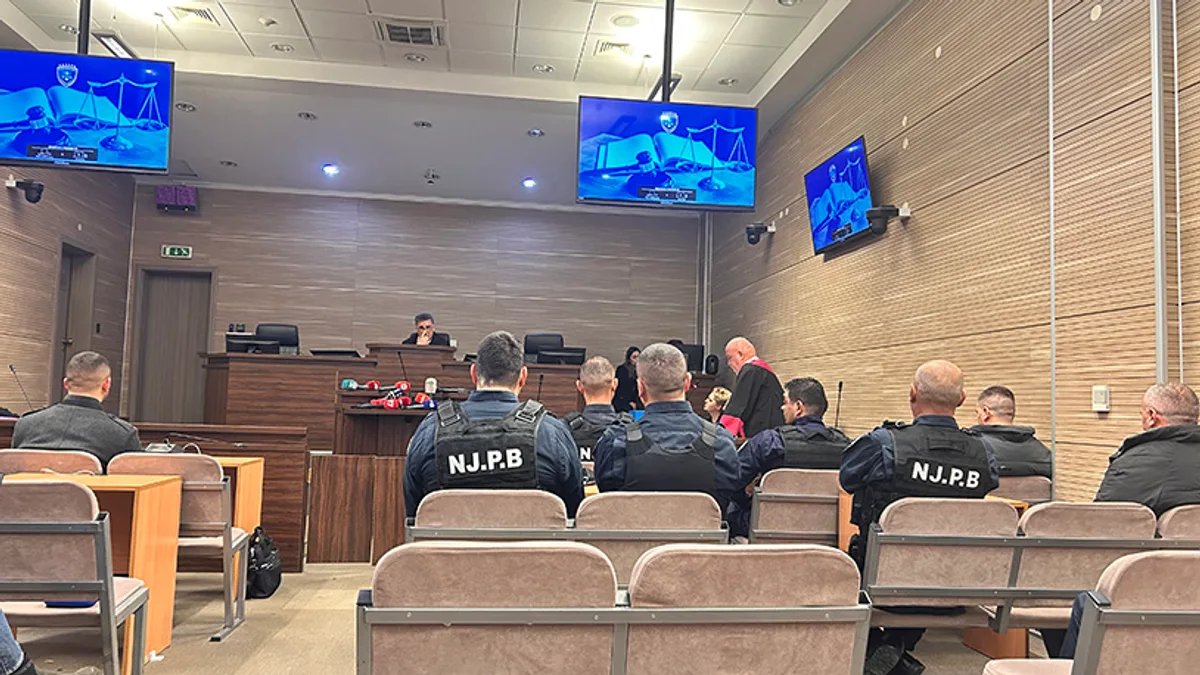
Veljko Odalovic, head of Serbia’s Commission on Missing Persons, said on July 29 on TV Prva that no lawyer has been able to reach the two Serbs detained in Zubin Potok and that it is not clear who exactly is being held or on what grounds. The men are Momir Jaksic and Miljko Bisevac, taken in by Kosovo police overnight between July 27 and July 28 on suspicion of a war crime against the civilian population committed in 1999.
Odalovic argued that since Albin Kurti took charge of the provisional institutions in Pristina there has been an unbroken run of institutional and physical pressure on Serbs, with the Zubin Potok arrests the latest link in it. His objection is not to the grounds for suspicion, but to what has happened since the men were taken away.
These arrests, this one now, and what is going on, the way that not even a lawyer can reach the detained persons, that nobody knows who or why, is something that causes concern
The right to counsel from the first hour of detention is not a procedural footnote. It is the foundation of the process, and it is precisely where Belgrade and Pristina clash in every war crimes case in northern Kosovo.
The group that set out for Ulcinj
Odalovic connects the Zubin Potok arrests to one of the oldest unresolved missing persons files. A group of intellectuals left Kosovska Mitrovica for Ulcinj in 1999 and never reached their destination.
That is a group of intellectuals who set out from Mitrovica for Ulcinj, they never got there, they are somewhere, according to the information that has circulated, they were liquidated
In Pristina the same group is filed under the name Intellectuals, and is believed to number 23 people abducted in April 1999 in the Kaludra area of the Zubin Potok municipality. That is also the basis on which the two detained men are being investigated.
Why is the Serbian side suddenly left off the site?
Because, according to Odalovic, the practice of going into the field together has been broken off after years of applying to missing persons cases. The Commission on Missing Persons has routinely been present when a grave was opened, regardless of whose remains were being sought.
“We used to be there together with them at the sites. For the first time they are not calling us to be at a site together,” Odalovic said.
The site in question is one we reported on earlier today. Excavation in the village of Mala Kaludra near Zubin Potok began on Tuesday, July 28, the day after the arrests, on the order of the Basic Court in Pristina and at the request of Kosovo’s Special Prosecution. On the first day alone, human remains of forensic significance and footwear were recovered, with no identification made. Odalovic also complains that Pristina avoids opening graves where the remains of Serbs are being sought.
Drecun: quiet ethnic cleansing
Milovan Drecun, chairman of the Serbian parliament’s Committee on Defence and Internal Affairs, addressed the same subject on TV Pink and described Pristina’s conduct as a sequence of specific acts.
You seize property, you intimidate people, you arrest them over alleged war crimes, you reduce them to second-class citizens, you harass them through institutions, you respect none of their human rights.
He then turned to the other side of that ledger, the treatment of assistance coming from Serbia.
You prevent the state of Serbia from helping them, and the Serbian people cannot survive in Kosovo and Metohija without the help of the state of Serbia.
Asked what that should be called, he answered without softening it.
Ethnic cleansing, only nobody from the Western part of the international community wants to call it that. It is a kind of quiet ethnic cleansing so that Kurti can finish the job.
Drecun also claims Kurti is using the arrests to counter the verdict against Hashim Thaci, due at the Kosovo Specialist Chambers in September. He expects a conviction and reads Pristina’s moves as building a counterweight in advance.
That link cannot be proven through press statements, but it does supply a calendar against which things can be measured. Two clocks are now running in northern Kosovo before September: the detention ruling for the two men from Zubin Potok, and the identification of the remains from Mala Kaludra. The first is counted in days, the second in months, and only when both are in will it be clear whether this was an investigative step or something wider.