Serbia scraps decrees behind cuts to professors' pay
The Education Ministry says the circumstances that justified the temporary workload split no longer apply. Universities go back to 20 hours of research and 20 hours of teaching a week.

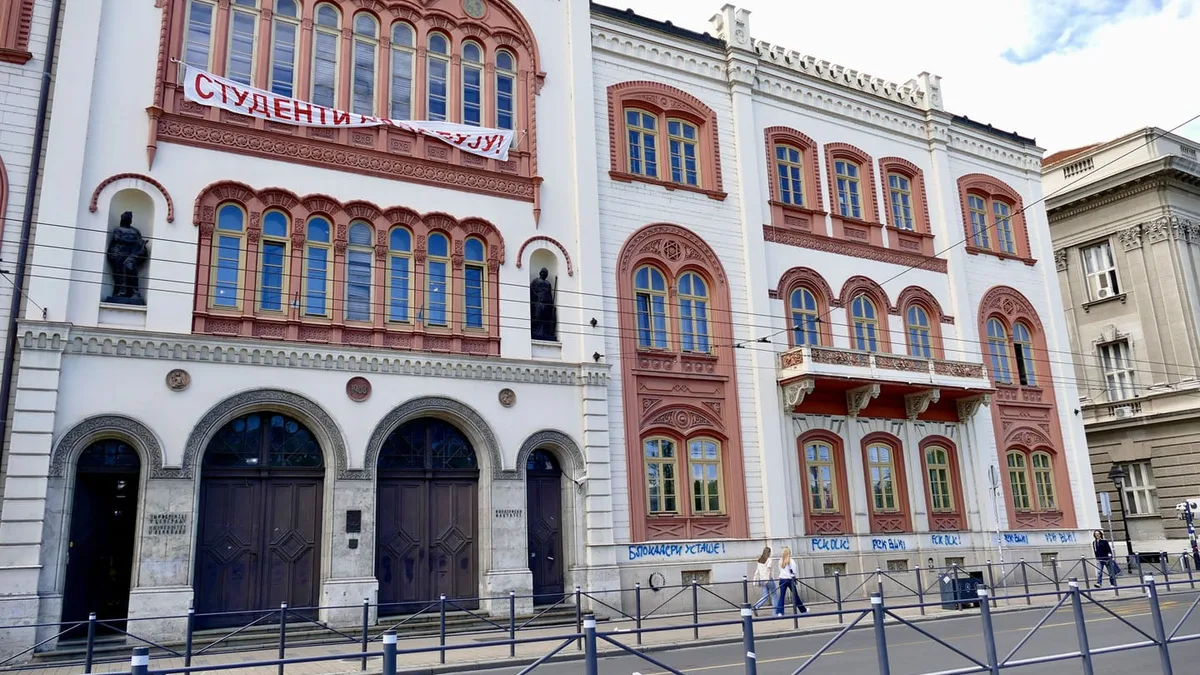
The Serbian government adopted two decrees on July 30 that repeal the 2025 changes to the rules on academic workload at universities. Those changes were the legal basis on which the Ministry of Education paid university teachers only a fraction of their salary for months in which no classes were held. A measure that sat at the centre of the standoff between the authorities and the academic community for a year and a half has now been withdrawn.
On paper these are two acts: a decree ending the validity of the amendment to the decree on criteria for setting tuition costs at state-founded higher schools, and a decree ending the validity of the amendment to the decree on norms and standards of working conditions at budget-funded universities and faculties. The titles are cumbersome. The effect is not.
What changes for faculty staff
Universities and faculties return to a weekly split of 20 hours for research or artistic work and 20 hours for teaching. Academies and vocational higher schools go back to 10 hours for professional or artistic work and 30 hours for teaching.
The March 2025 amendment had pushed that balance hard in one direction. Teaching was set at 35 hours a week, research or artistic work at five. Under accreditation standards the two had been treated as equal until then, 50 percent each.
How five hours became 12.5 percent of a salary
The arithmetic that followed was simple. Research counted for 12.5 percent of the job, teaching for 87.5 percent. In months when no classes were held, because faculty buildings were under student blockade, teachers received 12.5 percent of their pay. Non-teaching staff were left out of the cut.
The decree was issued while the government of Milos Vucevic was serving in a caretaker capacity, and roughly 470 professors challenged it before the Constitutional Court. Their argument was that classes had not stopped by their choice, but because the buildings were blocked, so the missing teaching could not be treated as work left undone.
The ministry now explains why the decree existed in the first place.
The 2025 amendments were adopted as a temporary measure to make up for teaching missed during the 2024/2025 and 2025/2026 school years.
The statement adds that the conditions behind that arrangement have ended, which is why the government restored the earlier distribution of working hours.
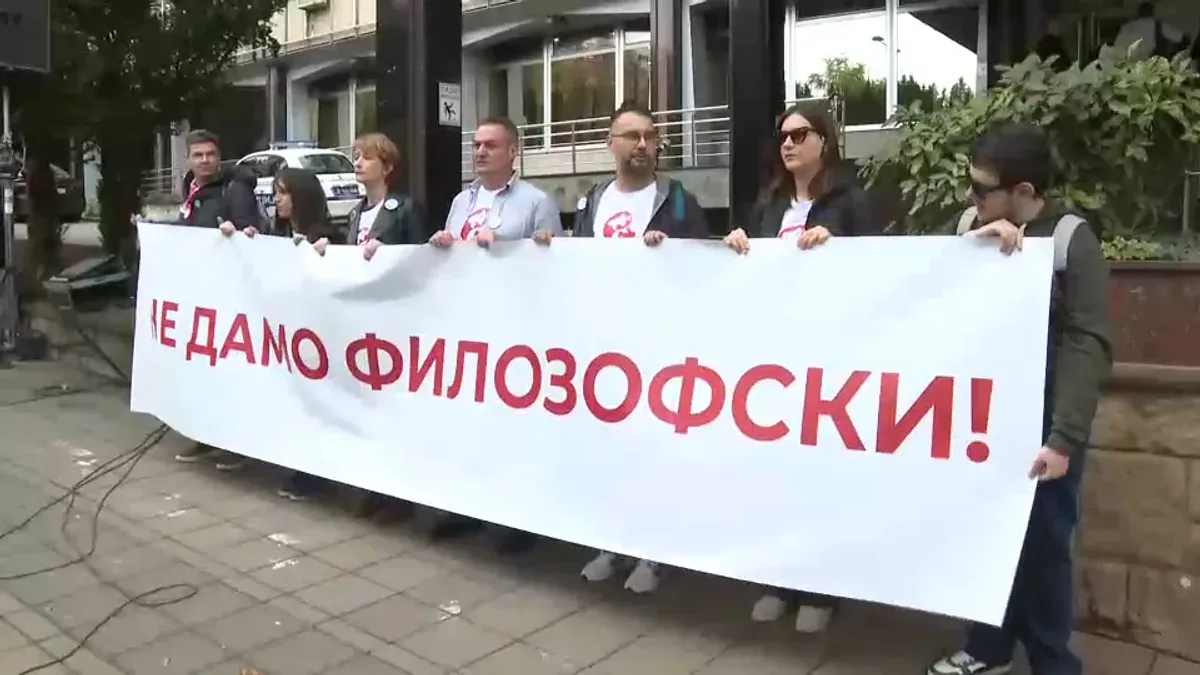
Who pushed for the repeal
The demand to strike down the amendments came from several directions:
- committees of the Serbian Academy of Sciences and Arts, SANU
- the Free University group
- the MASA academic network
- students holding the blockades
The Ministry of Education published its statement at 4.37 p.m. on July 30. It says nothing about the pay withheld in the months when the reduced rate was already applied, and nothing about what happens to the Constitutional Court case now that the contested act is gone. The first real test of the restored norm will be the August payroll.