Kosovo Assembly Remains Deadlocked, PDK and AAK Refuse Talks
Kosovo's Assembly still has no speaker two months after the election. Two opposition parties rejected the consultations called by Aljbuljena Hadziju, and her right to call them is disputed.

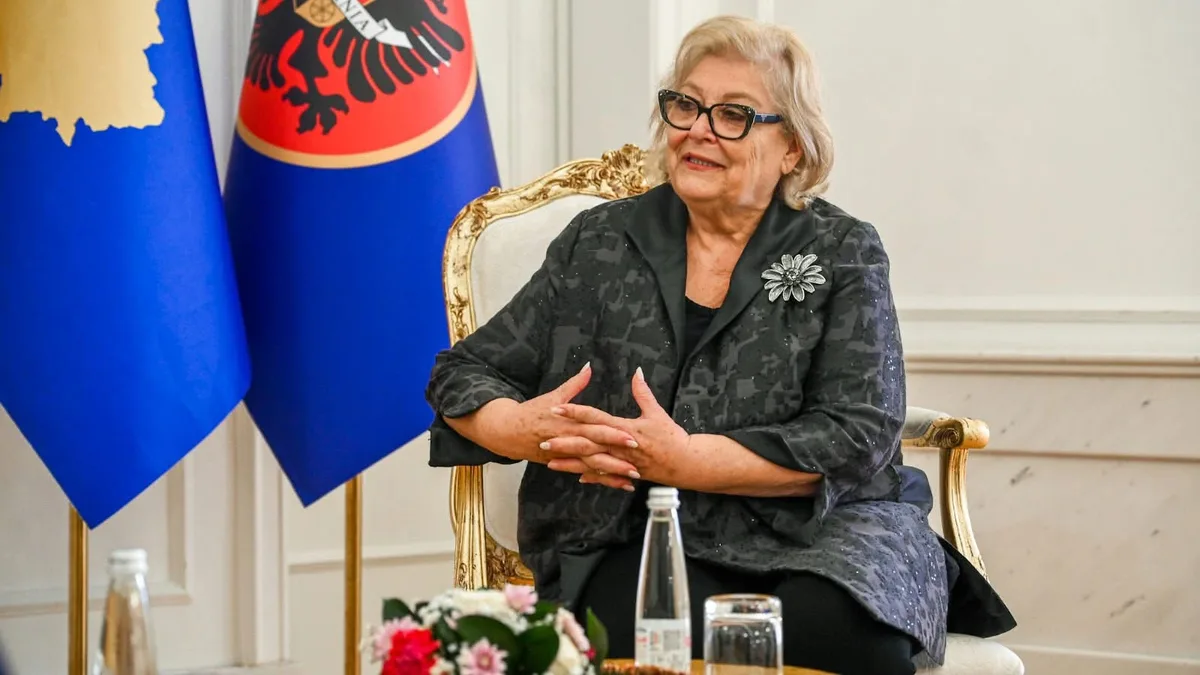
More than two months after the election, Kosovo’s Assembly still has no elected speaker, and acting president Aljbuljena Hadziju’s attempt to bring the leaders of parliamentary parties to the same table collapsed before the meeting even began. The Democratic Party of Kosovo (PDK) and the Alliance for the Future of Kosovo (AAK) rejected the invitation to consultations scheduled for Tuesday at nine in the morning.
Lawmakers elected on June 7 confirmed their mandates and took the oath, but no speaker was chosen, so the constitutive session is formally still recorded as suspended. It is chaired by Avni Dehari of Self-Determination, as the oldest lawmaker, and he refuses to schedule its continuation until the parties reach a political agreement on the country’s future president.
Hadziju called the rejection a mistaken and reckless move, and a sign that there is no will to bridge the differences.
“That helps no one, least of all our Republic. Elections should be the last option, if not no option at all.”
She noted that three consecutive election processes have produced roughly the same balance of political power: the regular election in February 2025, the snap vote on December 28 of that same year, and now this June’s. That is why, she said, talks should start from the question of the head of state, not from whatever is easier to resolve.
Why the opposition won’t sit down
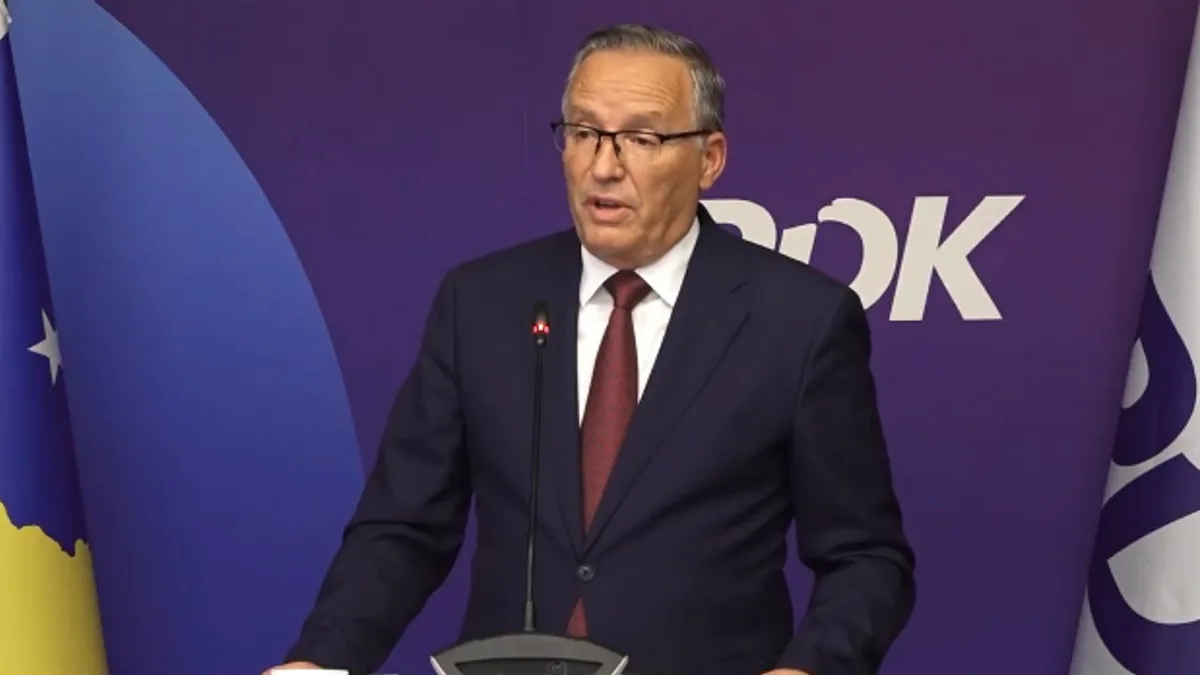
PDK lawmaker Uran Ismailji said his party would not send representatives, arguing that the invitation is an attempt to manipulate deadlines. In his view, Hadziju should have approached Dehari and requested the session’s continuation, not the parties.
AAK leader Ardijan Djini responded publicly, and more sharply, claiming that neither she nor acting prime minister Aljbin Kurti are looking for a solution, only for someone to blame.
“You are not the elected president of Kosovo, and you have no mandate to play the role of uniting the political spectrum. You and Kurti are too obvious, because you are not seeking a meeting to find a solution. You are seeking a meeting to find someone to blame for a decision you have already made, to take the country to elections. This time, even into institutional chaos.”
The Democratic League of Kosovo (LDK) is taking a different path. The party has held several meetings with Self-Determination on forming a government, and its leader Ljumir Abdidziku announced that LDK is dropping its demand that the presidency go to its own party and is ready to negotiate a consensus candidate. Even so, the narrowing gap over a non-partisan candidate has not opened the doors of the assembly hall.
The constitutional knot: what has to come first
Self-Determination, together with its allies and representatives of non-majority communities, except the Serb List, has enough votes to elect a speaker and constitute the Assembly. Kurti, however, has not proposed a candidate. He argues that constituting the Assembly without a prior agreement would trigger a 60-day deadline to elect the president, and that if no one is elected within that period, new parliamentary elections would follow.
Dehari made the same argument in his own name.
“Constituting the Assembly and forming a government without a prior agreement on the president means snap elections, something we need to avoid.”
The opposition and part of the legal community reject that link. Their argument is that electing a speaker must not be made conditional on securing support for a presidential candidate, and that the constitutional clock has not even started running yet.
Hasani: she is not acting president and cannot call the parties
Former Constitutional Court of Kosovo president Enver Hasani has entered the dispute against both sides. He disputes Hadziju’s very status, arguing that she lost it the moment she took up her parliamentary mandate.
“Ms. Hadziju cannot speak on behalf of the head of state. The moment she took the oath as a lawmaker, she could no longer serve as acting president of the Republic.”
Hasani specified that even a legitimate acting president would have no right to call the parties for political consultations, except when setting the date of an election. He sees the same problem of a dual mandate, parliamentary and executive, in Kurti’s case as well.
Dehari fares no better in his view. Hasani called the acting speaker’s conduct entirely unconstitutional and arbitrary, saying it will be remembered as a black mark on the country’s political and constitutional history. He also opposes sending the deadlock back to the Constitutional Court, since, as he put it, rulings already exist that govern the formation of central institutions, so a new proceeding on the same questions would only add political pressure on the Court.
Pressure shifts to outside the government building
While Tuesday is awaited, PDK is taking the dispute to the street. The party’s lawmakers gathered outside the government building in Pristina both yesterday and today, after trying the previous day to enter the assembly hall and finding the doors locked. Lawmaker Vljora Citaku told Kurti to return to parliament.
“We are outside the government again today: Albin, come to the Assembly and open the way back to constitutional order. Do not hold the state, its institutions, and the interests of citizens hostage to your political calculations.”
AAK lawmaker Burim Ramadani extended the criticism to the state of local government. He said municipalities in Kosovo face unprecedented obstacles and are under unprecedented pressure from the central government, not only a financial one, accusing the executive of acting contrary to the Law on Local Self-Government. In a separate post he added that a government without a mandate is crippling municipalities, and that the deadlock, since there is nowhere to debate it, has become multi-layered.
The consultations remain scheduled for Tuesday at nine in the morning. Hadziju said she hopes attitudes will change by then, though without PDK and AAK at the table, the parties that would remain are largely those that do not disagree much on the key question in the first place.