Specialist Chambers Law: EU, UK, Germany Seek Consultations
The EU Office in Kosovo and the British and German embassies spoke out ahead of a possible Kosovo Assembly vote on amendments to the law governing the court in The Hague.
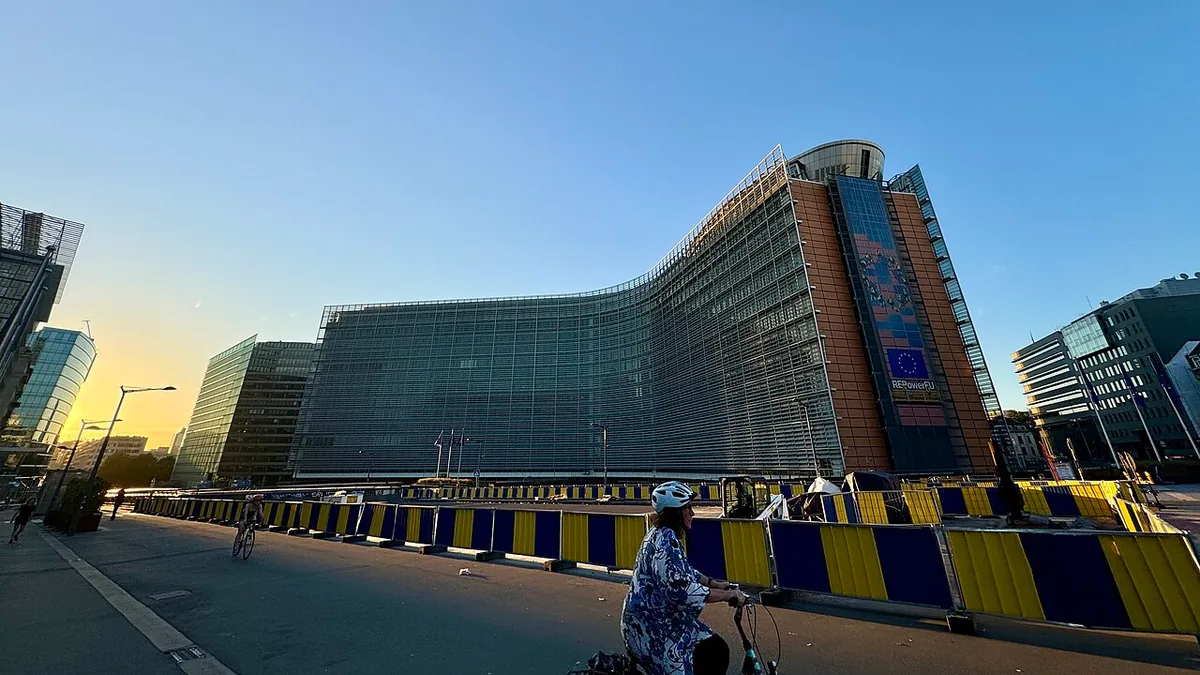
The European Union Office in Kosovo said on November 12 that it is watching with concern the possibility that the Kosovo Assembly will vote the next day, November 13, on a law amending the Law on the Specialist Chambers. The British and German embassies in Pristina spoke out the same day. Their tone differs, but all three ask for the same thing: consultations before lawmakers decide.
What does Brussels say?
The EU Office says the amendments raise questions about judicial independence, the protection of victims and witnesses, the continuity of procedural rights and effective accountability. Its statement reads:
“The amendments raise serious concern regarding Kosovo’s international obligations and respect for the basic principles of the rule of law, in particular the independence of the judiciary, the protection of victims and witnesses, the continuity of procedural rights and effective accountability.”
The office adds that the concern also extends to the constitutionality of the amendments themselves. Since the law was returned to the Assembly for reconsideration, EU representatives have, according to the statement, been conveying their concerns and expectations to the Kosovo authorities. The EU Office in Kosovo said: “This includes the need for prior consultations before any eventual adoption of the law, in line with Kosovo’s international obligations.”
The British and German embassies
The British Embassy in Kosovo went beyond general concern and spoke about the consequences for Kosovo itself:
“We fear that the proposed amendments will not in any way serve Kosovo’s essential interests and that they will damage its relations with international partners and supporters.”
The embassy says it is aware of the strong reactions provoked by recent verdicts. Still, it says, Kosovo should keep honoring its international obligations and the principles of accountability, justice and the rule of law. “We believe that Kosovo’s goals can best be achieved if Kosovo continues to honor its international obligations and its commitment to accountability, justice and the rule of law,” the British Embassy said. The United Kingdom is asking the Assembly to set aside additional time for consultations within the institutions, with the European Union and with other international allies, so that a better solution can be found.
The German Embassy in Pristina shared the EU Office statement on social media with a short message: “We fully agree with this EU statement.”
What do the amendments change in the work of the court in The Hague?
The Kosovo Assembly adopted the amendments on October 6 in the second reading, on a proposal from the Democratic Party of Kosovo. According to the description carried by the portal European Western Balkans, they provide for:
- jurisdiction of the chambers for the period from July 1, 1999 to December 31, 2000
- a maximum sentence of 15 years in prison
- transfer of cases that are no longer within the chambers’ jurisdiction to Kosovo institutions
- appeals on jurisdictional questions going to the Supreme Court of Kosovo
- serving sentences in Kosovo and, in some cases, presidential pardon
Brussels has been dealing with the issue since early October. The European External Action Service assessed at the time that the adopted law runs counter to Kosovo’s international obligations toward the EU, that the mandate and independence of the chambers must be fully respected, and that the protection and safety of witnesses must be ensured.
How does this connect to the September verdict?
The British Embassy mentions recent verdicts in its statement. The latest was handed down on September 16, 2026, when the Specialist Chambers in The Hague sentenced Hashim Thaci and Jakup Krasniqi to 25 years in prison each, Kadri Veseli to 18 years and Rexhep Selimi to 13 years, for war crimes. According to the verdict, in the period from April 1998 to June 20, 1999 the accused were responsible for the arbitrary arrest and detention of 385 people, the torture of 303 and the murder of 96. The victims included Albanians, Serbs and Roma. All four were acquitted on all six counts of crimes against humanity.
The statements we had before us contain no response from the Assembly or the government of Kosovo. Both the EU Office and the embassies speak of a possible vote, not a confirmed outcome, so it cannot be concluded from them whether the law will actually be put to a vote tomorrow.