Pristina: DPK Back in Chamber, Students Join Opposition
Lawmakers from Kosovo's Democratic Party returned to the assembly hall in Pristina at 11 a.m. today to demand the constitutive session resume, as a student group joined the opposition outside.

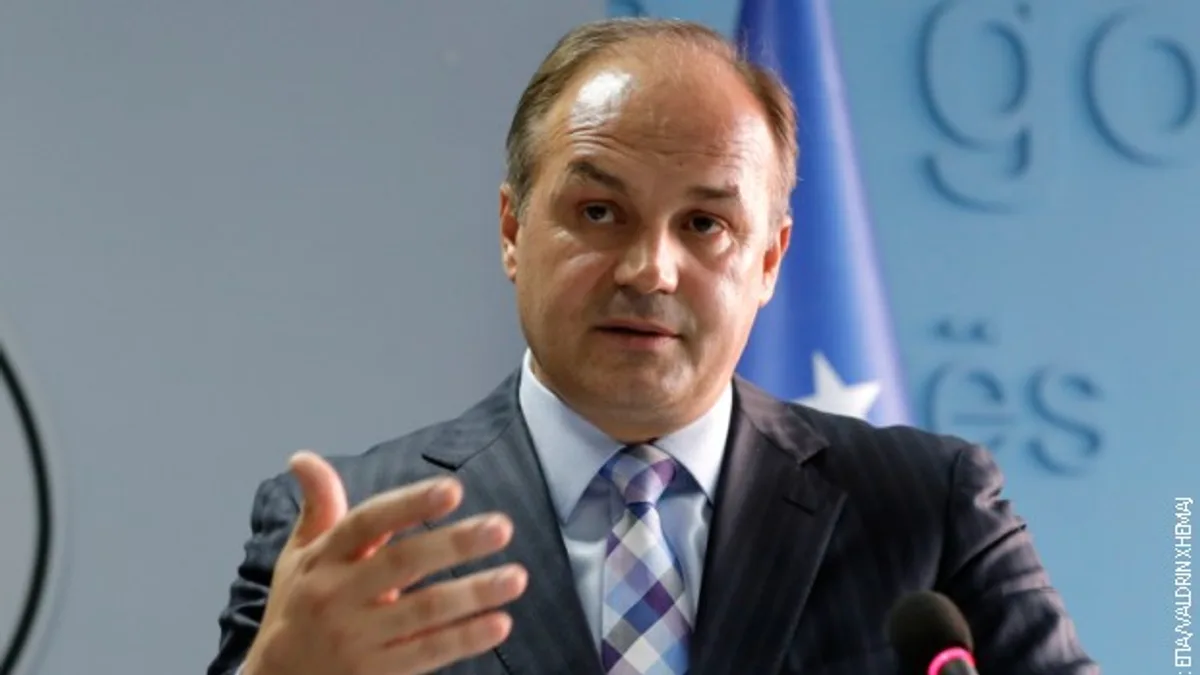
Lawmakers from the Democratic Party of Kosovo (DPK) walked back into the assembly hall in Pristina at 11 a.m. today, formally demanding that Avni Dehari, who is chairing the constitutive session, call for it to resume. Their letter to him asks that he do so in line with the Constitution, the Constitutional Court’s rulings, and the Assembly’s own rules of procedure. The same morning, outside the Government building, DPK and Alliance for the Future of Kosovo lawmakers were joined for the first time by student organizations from the University of Pristina.
The Kosovo Assembly has had neither a speaker nor its five deputy speakers for eighteen days, ever since the constitutional deadline set by the Constitutional Court for forming the chamber expired. According to the news outlet KoSSev, that deadline lapsed at midnight on August 7. The last time lawmakers actually gathered in session was the following day, August 8, and Dehari has not called the hall back into order since.
Prparim Gruda, a DPK lawmaker, used this morning’s protest to spell out what he says the institutional blockade is costing young people. “300,000 people have left Kosovo in five years. That is not migration, that is not people moving around, that is a mass exodus of people from Kosovo,” Gruda said, adding that beyond how the country is being governed, the constitutional order itself has now collapsed.
Student representative Granit Spahiu warned that the institutional crisis is not only political, that it is sending a deeply damaging message to an entire generation, and said students will not stay passive forever in the face of blocked institutions.
“We don’t want privileges. We want a university that moves us forward, we want opportunities for young people, and we want institutions that work. And I want to say one more thing: never underestimate a student. Because many times in this country’s history, when others waited, students always came out,” Spahiu said, adding that any further protests would always be for Kosovo, not against it.
Alliance lawmaker Albana Bitici said her party’s lawmakers will not back down until the institutions are formed. “What matters is that as lawmakers we took an oath to protect the Constitution, and we will always stand in its defense. That is why we will not stop until the institutions are formed, until the Government is formed, and until we resume work without blockades,” Bitici said.
Why the Session Is Waiting on a Political Deal
At the center of the dispute is a question of sequence. Acting Prime Minister Albin Kurti is making his willingness to put forward a candidate for Assembly speaker conditional on the largest Albanian parties first agreeing on who the next president of Kosovo will be. His calculation is that if the Assembly is constituted without that agreement in place, the sixty day constitutional clock for electing a head of state would immediately start running, and if that deadline is missed, Kosovo would head back to the polls for the fourth time in under two years.
The DPK and the Alliance reject that sequence and want the opposite order: finish the constitutive session first, then negotiate over the president. Former Constitutional Court president Enver Hasani said making the Assembly’s formation conditional on a prior deal over the presidency is “entirely unconstitutional and arbitrary.”
The day before today’s protest, on August 23, Alliance lawmakers poured coal in front of the Government building’s entrance. “Under Kurti and the Self-Determination Movement, Kosovo has spent the last six or seven years in an energy blackout that kept the country in that state, and now it’s moving into a political blackout,” Alliance lawmaker Burim Ramadani said at the time, explaining that the coal was meant to symbolize how Kosovo still sits on coal reserves even as its power supply falls short.
What Happened on August 8
The last attempt to constitute the session, on August 8, broke down after Alliance lawmaker Time Kadrijaj threw eggs toward Kurti, who was once again asking for more time to negotiate. Dehari called in security and shut the session down. Since then, opposition lawmakers have faced a locked plenary hall door for the first time since Kosovo’s parliament was established in 1999.
The results of the snap election held on June 7 show a balance of power that explains why the standoff is proving so hard to break: the Self-Determination Movement won 53 seats, the DPK 22, the Democratic League of Kosovo (LDK) 18, and the Alliance for the Future of Kosovo seven. The Serbian List holds nine seats.
Who Is Talking to Kurti, and Who Isn’t
Unlike the DPK and the Alliance, which are refusing to meet with the acting prime minister, the LDK has entered into talks. Party leader Lumir Abdidziku met with Kurti for nearly three hours to discuss what kind of candidate should be put forward for president, without a name being announced. The move has split the LDK itself. Lawmaker Hikmete Bajrami publicly asked whether Kurti is even trying to avoid new elections: “If you don’t constitute the Assembly, the country goes to elections again. So what are you trying to avoid?” Her party colleague Arben Gasi summed up the outcome of the talks more bluntly: “The mountain labored and brought forth a mouse.”
According to Kosovo media, Kurti offered DPK leader Bedri Hamza the post of Assembly speaker in a letter, in exchange for votes to elect the president of Kosovo. Hamza turned the offer down, calling it an unconstitutional takeover of institutions and warning that responsibility for new elections, or for deepening the crisis, rests with Kurti. The Alliance, for its part, has made its support for any presidential candidate conditional on a U.S. gas project, the construction of a new power plant, and tax reforms.
On August 18, the opposition also turned down an invitation from acting president Albulena Hadziu to a meeting of political leaders. Under the Constitution, if a president is not elected within the constitutional deadline, new parliamentary elections must be called, the fourth such vote in under two years since Kosovo’s parliament was last regularly constituted.
For now, there is no sign that Dehari is ready to call a new session without the prior agreement Kurti is demanding, while the DPK continues to present its return to the hall as insistence on resuming a constitutional process that was interrupted, not started over. What remains unresolved is when, or whether, the two constitutional clocks, the one for the Assembly and the one for the presidency, will stop being held hostage to each other.