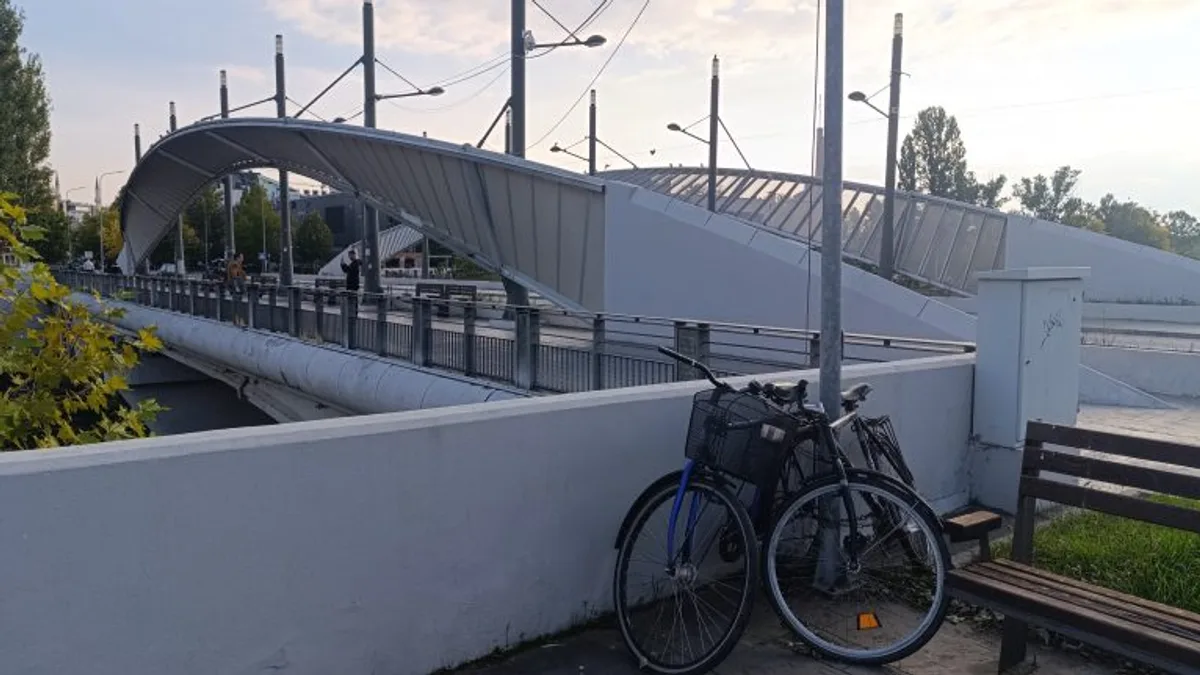
KFOR Reinforces Mitrovica, Leaves Ibar Bridge to EU
KFOR says it is reinforcing its presence in north Kosovo, denies handing its security mandate to Kosovo Police, and Admiral George Wikoff says the Ibar bridge opening is up to the EU and Pristina.

NATO’s Kosovo Force command has announced it will reinforce its presence in parts of Kosovo and Metohija, including North Mitrovica and the wider north of the province, and that the ongoing troop redeployment does not amount to handing the security mandate over to the Kosovo Police. The mission’s commander, Major General Ozkan Ulutas, said KFOR’s commitment to the safety of all communities in Kosovo remains unwavering. Admiral George Wikoff, commander of NATO’s Allied Joint Force Command in Naples, said publicly and clearly for the first time that KFOR has no mandate to decide on reopening the main bridge over the Ibar River to traffic, and that the decision rests with the European Union and Kosovo’s institutions.
The statement shifts the tone of the story so far. The news outlet Srpske vesti had reported that KFOR was scaling back its presence in the north, and that Serbian President Aleksandar Vucic had announced he would ask Europe and Washington to prevent the bridge from opening. Now, for the first time, the NATO mission is publicly saying the opposite: that its presence in certain areas is increasing, and, also for the first time, it is explicitly separating its own security assessment from the political question of the bridge.
In the statement, Ulutas said “KFOR’s presence will be increased in certain areas, including but not limited to North Mitrovica.” He added that “KFOR’s commitment to the safety of all people living in Kosovo and Metohija is unwavering,” and that the mission’s day-to-day activities will take into account the needs and concerns of all communities.
The redeployment process was announced on June 12 of this year and, according to KFOR, is being carried out transparently, consistently, deliberately and gradually, in coordination with Kosovo’s institutions, the European Union, the Kosovo Police and the European Union Rule of Law Mission (EULEX). KFOR notes that the process is not irreversible and can be reversed if developments threaten Kosovo’s long-term security or regional stability.
Who decides the fate of the Ibar bridge?
The part of the statement that had been most anticipated concerns the main bridge over the Ibar. The static position held by Italian carabinieri was removed from the northern side of the bridge on August 10, as part of the same schedule optimization. Wikoff said decisions on KFOR’s presence at the bridge are based on an assessment of the security situation:
“KFOR has no mandate to decide whether the bridge should be open or not. That is for the EU and the relevant institutions in Kosovo to decide, once KFOR ends its permanent presence at the bridge. KFOR personnel will remain present in the surrounding areas,” Wikoff said.
KFOR at the same time denied that the troop redeployment means transferring responsibility to the Kosovo Police. “The current optimization process does not represent a transfer of KFOR’s mandate or responsibilities to the Kosovo Police,” the statement reads. The mission notes that the Kosovo Police has already been the first to respond on the ground on matters of public order, and that this is not a consequence of a change in KFOR’s deployment. The mission’s own mandate, it adds, still rests on United Nations Security Council Resolution 1244 from 1999.
The question of opening the bridge turned into a dispute in mid August, when the European Union said that, following works and further assessments, the conditions for opening it had been met. Kosovo President Vjosa Osmani called it a historic step, while the Serbian List demanded that the EU publish the security analysis behind that conclusion, warning of consequences for the Serb community in the north. Vucic then wrote to NATO Secretary General Mark Rutte, asking the Alliance not to allow the bridge to open.
Along with the statement on troop deployment, KFOR also announced the appointment of a new mission commander. Italian Major General Roberto Vergori will take up the post. The mission did not specify how much longer KFOR’s permanent presence at the bridge will last, and for now the bridge remains closed to traffic.