

Mitrovica Ibar Bridge: KFOR Says Opening Is Not Its Call
The mission says it has no authority to decide on letting motor vehicles cross, and adds that the reduced presence at the bridge can be reversed if security worsens.
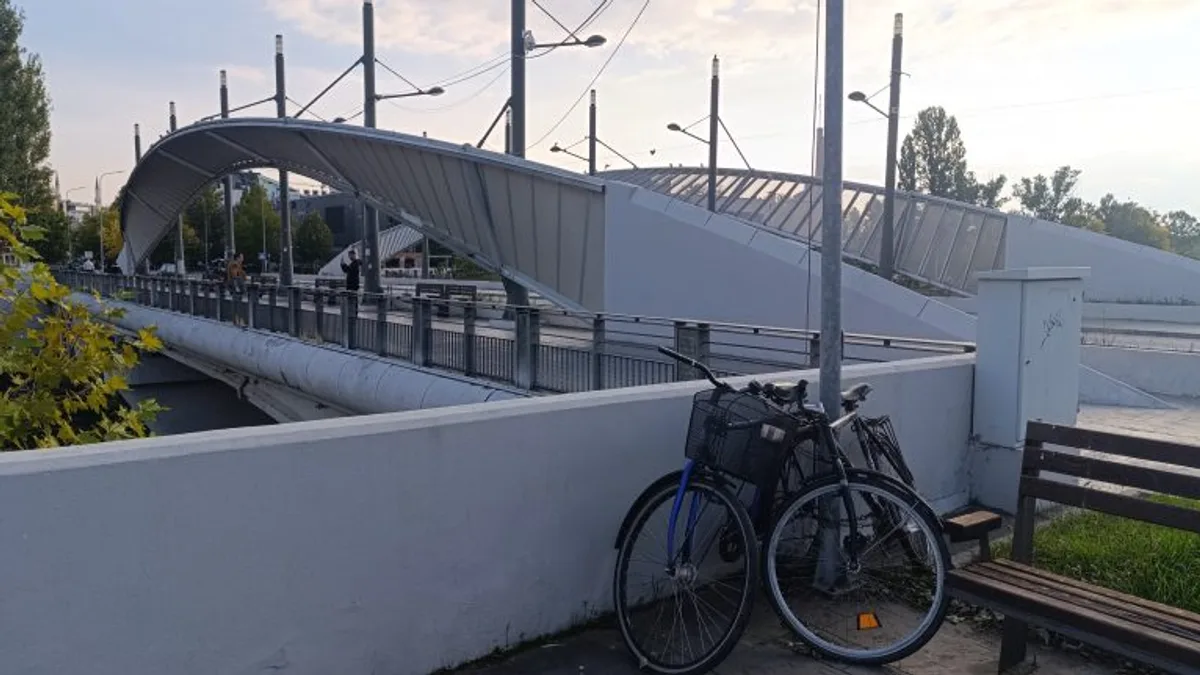
A KFOR spokesperson said on Tuesday, speaking to the Pristina portal Gazeta Ekspres, that the Atlantic alliance’s military forces in Kosovo have no authority whatsoever to decide on letting motor vehicles cross the main bridge over the Ibar in Kosovska Mitrovica. The statement was relayed by Kosovo Online, Danas and Tanjug.
The question of traffic on the bridge has been open since KFOR announced on August 10 that it would gradually withdraw its permanent presence from the site. The statement of November 3 tries to separate two things that are constantly mixed up in public: the fate of the military checkpoint and the fate of the road itself.
What did KFOR say about the bridge?
The spokesperson boiled his answer down to a few sentences:
“KFOR has no authority to decide whether the Ibar bridge should be opened to motor vehicle traffic. Any eventual opening is a separate matter that falls within the competence of the relevant institutions in Kosovo and the EU, and is not the result of any change in KFOR’s position.”
In other words, if the bridge opens, it will not be because the mission changed its stance, and if it stays closed, that will not be the mission’s decision. The spokesperson also said that the gradual move away from a permanent presence on the bridge fits into a wider optimization of the military structure in Kosovo, which the mission justifies by a better security situation.
He attached a condition as well. According to him, the process “depends on appropriate conditions and can be reversed should developments arise that could affect long-term security in Kosovo and regional stability,” and it is subject to regular assessments on the ground.
What presence remains in Mitrovica?
The mission is not leaving the city. According to the answer relayed by Danas, KFOR keeps an adaptable presence on the northern side of the bridge, as well as a dynamic presence in North and South Mitrovica and across northern Kosovo. The spokesperson explained it this way:
“This flexible approach, which includes both a visible and a mobile presence, will allow us to remain in the best position to contribute to local security, for the benefit of all communities. Our personnel remain ready to respond to any relevant security incident, in close coordination with the Kosovo Police and EULEX, within their respective roles as security actors, and in line with KFOR’s long-standing mandate entrusted by the United Nations.”
The withdrawal from the bridge is part of a process KFOR announced on June 12, when it spoke about optimizing the deployment of its forces. In a statement of August 25 it said its presence in some areas, including North Mitrovica and other municipalities in the north, would be increased.
What did the NATO commander and the European Union say earlier?
The position is not new. Admiral George Wykoff, commander of NATO’s Joint Force Command in Naples, told the Pristina outlet Koha at the end of August:
“Decisions regarding KFOR’s presence at the bridge in Mitrovica are based on our assessment of the security situation. KFOR has no mandate to decide whether the bridge should be opened or not. That is for the EU and the relevant Kosovo institutions to determine, after KFOR ends its permanent presence at the bridge.”
The statement was relayed by Beta.
In August, also speaking to Gazeta Ekspres through an unnamed spokesperson, the European Union confirmed that the conditions for opening had been met. It recalled that last year’s report said the bridge should be opened after consultations with security partners, and judged that this condition had been fulfilled by the KFOR announcement:
“The EU position on the bridge has always been clear: once the works on the Austerlitz bridge in Mitrovica are completed, and following additional assessments and consultations, the bridge should be opened. We can confirm, as already stated in last year’s annual report, that this is indeed the case.”
Brussels added that EULEX, the European Union rule of law mission, had been duly informed about the gradual transition.
So the circle is closed: KFOR points to Brussels and Pristina, Brussels says the conditions are met, and the final decision on traffic over the bridge has no signatory. None of the sources gives a deadline.


