

Crowds on Belgrade Overpasses Greet Mladic Convoy
People began gathering hours before the plane landed, at the roundabout by Belgrade Arena and on overpasses along the motorway, with banners, flares and flags.

While the plane carrying the remains of Ratko Mladic was still in the air, people were already lining the railings at several points in Belgrade. The gatherings started hours before the landing, first at the roundabout by Belgrade Arena, then on the overpasses along the motorway the convoy from the airport was due to take toward the Military Medical Academy. The plane landed at about 5.50 p.m., and the convoy passed that way in the early evening.
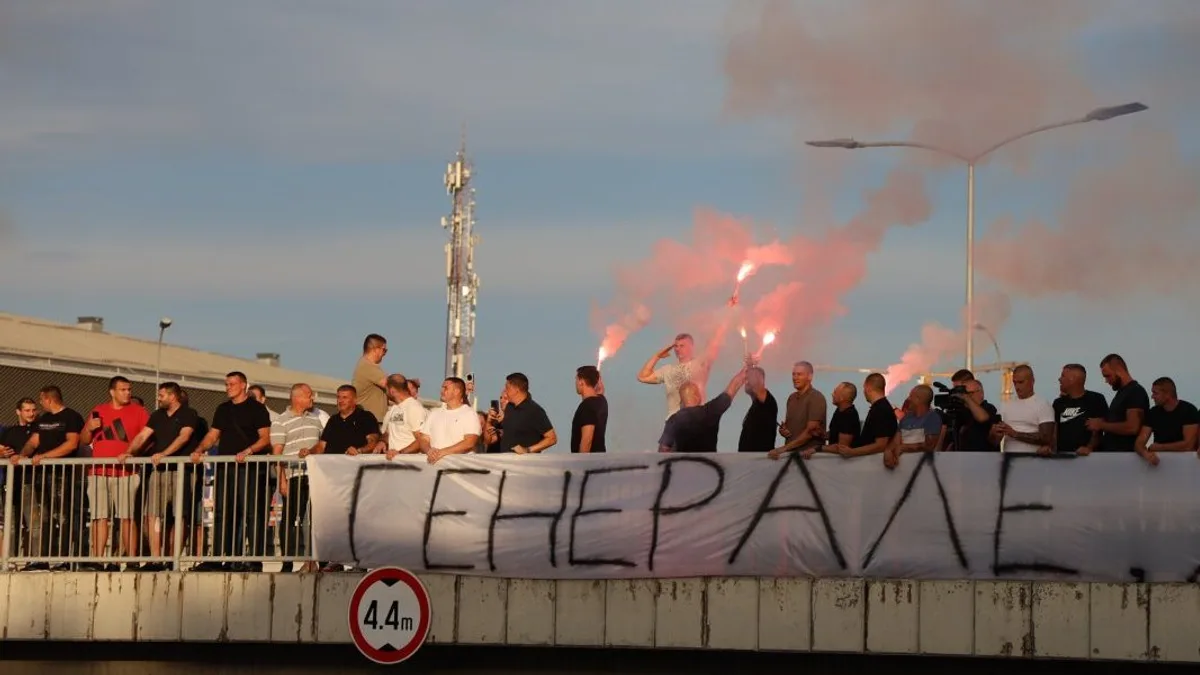
At the roundabout by the Arena, dozens waited with a banner reading „Generale, hvala“, meaning “Thank you, General”. Two police vehicles were parked on the airport side of the road, and officers on motorcycles were on the spot.
What the banners said
The messages were painted in Cyrillic on white sheets stretched across the overpass railings. On one of them, by Belgrade Arena, the banner read „Генерале, хвала“, with a Serbian flag at half-mast above it.
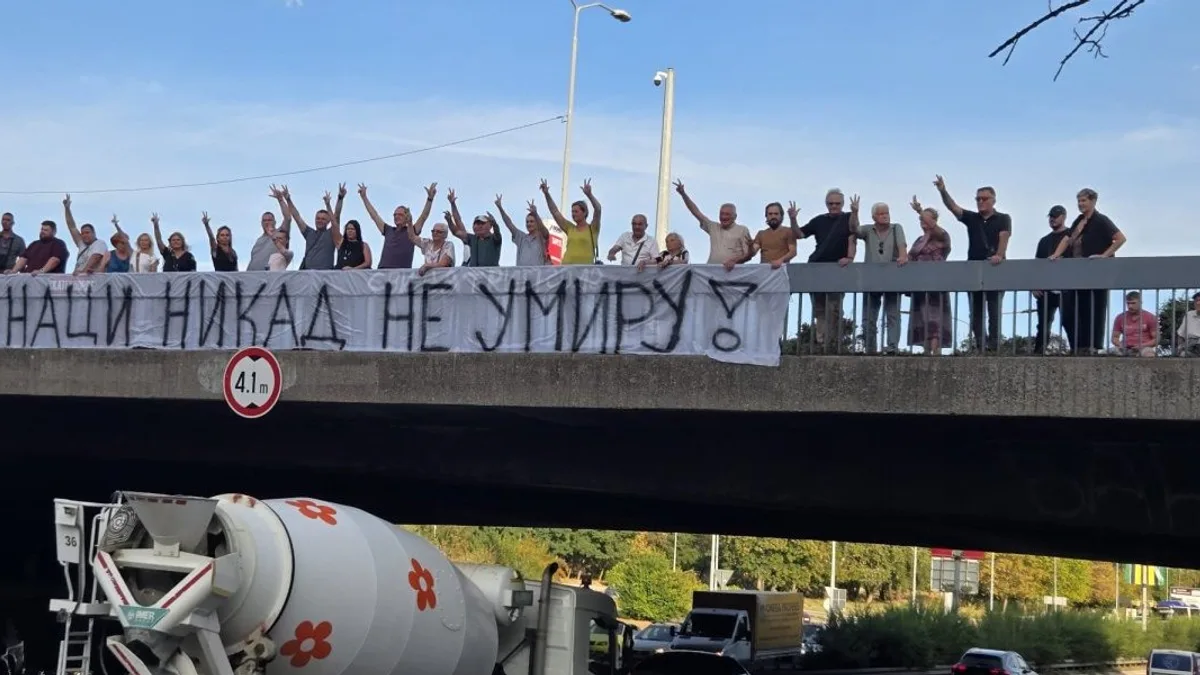
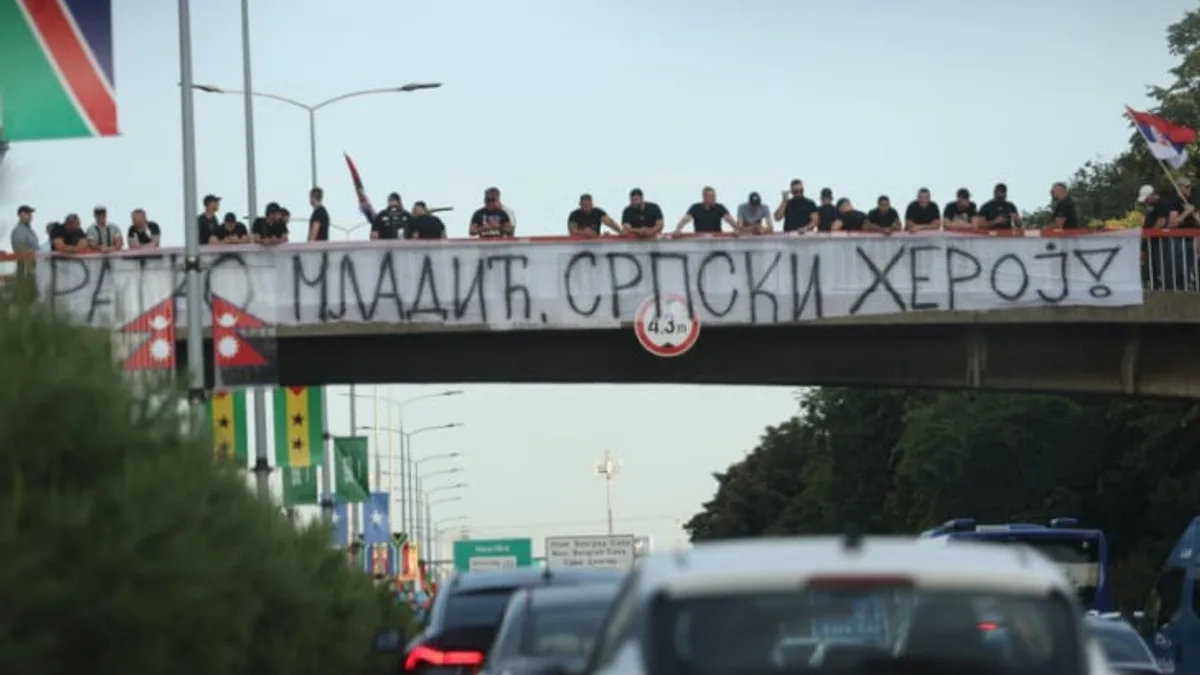
At another spot a banner read „Ратко Младић, српски херој“, meaning “Ratko Mladic, Serbian hero”, strung above a boulevard lined with the flags of foreign states. On a third overpass, people raised three fingers above a banner reading „Јунаци никад не умиру“, meaning “Heroes never die”.
Belgrade media also recorded banners thanking the general’s mother and welcoming him home, in the dialect form of address his supporters use. Flares were lit at several points and Serbian flags hung from the railings.
Gendarmerie saluted the convoy
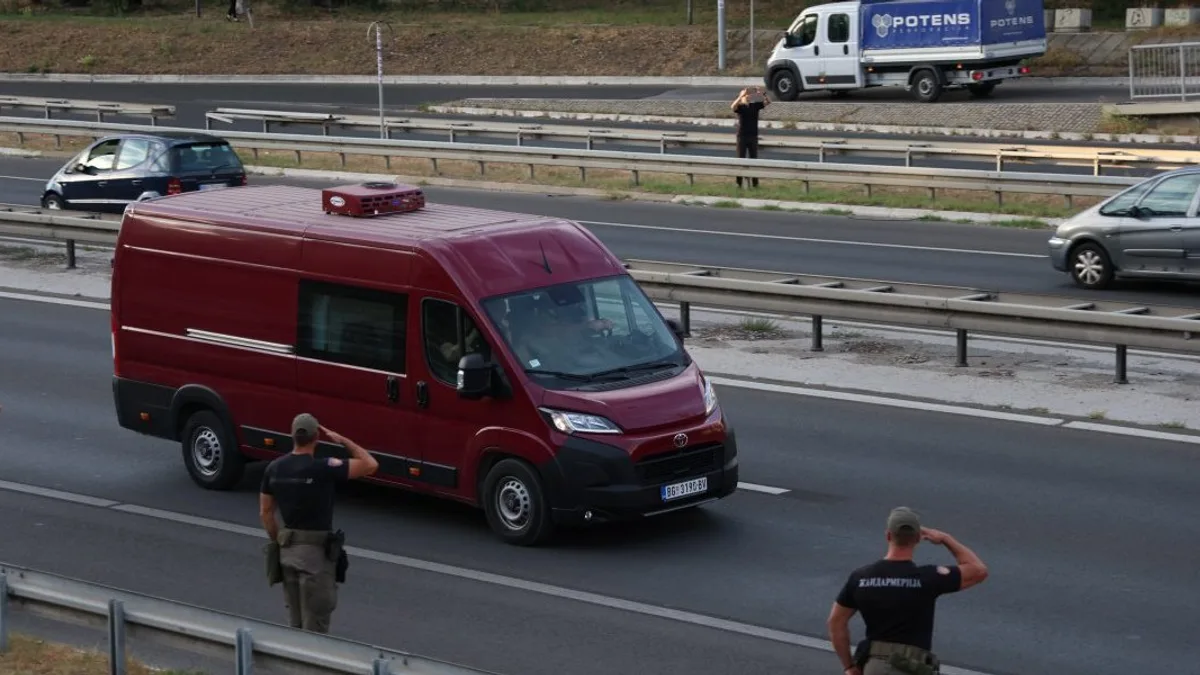
As the vehicle carrying the coffin drove down the motorway, members of the Gendarmerie lined up along the road and saluted. The coffin had been carried off the plane on the apron by a detail of the Serbian Army, draped in the flags of Serbia and Republika Srpska, with Justice Minister Nenad Vujic present.
The convoy ended at the Military Medical Academy, where an autopsy will be carried out at the family’s request and on the basis of a letter from the Justice Ministry.
Who is coming to the funeral
The Belgrade gatherings are not the first this week. In Banja Luka, on September 1, Krajina Square was packed for a memorial service and march for Ratko Mladic.
Arrivals from Republika Srpska have been organized for the day of the funeral itself. The Veterans’ Organization of Republika Srpska said it would arrange transport for all interested veterans in cooperation with the authorities of Republika Srpska and Serbia. Registration went through municipal and city veterans’ organizations, and the veterans’ organization of the Istocno Novo Sarajevo municipality asked demobilized veterans for their ID details to compile a final list, with a deadline of noon on September 2. No final number of registrations has been published.
How many people will be in Belgrade is, for now, a matter of the security services’ estimates. The Security Information Agency, the Military Security Agency and the Interior Ministry (MUP) expect tens of thousands at the funeral. President Aleksandar Vucic said the services face a difficult and complicated situation and that the state will provide logistical and transport support and help preserve public order.
What comes next
Under the schedule published by Belgrade media, the commemoration is on Saturday, September 5, at 12 p.m. at the House of the Army, the body will lie in state on Monday, September 7, from 9 a.m. to 12.30 p.m. at the Church of Saint Luke in Vidikovac, the funeral service is at 12.35 p.m., and the burial at Topcider Cemetery. No official family statement confirming that schedule had been published at the time of writing.
Mladic died on August 27 in The Hague, aged 84. He was sentenced in 2017 to life imprisonment for genocide in Srebrenica, crimes against humanity and violations of the laws and customs of war, and the Mechanism’s Appeals Chamber upheld the verdict in 2021. The gatherings and the announced funeral with state and military honors drew condemnation from Sarajevo, Zagreb and Novi Pazar as well as a reaction from Brussels, while messages of support for the family came from Republika Srpska and part of the political scene in Serbia.


