Rasuo: MUP revises May ID card count to 6,211,000
A voter roll commission member says police now report 6,211,000 valid ID cards for May 18, not 5,990,000. The gap to September would shrink to about 14,000, not 235,000.
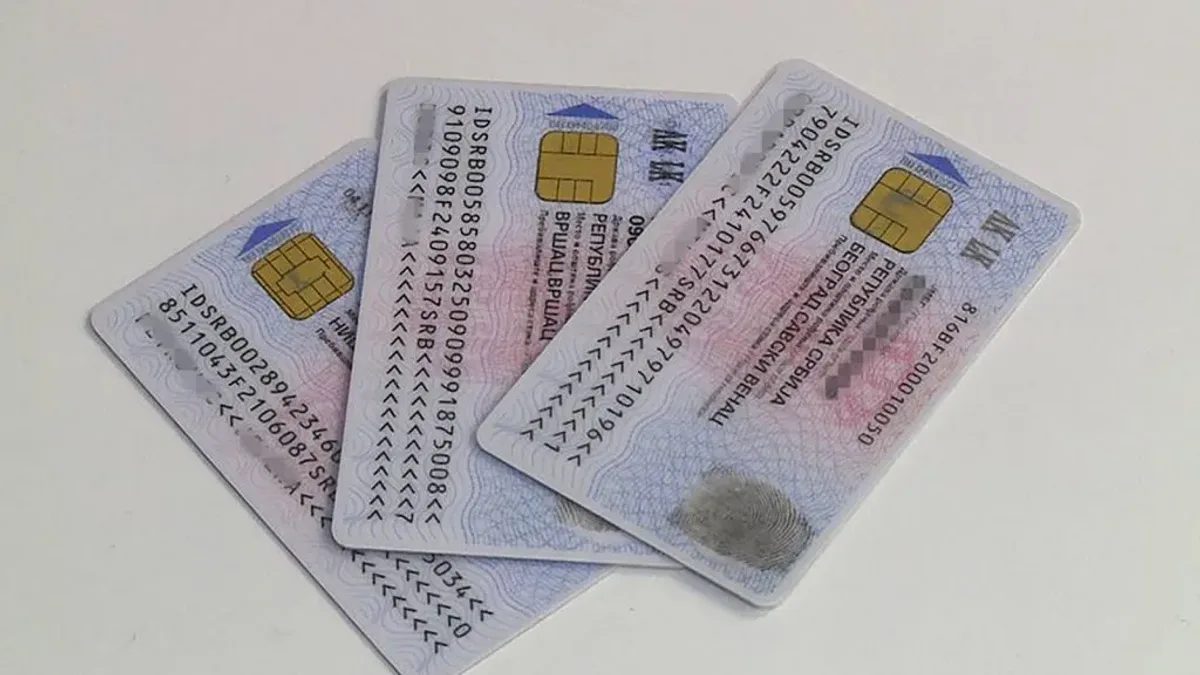
Police now say Serbia had 6,211,000 valid ID cards on May 18, not the 5,990,000 they earlier gave the Commission for the Revision, Verification and Control of the Accuracy and Updating of the Voter Roll. Commission member Ognjen Rasuo told the FoNet agency on Sunday, October 18, that he was given an explanation: the May figure was wrong because of a technical error.
Rasuo is relaying the correction as a claim by the police, not as a document. The Interior Ministry (MUP) has not published a response to his statements, and there is no official confirmation of the new May figure.
“The police claim that the correct figure for May is 6,211,000 and that they sent us the wrong figure of 5,990,000,” Rasuo told FoNet.
What did the MUP letters show until now?
According to data MUP sent to Rasuo, Serbia had 5,990,000 valid ID cards on May 18 and 6,225,000 on September 28. When the Commission compared the two numbers, it found growth of more than 235,000 cards in under five months.
More precise figures for both dates appear in MUP letters that N1 published on October 14. In a letter dated June 4, signed by Dragana Trajkovic, a police colonel and head of the Administrative Affairs Directorate, MUP says there were 5,988,749 valid ID cards held by adults and 111,229 held by minors on May 18. A letter dated October 10, answering Rasuo’s request of September 28, lists 6,225,029 cards for adults and 119,048 for minors. The published reporting does not name the signatory of the second letter.
That means the rounded figures of 5,990,000 and 6,225,000 refer to adults. Counting minors, there were 6,099,978 cards in May and 6,344,077 in September, an increase of 244,099. On October 14, Rasuo posted on the social network X that the jump was 236,000 for adults and more than 244,000 including minors. The Commission puts the overall figure at about 235,000.
What did Rasuo say before the correction?
On X on October 14, he wrote that he had twice asked the police for the number of valid ID cards. Rasuo also says he asked at a Commission session whether the figure was correct and requested a check that it was not a typo. When he spoke about it publicly on October 14, he described what he had asked them to check:
“Could someone in the police have mistakenly typed 6,225,000 instead of 6,025,000.”
The date of the session where he asked is not given; he said it publicly on October 14. At that point Rasuo also claimed he had checked everything three times, that he holds stamped papers, and that the three-month average of ID cards issued has not risen from July 2024 to today.
“There is no rational explanation whatsoever for such growth in the number of ID cards,” Rasuo said on October 14. In the same article N1 also identifies him as an official of the Green-Left Front (ZLF).
What does the correction mean for the 235,000 gap?
If the new May figure is correct, growth from May to September falls to about 14,000 cards. That is our own calculation, which the sources do not give, and it holds only if 6,211,000 refers to adults like 6,225,000 does, because MUP has not split the new May figure into adults and minors.
Rasuo is not reassured. He says he cannot be sure which figure is correct and asks how anyone can trust the police. He finds it especially problematic that the Commission worked for five months with a figure MUP now calls wrong.
“Either the police are so incompetent that they cannot pull the correct number out of a computer, or I don’t know what is going on. Either way, it is bad,” he said.
The Commission, Rasuo adds, will keep monitoring the data and scrutinizing this area, including possible irregularities involving ID cards.
What is the Green-Left Front demanding?
On October 14, when the jump was made public, ZLF said that the ID card is the document a voter uses to identify themselves at a polling station. According to the party, if a surplus of a quarter of a million valid ID cards appears within a few months and those “new” people are not visible in the voter roll, citizens have a right to know who they are and why the documents were issued to them. From the statement:
“Members of the voter roll revision Commission have been persistently asking for months for the ID card records and have never received them. What MUP did provide is only the figure for the increase in the total number of valid ID cards of 235,000. Since they claim there is nothing disputable about it, the problem is no longer the figure itself, but that the institution refuses to explain it,” ZLF said.
ZLF demands that MUP publicly and precisely explain the increase before October 25, and that MUP, the Ministry of Public Administration and Local Self-Government and all other competent bodies urgently let Commission members compare the voter roll database with the ID card database. The published reports do not say whether the party has responded to the latest correction of the May figure.
How many voters are on the roll ahead of the vote?
According to the Republic Electoral Commission, the total number of voters for the upcoming snap parliamentary elections on October 25 is 6,450,523, as of October 9, 2026. By census, Serbia has 6,647,003 residents, so the number of voters on the roll is nearly equal to the population. That is the backdrop against which the voter roll Commission compares what it receives from the police: six days remain until the vote, and the question of which May figure is correct is still without a public answer from MUP.