CRTA: 116 incidents and 7 of 18 lists under suspicion
CRTA's observer mission released a preliminary report on the campaign for the October 25 election: violence, doubts over candidate lists and unequal media access.
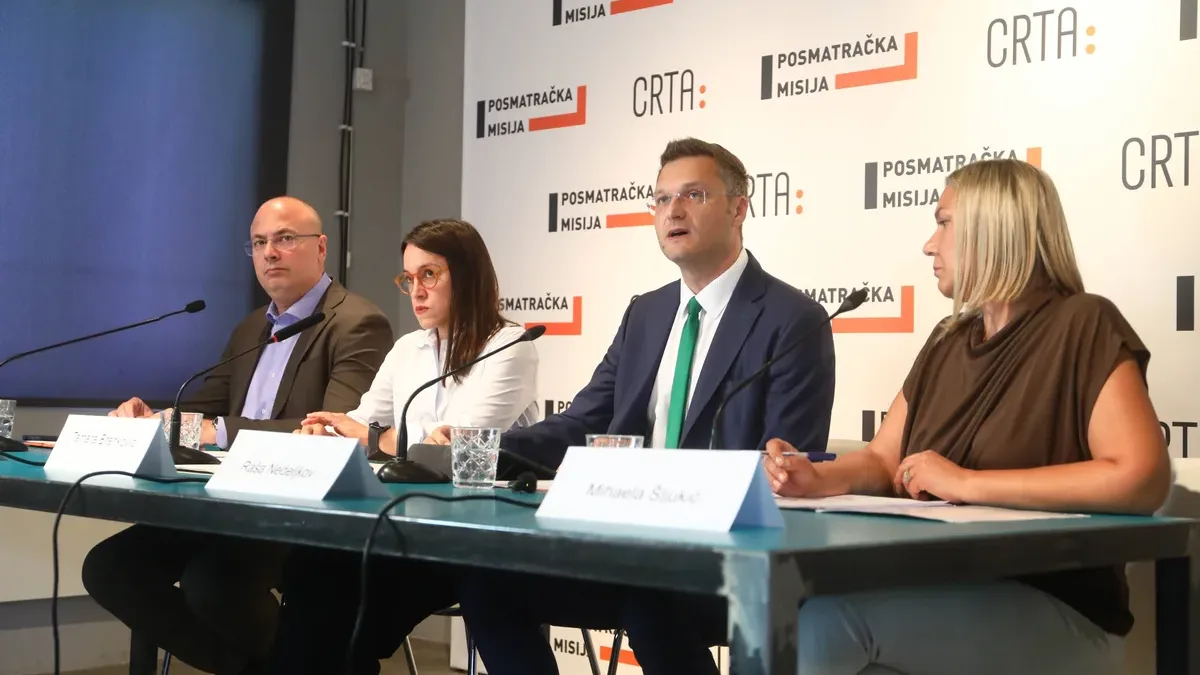
The CRTA observer mission presented its preliminary report on the election campaign on Wednesday, October 21, four days before the snap parliamentary election scheduled for October 25. Its conclusion, delivered at a press conference: “The election campaign is unfolding amid shrinking freedoms and deepening inequality.”
Mission head Rasa Nedeljkov said the quality of the campaign rates as worryingly low, shaped by election engineering, violations of freedoms and violence. Since the first report, he said, the situation has only continued to escalate, a result of irresponsible conduct by institutions.
What does the report say about violence and policing?
The mission states: “Up to the final week of the campaign, 116 incidents involving elements of physical violence and verbal threats were recorded.” That figure covers the period from the start of the campaign through its last week, not a single week.
CRTA says that at many field events the first concern was the safety of participants rather than presenting a list’s program. In some cases where opposition candidates and supporters were at risk, police reportedly acted late, while events of the ruling party were secured efficiently and preventively. Nedeljkov described inconsistent police conduct that favored the ruling party and its supporters.
According to the mission, opposition activists, above all those linked to the Student List, were subjected to surveillance, interceptions and detentions for informational interviews. CRTA is asking the Interior Ministry to explain publicly what grounds there were for such actions.
Why are seven of 18 lists under suspicion?
For at least seven of the 18 certified electoral lists, the mission says, there are well-founded suspicions that they are fake or satellite lists. CRTA claims this also shaped decisions made by the majority in the expanded Republic Electoral Commission (RIK).
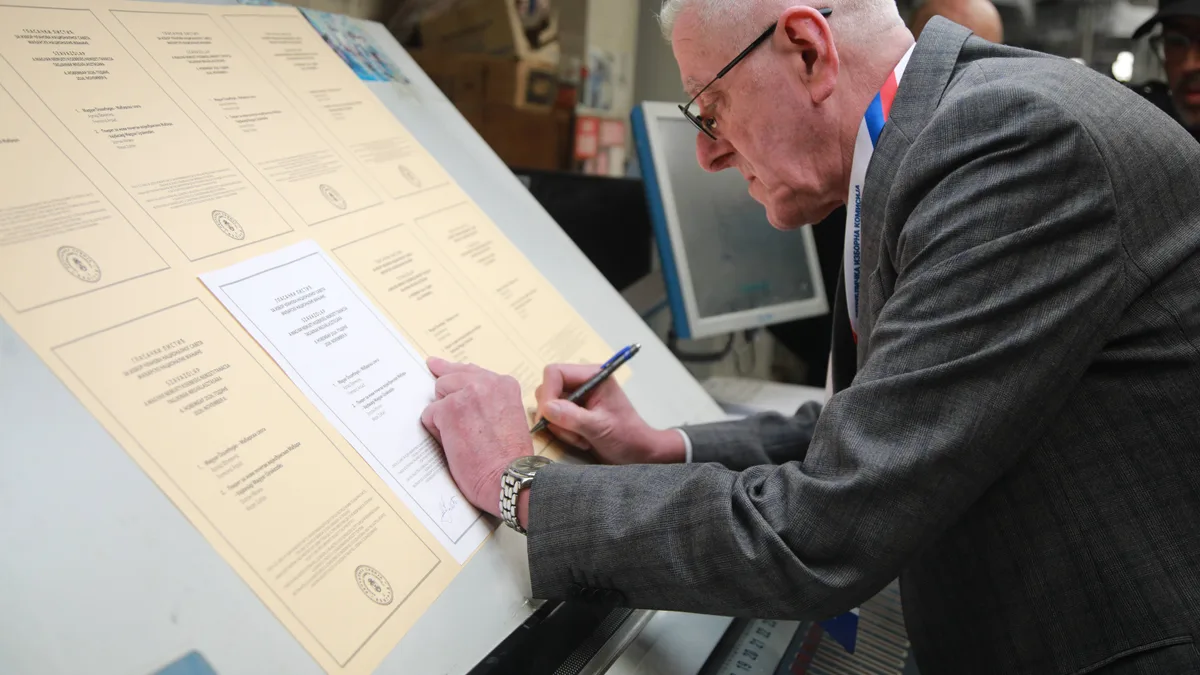
The mission also found that, on average, 98 percent of the statements of support for lists of doubtful authenticity were certified at municipal offices rather than by public notaries. Part of the signatures for the “Aleksandar Vucic - United Serbia” list is also disputed, over claims that they were certified in municipalities without the voters being present.
Because RIK failed to specify how voters can register to vote outside a polling station, the report says, room was left for potentially unlawful practices. One example is the City Election Commission in Zajecar, which allowed political parties to register voters for voting at home.
How many abuses of public resources were recorded?
Observers logged more than 1,500 activities by public officials, of which more than 650 involved elements of abuse of public office and public resources. A third of the activities of the “Aleksandar Vucic - United Serbia” list are linked to potential abuses. In more than 250 cases, most often in public enterprises, a job or a public service was used, according to the report, as a means of extorting citizens’ support.
How were airtime minutes divided on television?
On television stations with national coverage, nearly three quarters of the time devoted to political actors went to government representatives. Positive coverage of them exceeded half of the airtime, while the Student List, the most visible opposition actor, was portrayed negatively in more than 80 percent of the time in which it was discussed.
On Radio Television of Serbia, government representatives took 94 percent of extended prime time in regular programming, and the impression of balance, CRTA says, was created only in the election blocks. After Aleksandar Vucic resigned as president, his share fell from slightly more than half of television time to a third, a change the mission attributes to a shift in RTS programming. On the other stations he still took up nearly every second second of airtime and remained the most visible political actor, with more time than the entire opposition combined. The number of his live appearances rose from 27 in the first part of the campaign to 78 in the final stretch.
What about the voter register and the diaspora?
CRTA says the election will be held using a voter register whose accuracy is disputed, and that claims by the Serbian government’s Office for Information Technologies that the register is almost entirely accurate are untrue. The commission for auditing the voter register, according to the report, was not given access to all the necessary data, so questions about multiple entries and fictitious residences remain unanswered.
The mission also noticed that about 30,000 voters are not listed alphabetically in voter register extracts but at the end of the extract or elsewhere. It is asking RIK to instruct polling boards to search further for missing voters, and it is telling citizens to insist on an additional check of the extract in that situation.
Nedeljkov singled out the diaspora: in 19 cities where the conditions for opening a polling station were met, none was opened, so voters, he said, will have to travel a long way to exercise their constitutionally guaranteed right to vote.
We have not recorded reactions from RIK, the Interior Ministry or the ruling list to these findings as of publication.