CRTA: polling stations opened late at 16% of observed sites
CRTA observers log ballot photography at one in four monitored stations by noon. The Republic Electoral Commission says stations opened on time, with small delays at some.
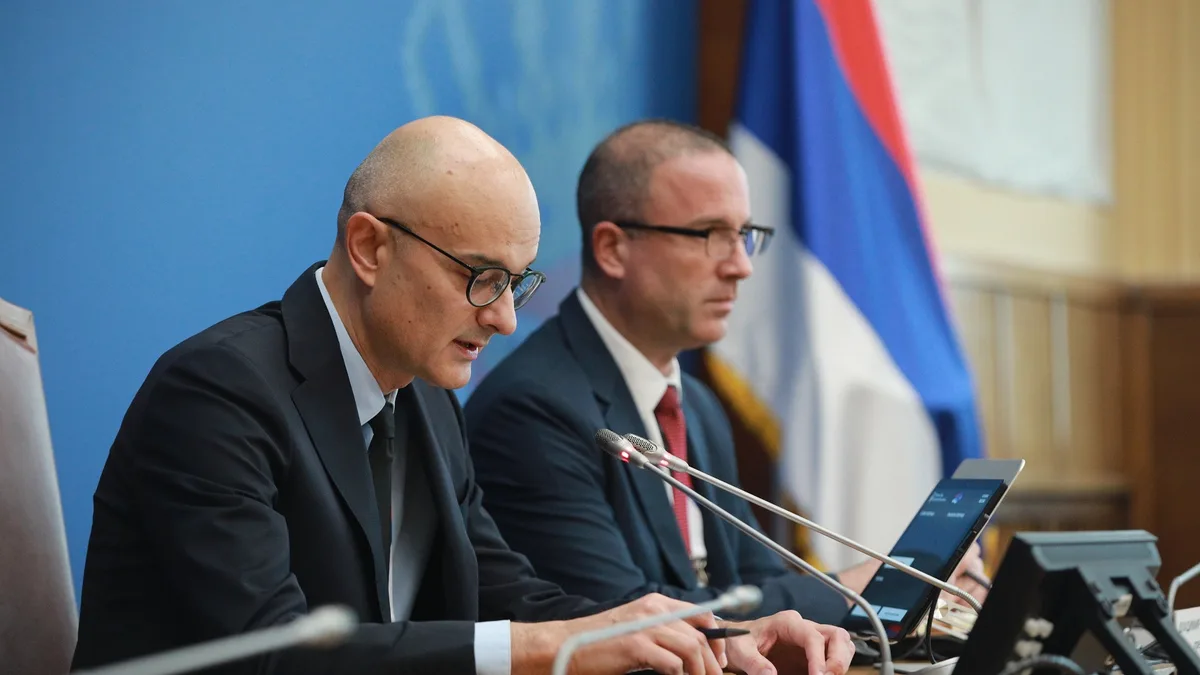
The CRTA observer mission presented its first findings from Sunday’s snap parliamentary elections, covering the period up to noon on October 25. Rasa Nedeljkov, the organization’s program director, told a press conference that polling stations opened late at 16 percent of the sites CRTA monitors, that ballot photography was recorded at one in four of them, and that CRTA’s legal team called police in Novi Sad over suspected vote buying.
The figures apply only to stations where CRTA has its own observers: more than 2,000 people are monitoring election day across a random sample of 500 polling stations. The percentages are therefore not data on all 8,392 polling stations in Serbia, and should not be read that way.
How many stations opened late?
Nedeljkov gave the reasons for the delays, along with a figure on improperly organized stations:
“We recorded late openings at 16 percent of polling stations, caused by technical problems, but also by disputes between polling board members over how the stations were set up, and at 4 percent of polling stations improper organization was reported during the morning.”
The daily Danas, relaying CRTA’s statement, reports that the delay exceeded 10 minutes. Vladimir Dimitrijevic, president of the Republic Electoral Commission (RIK), said at the commission’s first regular press conference that polling stations opened on time, with a small delay at some of them because of high voter interest and the preparation of polling board members. He asked voters and board members for understanding. The two assessments do not rule each other out: RIK speaks about individual stations across the country, while CRTA speaks about its own sample.
What does CRTA say about ballot secrecy?
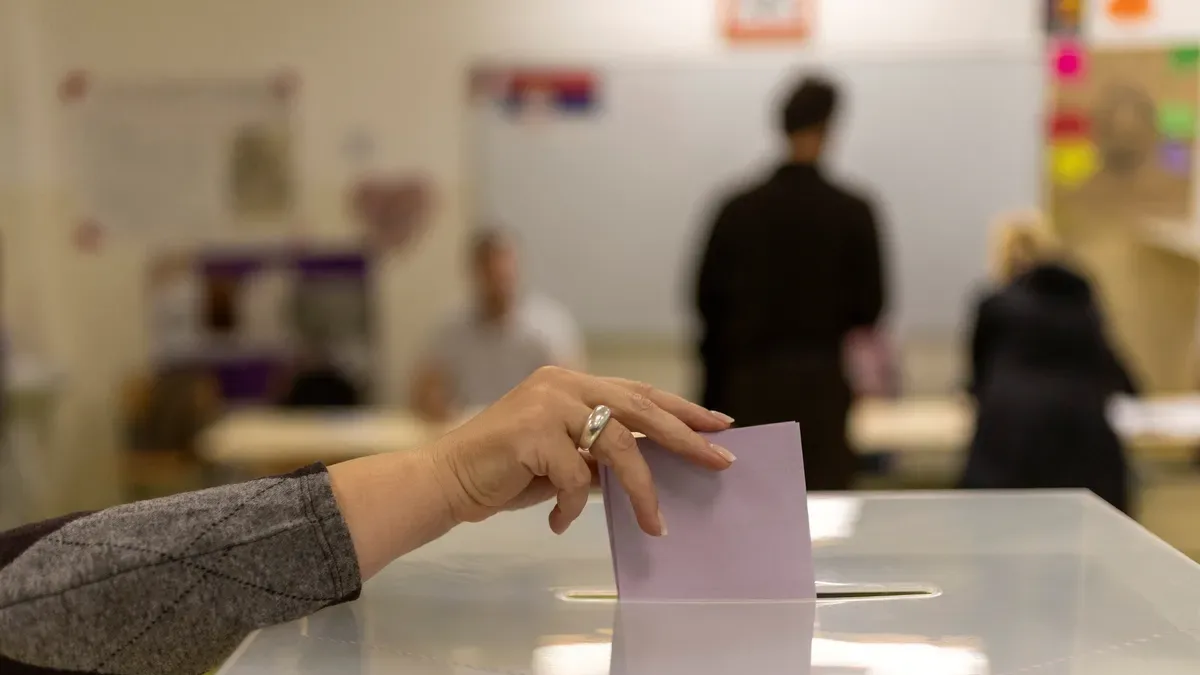
According to Nedeljkov, the most common irregularity is the violation of ballot secrecy, above all the photographing of ballots. He told the press conference:
“By 12:00 we recorded the photographing of ballots at every fourth polling station in Serbia, and the number of stations where this has been recorded keeps rising.”
In Belgrade, photography was recorded at every second polling station, and in Vojvodina at every third. Nedeljkov added that multiple irregularities were recorded at once at nine percent of stations, which “may point to an attempt at illegitimate control of voting: unauthorized presence of third parties, photographing of ballots and interference by observers from different observer missions.”
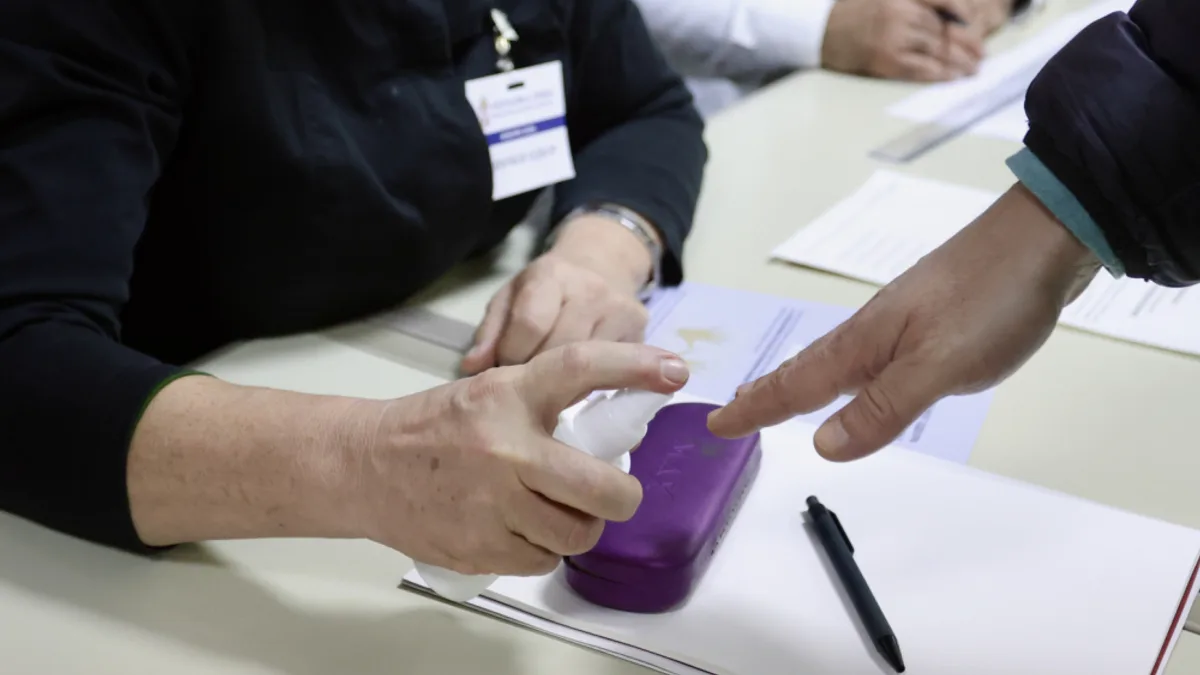
CRTA recorded procedural irregularities at 14 percent of stations. The spray and UV lamp are not used consistently at about 12 percent. Beta and N1 translate that into roughly 1,000 polling stations, while Insajder TV converts the 14 percent into more than 1,200 stations. Those are the outlets’ own extrapolations, since CRTA’s percentages come from a sample of 500 stations.
Nedeljkov also cited a case of ballot stuffing:
“At two stations in our sample we recorded one of the most serious violations of procedure, which is multiple ballots being dropped into the boxes, in Zablje and Sjenica.”
What happened in Novi Sad and with observers?
CRTA’s legal team called police in Novi Sad over suspected vote buying and so-called carousel voting. As described, a voter entered the polling station with a filled-in ballot and left with a blank one. Nedeljkov said, as relayed by N1, that there had been no feedback from police up to that point.
Local electoral commissions in Ub, Kovin, Negotin and Kikinda did not allow CRTA observers to follow the work of polling boards, and Insajder adds Pozarevac. Observation was permitted only after RIK intervened, and according to N1 the wait lasted up to three hours in some cases.
CRTA also says that the names of more than 30,000 voters are not in alphabetical order in the voter register extract, but at the end of the extract or elsewhere in it. Danas gives this figure as “about 30,000”, while N1 and Insajder say “over” and “more than 30,000”.
What did RIK announce about how voting is organized?
Polling stations are open from 7:00 a.m. to 8:00 p.m. There are 6,451,292 eligible voters and 8,392 polling stations, of which 29 are in penal institutions and 93 abroad, in 37 countries. For voters from Kosovo and Metohija, 60 polling stations have been designated in Vranje, Kursumlija, Raska and Tutin. The ballot carries 18 electoral lists, and at some stations it is available in up to 29 language versions, depending on the languages in official use in the municipality or city.
A total of 16,271 observer representatives have registered to monitor the elections, including 26 domestic associations and 57 foreign organizations, institutions, parliamentary delegations, electoral commissions and diplomatic missions. Local electoral commissions have 6,998 members in their regular and expanded composition.
CRTA estimates turnout by 10 a.m. at 19.8 percent, compared with 9.8 percent at the same point in 2023. The observer mission’s next press conferences are scheduled for 4:30 p.m. and 8:15 p.m.