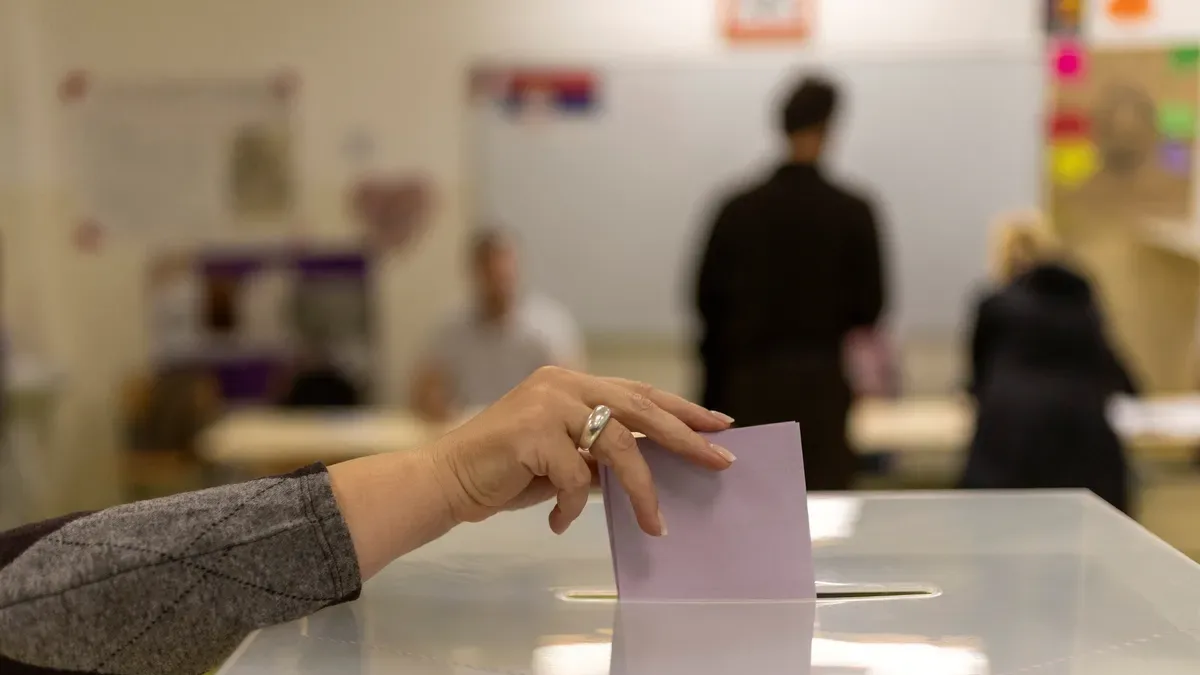
Serbia Election Turnout 2026: RIK Reports 64.89% by 6 PM
RIK reports 64.89 percent by 6 p.m., while CeSID and Ipsos and Crta estimate 67.6 and 67.8 percent for 7 p.m. A full-day figure has not yet appeared in the sources we read.
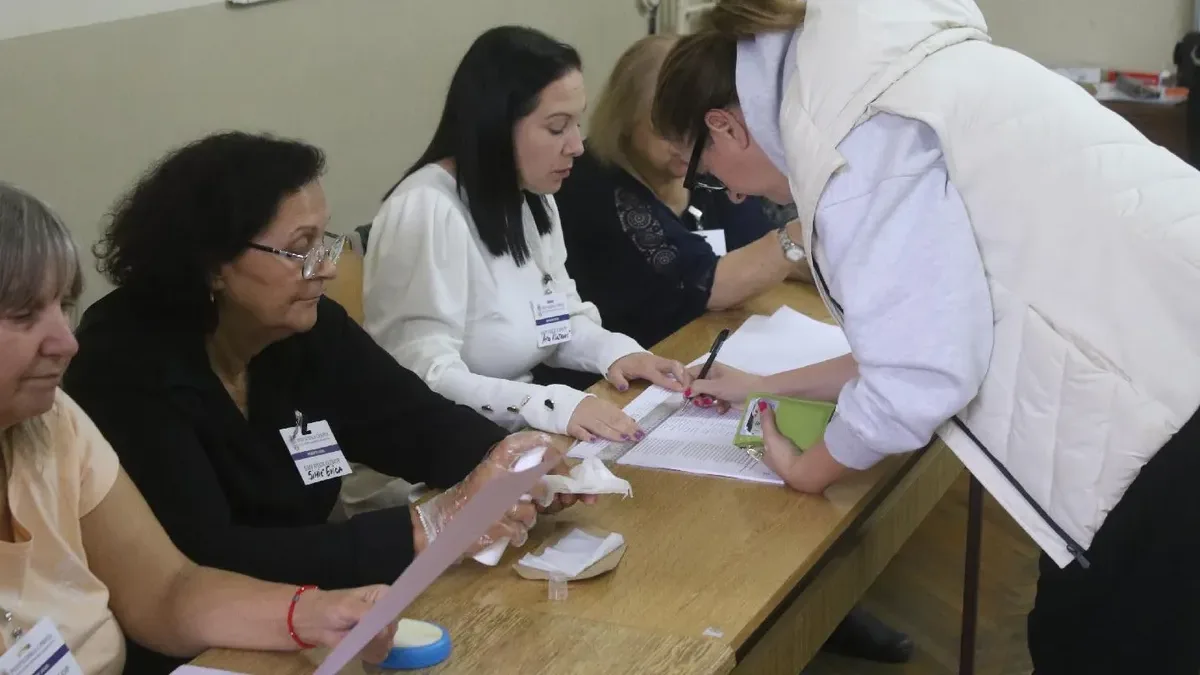
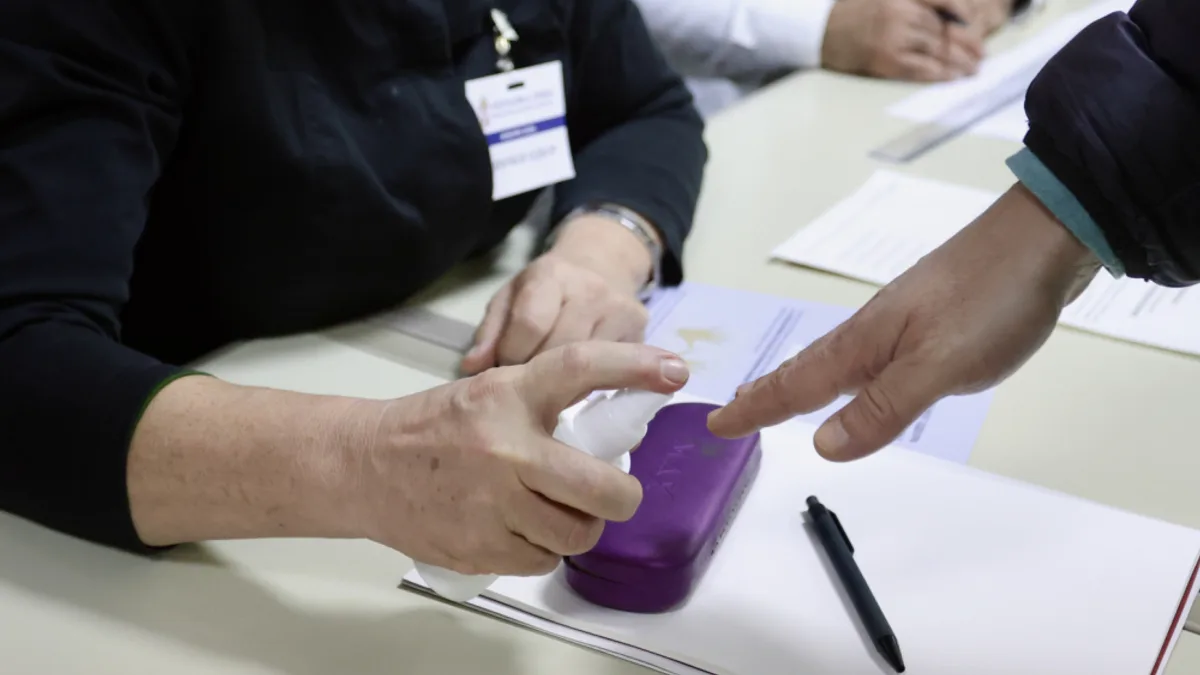
Serbia’s Republic Electoral Commission (RIK) said on Sunday evening that 64.89 percent of all registered voters had cast ballots in the snap parliamentary elections by 6 p.m. Polling stations closed at 8 p.m., and a turnout figure for the whole day has not yet appeared in the sources we read. For 7 p.m. there are only estimates: CeSID and Ipsos put it at 67.6 percent, and the organization Crta at 67.8 percent. We published the noon figure, 34.55 percent, earlier today.
The numbers below are turnout, not final election results, and each one carries the name of whoever announced it.
What did RIK officially announce by 6 p.m.?
Branko Josipovic, director of the Republic Statistical Office, presented regional figures for 6 p.m. at RIK: Vojvodina 66.90 percent, the Belgrade region 65.67, Sumadija and Western Serbia 64.53, and Southern and Eastern Serbia 62.01 percent. At the same hour in 2023, turnout was 51.93 percent, Josipovic added. For the morning check at 10 a.m., the same source gave 23.62 percent in Vojvodina, 20.46 in Belgrade, 17.4 in southeastern Serbia and 17.08 percent in Sumadija and Western Serbia.
RIK’s overall series through the day, as reported by N1 info and Danas, looks like this (the figure for the same hour in 2023 is in parentheses):
- by 10 a.m.: 19.72 percent (9.94)
- by noon: 34.55 percent (21.33)
- by 2 p.m.: 46.53 percent (32.38)
- by 4 p.m.: 56.38 percent (42.36)
- by 6 p.m.: 64.89 percent (51.93)
What do CeSID, Ipsos and Crta estimate for 7 p.m.?
CeSID and Ipsos track a sample of 750 polling stations. Their estimate for 7 p.m. is 67.6 percent. By 5 p.m. they estimated 60.9 percent, against 47.2 percent at the same time in 2023, according to CeSID, a gap of 13.7 points. By 2 p.m. the estimate was 46.4 percent (2023: 32.2), by 11 a.m. 27.2 percent (2023: 15.1), and by 9 a.m. 12 percent, against 5.2 percent three years ago. For the 11 a.m. figure, Danas reports 27.3 percent, based on 94.8 percent of the sample processed.
Crta has observers at 500 polling stations. Its estimate for 7 p.m. is 67.8 percent, with a margin of error of plus or minus 0.9, and in 2023, Crta says, the figure at that hour was 55.5 percent. The same organization earlier estimated 19.8 percent by 10 a.m. (2023: 9.8), 41.1 percent by 1 p.m. (2023: 26.6) and 56.4 percent by 4 p.m. For 4 p.m., RIK announced 56.38 percent, almost exactly matching Crta’s estimate.
With its 7 p.m. figure, Crta said:
“Turnout recorded by 7 p.m. is very close to the historic maximum: 67.8 percent. It is expected that turnout will rise by another 3 to 4 percent in the final hour of voting.”
Emilija Orestijevic of CeSID told RTS on October 22 that no sharp jumps were expected over the lunch hours, between 2 and 5 p.m., but that previous elections had shown growth in the last hour or two as well, so voting at some polling stations could run past 8 p.m.
What does RIK’s first results snapshot show?
In RIK’s first snapshot of preliminary results, based on 203 processed polling stations, turnout stands at 68.84 percent, Tanjug and Euronews reported. That figure covers only the stations processed so far and is not the final turnout for the whole of Serbia.
How does it compare with earlier elections?
Final turnout arrives only once repeat voting is finished, so full-day numbers differ from those of election night:
- December 17, 2023: final turnout 58.77 percent, according to RIK. The final report lists 6,500,666 registered voters, of whom 3,820,746 voted. Voting was repeated at 35 polling stations on December 30 and at eight on January 2.
- April 3, 2022: at 10 p.m. on election night, RIK announced on its website that turnout in the parliamentary and presidential elections was around 57 to 58 percent. According to RIK data from April 4, 6,268,496 voters were on the register and 3,675,064 voted.
- June 21, 2020: final turnout 48.93 percent, according to RIK’s final results published more than two weeks after the vote, with repeat voting at 234 polling stations.
BBC News in Serbian reports that the highest final turnout since Serbia became independent was in 2008, when 61.35 percent voted. Since the return of multiparty politics, the highest figures were recorded at the first elections in 1990, 71.5 percent, and in September 2000, 74.4 percent. Estimates for 7 p.m. are not final turnout and cannot be compared directly with these values.
What is the percentage calculated from?
On October 9, 2026, RIK determined that the voter register contains 6,451,292 voters. The BBC writes that some researchers point out that the register does not reflect the real number of people eligible to vote. Ivo Colovic, program director at CeSID, told BBC News in Serbian earlier:
“Public opinion researchers’ estimates are that you can hardly find more than 4.8 to 4.9 million voters in Serbia. If four million people turn out to vote, that is 82 to 83 percent of those present who can exercise the right to vote, which is an impressive number. Even in countries with compulsory voting, turnout is not this high.”
Ipsos, in a survey conducted from October 20 to 22, 2026, on a sample of 3,624 respondents, estimated expected turnout at 64.7 percent, in an interval of 62.9 to 66.5 percent of registered voters. The survey was commissioned by the list Aleksandar Vucic - United Serbia. The 7 p.m. estimates from CeSID, Ipsos and Crta are already above the upper bound of that interval, and voting continued until 8 p.m.