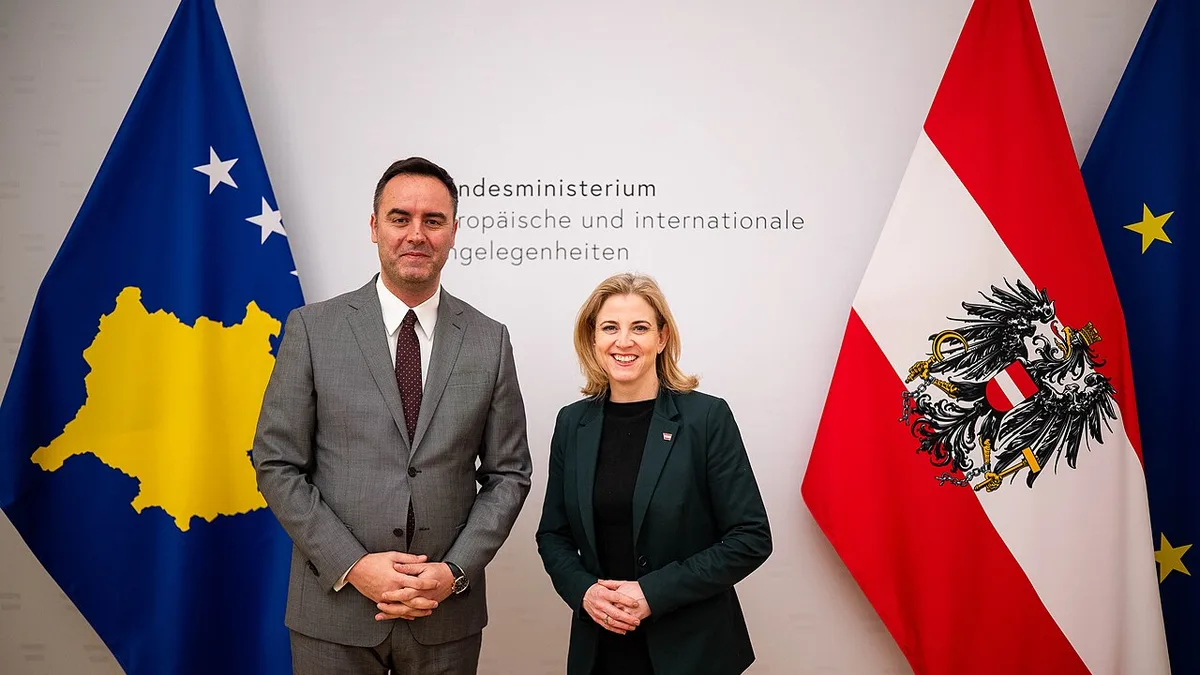
Kurti hopes for mutual recognition of Kosovo and Serbia
Kosovo's prime minister told his Self-Determination movement on Saturday what he expects from Belgrade's future authorities. Belgrade had not responded by publication.
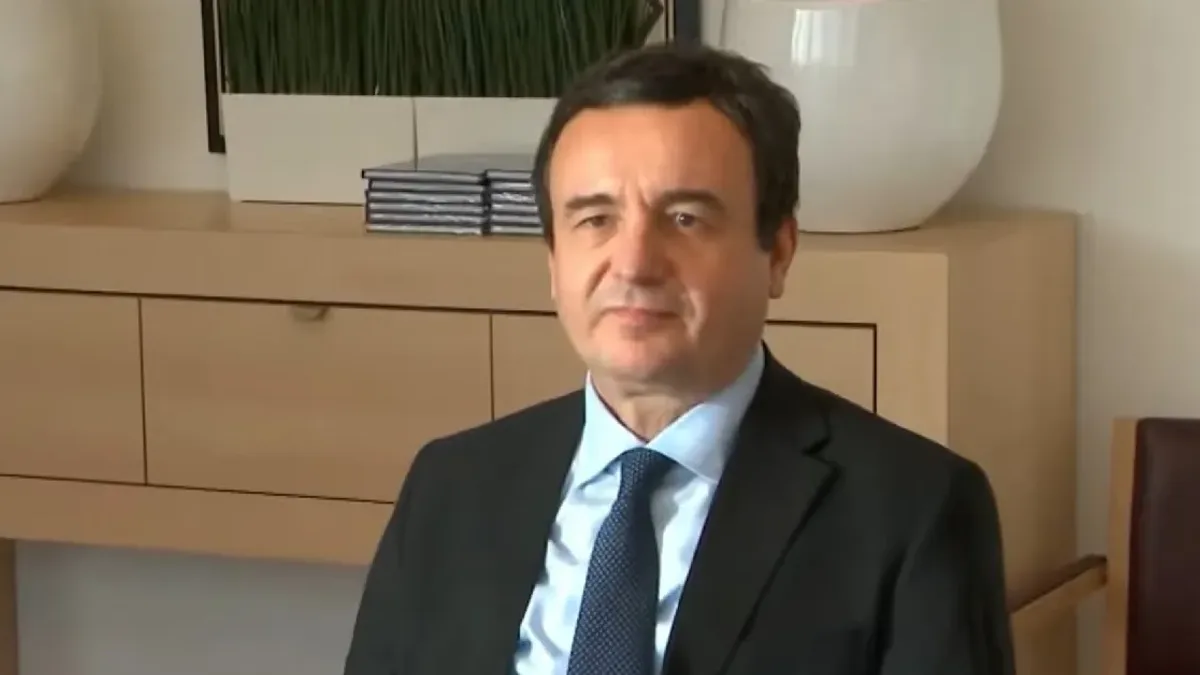
Kosovo Prime Minister Albin Kurti said publicly on Saturday, October 31, what he expects from the next government in Belgrade: a change in its attitude toward Kosovo as an independent state, toward Albanians in Presevo, Bujanovac and Medvedja, and a path to “complete normalization of relations between Kosovo and Serbia, with mutual recognition.” It is his first public reaction to the October 25 elections in Serbia.
Sources differ on where he spoke. RTS and Insajder, which carries a FoNet report, say Kurti addressed a session of the General Council of the Self-Determination movement (Vetevendosje), which he chairs. Radio Free Europe writes that he spoke at a rally of his party.
What did Kurti say about the elections in Serbia?
According to RTS, Kurti summed up the outcome in a single sentence: “The Student List came first, Aleksandar Vucic’s coalition lost its parliamentary majority, while Ivica Dacic’s list stayed out of parliament.” He went on to a historical comparison, reported by Insajder:
“A quarter of a century after the defeat of Milosevic and Seselj, their political heirs, Vucic and Dacic, have lost too.”
These are Kurti’s assessments, not our figures. Official election results are published by the Republic Electoral Commission (RIK), and the prime minister’s address from Pristina does not replace that data.
Radio Free Europe reports that he added this before his movement:
“We know who lost power in Serbia as a result of these elections, but we do not yet know exactly who won it.”
He then set out the expectation at the heart of his address:
“We hope this political change will be followed by a positive change in the approach of official Belgrade toward the Republic of Kosovo as an independent state, and toward Albanians in Presevo, Bujanovac and Medvedja, as a discriminated community.”
Belgrade does not recognize Kosovo’s independence, declared in 2008.
What conditions for normalization did he name?
Kurti said that facing the past, the “denazification of political discourse,” institutional decriminalization and internal democratization must create the conditions for normalizing relations with neighbors. He called shedding light on crimes against Albanian civilians, establishing the locations of mass graves and learning the fate of missing persons an obligation to the victims and their families. According to the Kosovo Institute for Crimes Committed during the War, cited by Radio Free Europe, 1,577 people from the 1998 and 1999 war are still missing, and 12,230 war victims have been documented in total.
Then he said:
“Without the truth about the past, trust for the future cannot be built.”
In the same speech, as Insajder reports, he also said: “We want good neighborly relations, peace and cooperation, based on equality and mutual respect.”
What did he say about Albanians in Serbia?
Kurti praised the unification of Albanian political groups in Serbia and said the result was proof that the common interest was placed above party interest. According to RTS, he noted that the Albanian Coalition won 27,670 votes and two parliamentary seats. That is a preliminary figure, and the final count has not been confirmed. Kurti called it the best result for Albanians in Serbia since 2000. He added that Albanians are the fourth largest minority by size and the second by number of votes, and that together with Hungarians they hold the most seats among the nine minority lists.
What he did not say, and what is still unknown
According to Radio Free Europe, Kurti did not speak about a possible resumption of the Brussels dialogue, which has been stalled in recent years. He earlier made the resumption of high-level political talks conditional on the extradition of Milan Radoicic from Serbia. Radoicic took responsibility for the armed attack in Banjska in 2023, in which a Kosovo Police sergeant and three attackers were killed. Pristina accuses Serbia of involvement, and Belgrade denies it.
No response from official Belgrade, the Office for Kosovo and Metohija or the Student List to Kurti’s words had been published by the time of this article. We reported earlier that a European Union spokesperson said the elections in Serbia do not change the dialogue on Kosovo.
Kurti’s speech came on the day when voting is being repeated at 53 polling stations in Serbia. The polls close at 8 p.m.