EU Kosovo Report: No Progress on Serb Municipalities
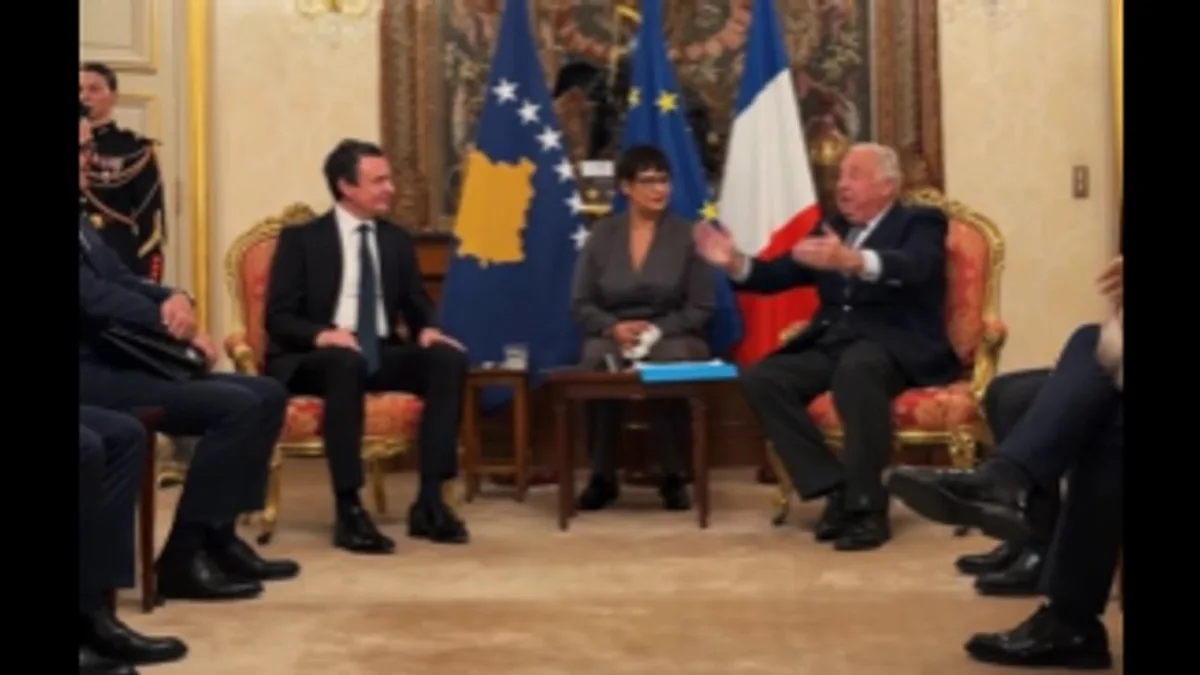
EU Office head Dirk Subel hands Albin Kurti the annual report today. The draft cites institutional gridlock, no progress on the Association of Serb Municipalities and criticism of Serbia.
European Union Office head in Kosovo Dirk Subel hands Prime Minister Albin Kurti the European Commission’s annual report on Kosovo for 2026 today at 5:45 p.m. in the Government building in Pristina. A joint press conference is scheduled for 6:15 p.m., the Prime Minister’s Office announced. The final text had not been published at the time of writing, but a draft seen by the Pristina daily Koha and relayed by Beta already shows the main assessments.
What does the draft say about the state of Kosovo?
According to the draft, the main reason reforms have stalled, including the recommendations from last year’s report, is prolonged institutional paralysis and the blockage of institutions. Assessments differ by area:
- rule of law: progress is insufficient
- fight against corruption: progress is limited
- fight against organized crime: some progress was recorded
- energy: progress is limited, so it remains a major obstacle to economic growth
Media freedom, the same draft says, is not in a satisfactory state, as attacks on journalists and media continued, including some carried out by government representatives. Radio Free Europe, which saw the enlargement policy draft, also reports that Kosovo is struggling with political influence and the influence of interest groups on the courts and prosecution. As a novelty, the draft highlights that Kosovo’s full alignment with the EU’s common foreign and security policy is presented for the first time in a separate chapter, Chapter 31.
What is demanded on the Association of Serb Municipalities?
The Commission finds no progress in forming the Association of Serb-majority municipalities, which is provided for by an agreement from the dialogue on normalizing relations with Serbia. Kosovo is again asked to start the process in line with its obligations from the dialogue, including the 2023 Ohrid Agreement, and the Commission considers this Kosovo’s obligation.
It also asks that the status of Serbia-supported structures and services be resolved in line with the dialogue agreements and Kosovo law, “rather than uncoordinated measures,” with structured consultations with Kosovo Serb representatives. That wording from the draft reached the public through an earlier report by Radio Kosovska Mitrovica, based on Radio Free Europe’s coverage.
What is Serbia criticized for?
Both the Kosovo report and the Serbia report call for fulfilling obligations from the dialogue. According to the draft, Serbia will be criticized for activities aimed against Kosovo’s membership in international organizations, above all the Council of Europe and Interpol. The European Union, the draft says, will again express regret that Serbia has not taken action against those responsible for the attack in Banjska.
Radio Free Europe reports that, according to the draft, neither Serbia, nor Bosnia and Herzegovina, nor Kosovo has advanced in the fundamental areas, which include the rule of law, democratic institutions, public administration reform and economic criteria. As in previous years, the Commission says that progress for both Serbia and Kosovo on the road to the EU is tied to real progress in normalizing relations.
What did the Serb List say ahead of the report?
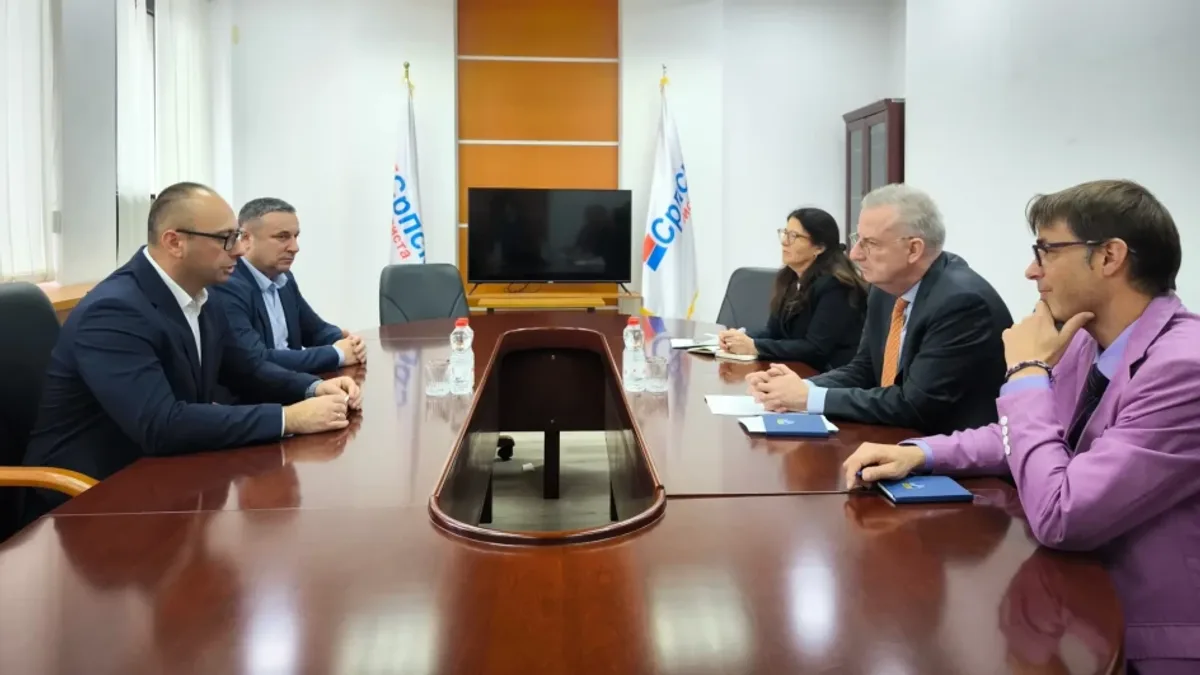
Ahead of the report’s release, the head of the Serb List parliamentary group, Igor Simic, and his deputy, Srdjan Popovic, met Subel in Pristina. The meeting was held at the Serb List parliamentary club. They discussed the upcoming report, the political situation, the position of Serbs and the European reform laws that the Assembly in Pristina is due to debate soon. Serb List representatives said they expect the report to give particular attention to the position of the Serb people.
In a statement after the meeting, the Serb List said:
“The Serb List remains committed to constructive political action, cooperation with representatives of the European Union and consistent advocacy of the interests of the Serb people, while insisting that every reform and political process must respect the rights, needs and legitimate interests of Serbs.”
The same statement also says it is important for the EU to recognize the Serb List as an important and constructive partner.
What else is expected in the enlargement package?
Alongside the reports, the Commission is expected, according to the draft, to present plans for the most advanced candidates. For Montenegro, the stated target is to finish negotiations by the end of this year and sign the accession treaty in June 2027, and for Albania, a plan to conclude negotiations by the end of 2027, provided it meets the criteria. Moldova and Ukraine are also mentioned in the reports.
The timing of the package differs between sources. Radio Kosovska Mitrovica, citing Radio Free Europe, wrote that the Commission would publish the package next week, while today’s reports say the reports are being adopted today in Brussels. The final wording will be known only when the full text of the report is published.