Student List Plan Puts Belgrade Waterfront, Expo on Review
The Economy and Finance program brings more tax brackets, public contract transparency and a review of special laws, three days before parliament's constituent session.
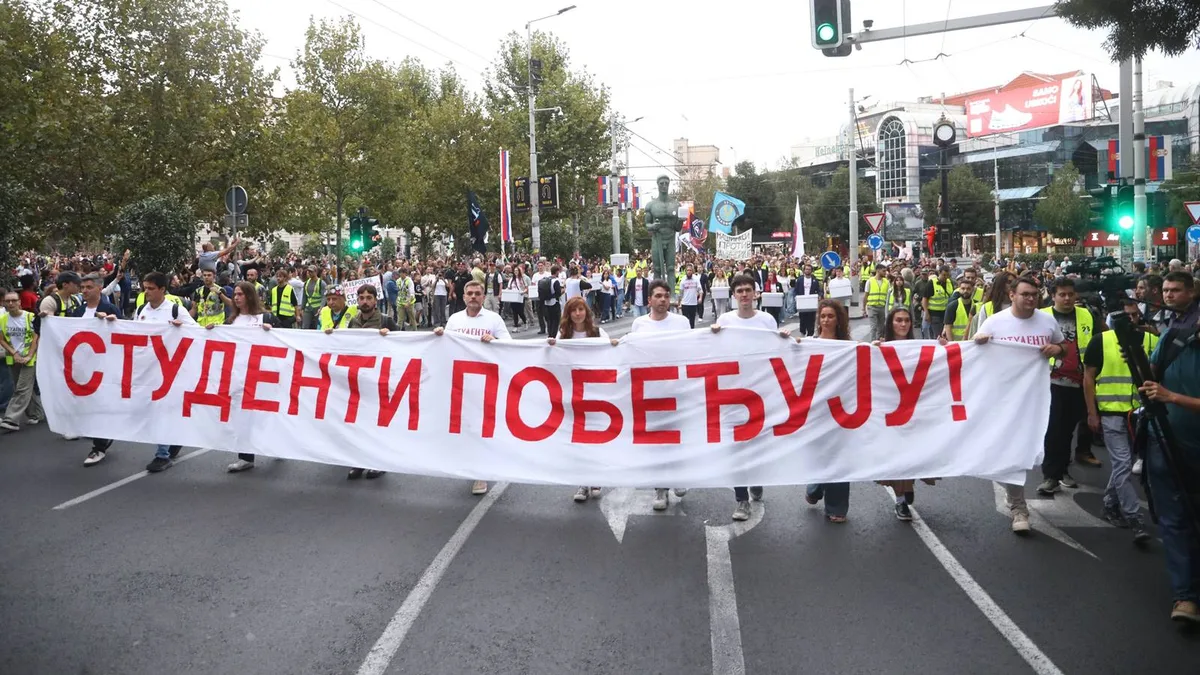
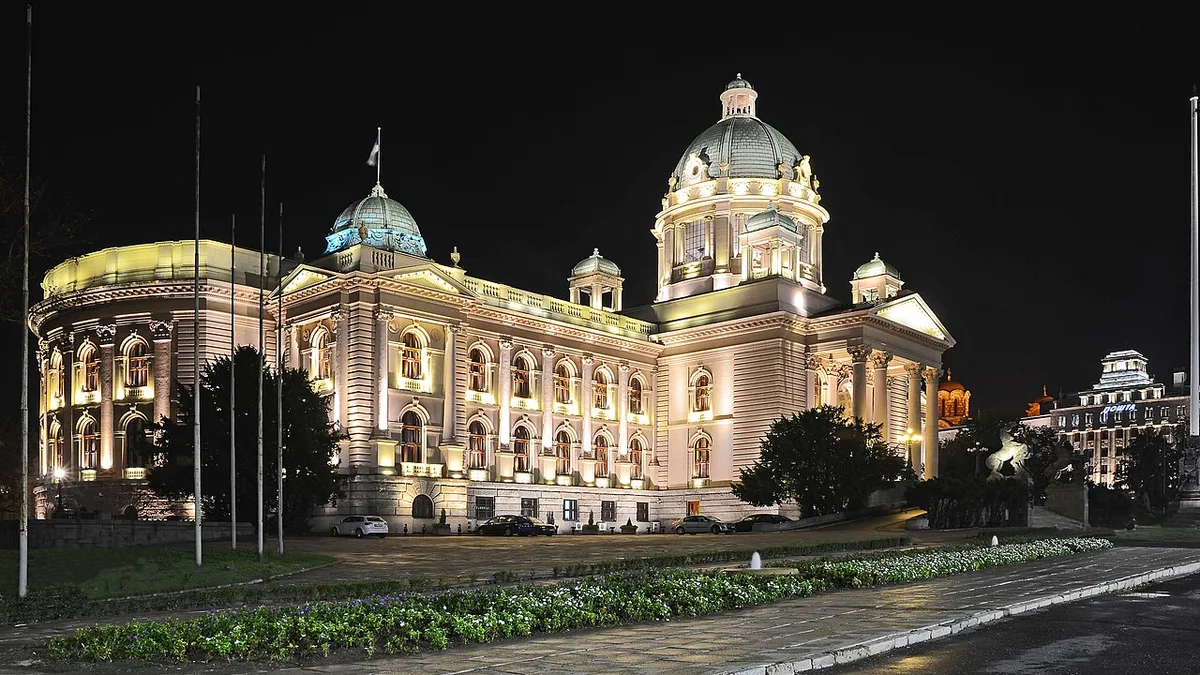
Student List published its “Economy and Finance” program on November 14, on its website and on the @studentblokade account on X. It is the group’s first detailed economic plan since the October 25 election. The document arrived three days before the constituent session of the National Assembly, scheduled for November 17. The list had not officially named its candidate for Assembly speaker by the afternoon of November 14, though Katarina Scepanovic and Aleksandar Cupic are mentioned unofficially.
We reported on the list’s earlier moves on November 10, when the subject was measures aimed at Idea supermarkets. This program is broader: it covers taxes, public procurement, state-owned companies, the dinar and government services for citizens.
What changes in the taxation of wages?
According to the program, the tax-free part of wages rises from 23% to 35% of the average wage. Income tax gets more progressive brackets, the annual income tax is abolished, and the brackets apply to monthly pay, withheld at the source. Excise duties are not cut, and the authors explain why:
“Instead of lowering excise duties, which would change the population’s habits for the worse, we plan to change tax policy so that labor is taxed less and large property is taxed more.”
The per-job subsidy is abolished, with existing contracts honored. In future, an incentive goes only to a project that raises the average wage, and the threshold is tied to the average wage and set in four tiers according to how developed a municipality is.
What does the program say about Belgrade Waterfront and Expo 2027?
The special laws on Belgrade Waterfront, Expo 2027 and linear infrastructure go under review, with a proposal to repeal them, amend them or align them with the general rules. Each of those options comes with an assessment of arbitration risk. For projects already under way, the State Audit Institution (DRI) and an independent technical auditor would publish the real cost and the obligations falling due, and an independent Commission for the Review of Capital Investments would decide whether to continue, change or halt each one.
New large projects would be contracted under the Decree on Capital Project Management, without a special law (lex specialis). On ratified international agreements, the program says Serbia will “do nothing unilaterally, but negotiations will be opened where possible.”
Public contracts and the blacklist
The public procurement portal would publish the full text of every contract, with prices and bidder scoring. Anyone who breaches a contract stays on a blacklist for three years. A national price list is introduced for public works, and reference prices for medicines, IT equipment, vehicles and fuel. Exceeding a reference price does not bar a contract but triggers a review of it: “If no agreement is reached, the contract is terminated.” The program names as its aim preventing a repeat of the situation in which highways and other public works cost many times the realistic price. The list’s summary also carries a pledge: “Every contract the state signs will be public.”
State companies and the dinar
According to the program, there will be no privatization of public companies. The Assembly, not the Government, would adopt the state ownership strategy, and the law would set which firms the state stake may not fall below its current level in, and which it may not fall below 51% in. The mandates of directors, acting directors and supervisory boards chosen under the old law end within 12 months of the new law taking effect.
On the exchange rate, the list says: “We are not touching the value of the dinar.” At the same time, only 22.5% of public debt is denominated in dinars, so the program sets a target that the list worded this way:
“The goal is to raise the share of the dinar in public debt to 30 percent by the end of the term.”
Dinar savings bonds for citizens are also introduced. The Development Fund and AOFI merge into the Development Bank of Serbia in the first half of the term, with borrowing capped at four times its capital.
The state and its citizens, and science
The hiring ban under Article 27k is replaced with a cap on the number of employees per budget user, and public sector pay would be adjusted once a year through the Budget Law. The ID card and health insurance card would be free, while the passport and driver’s license would be charged at the actual cost of production, with discounts for children, pensioners and people with disabilities. By 2028, all procedures before state bodies should be possible electronically.
On research and development, the list says: “We will double investment in research and development, today around 1% of GDP, by 2032.” A startup fund is also strengthened, and it could be filled with revenue from confiscated assets.
The government’s reaction to the program is not known to the newsroom as of this writing, and the Serbian Progressive Party has not commented on it in the reports we reviewed. The next chance to see how much of these measures enters the work of the new majority is the constituent session on November 17.