Pristina: Marta Kos ties Kosovo's EU path to dialogue with Belgrade
In talks with Albin Kurti and Albulena Hadziu in Pristina, EU Enlargement Commissioner Marta Kos reiterated that Kosovo's progress towards accession negotiations depends on reforms and concrete steps in dialogue with Belgrade ahead of the Tivat summit.

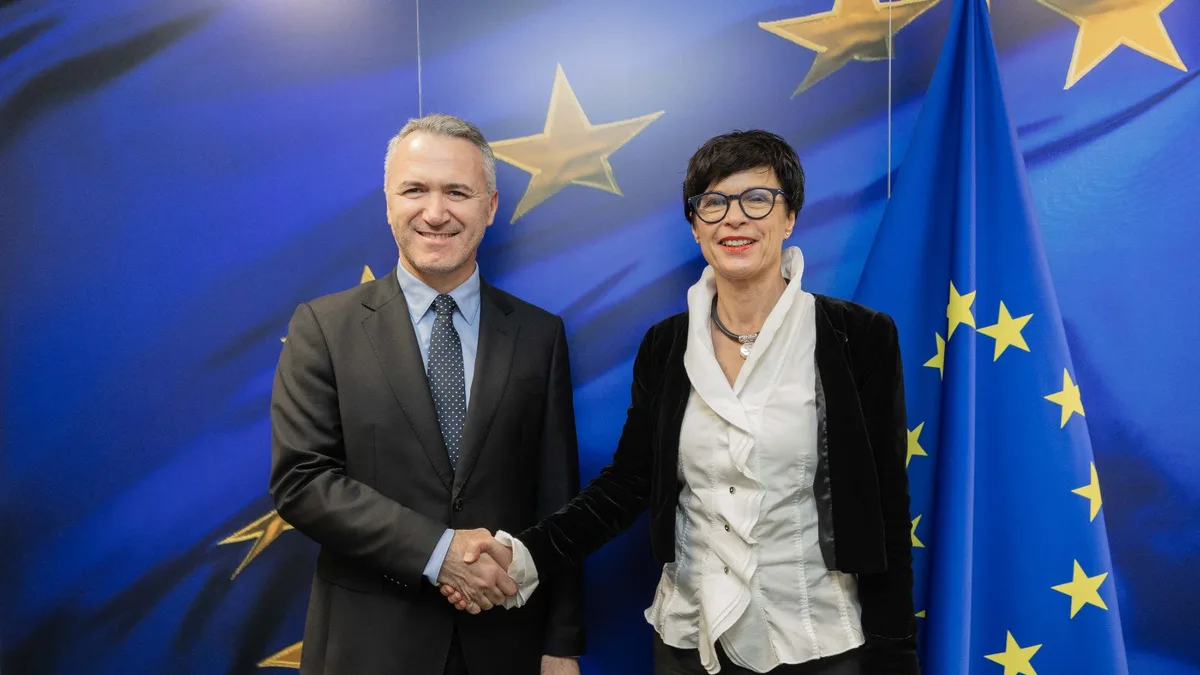
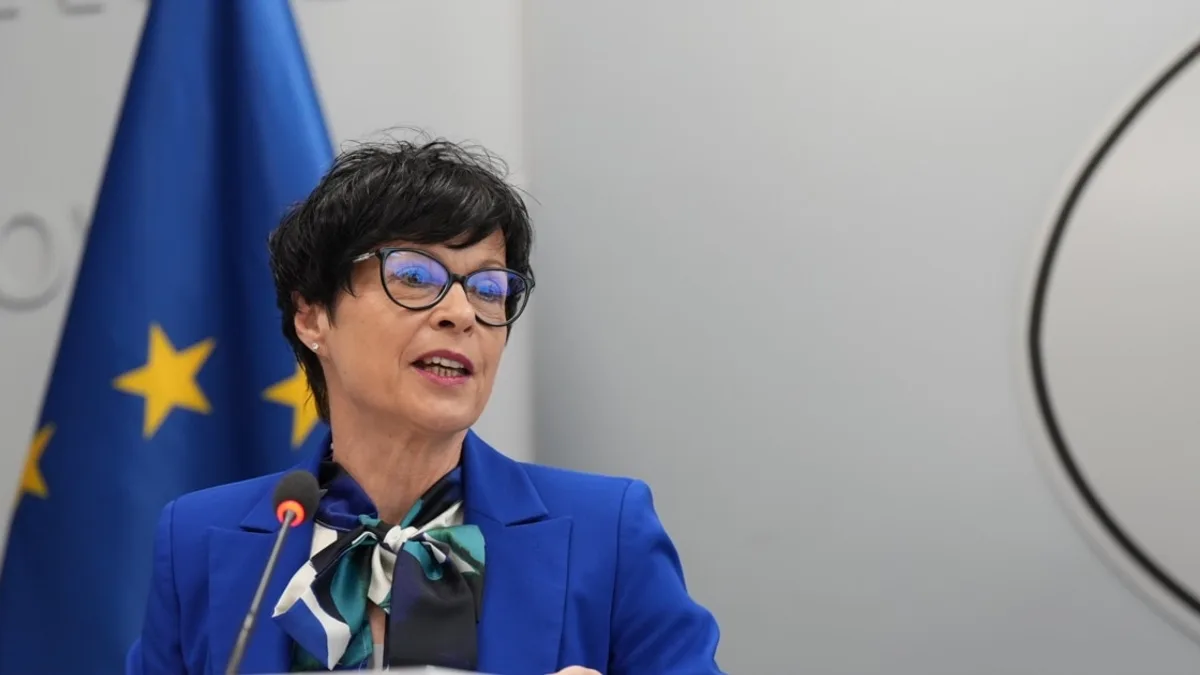
EU Enlargement Commissioner Marta Kos travelled to Pristina on 15 May, where she met caretaker Prime Minister Albin Kurti and acting President Albulena Hadziu.
The visit lasted two days and, according to the Commissioner’s office, was a “strategic review of the situation in Kosovo ahead of the EU-Western Balkans summit in Tivat”. After the official statement was released on Wednesday evening, Brussels signalled that Kosovo’s progress towards accession negotiations remains conditional on both reforms and concrete steps in dialogue with Belgrade.
For Serbia, which is itself in accession talks with Brussels, the Commissioner’s position carries a double weight. On the one hand it confirms that Belgrade is not the only party waiting on EU conditions linked to the dialogue. On the other it opens the possibility that, if the Tivat conclusions on 5 June require concrete steps, both sides will need to show movement. That has not happened in the past five years.
Kos was precise in Pristina:
There is a place for Kosovo in the European Union and in the accession process, but progress in reforms and developments in the dialogue with Belgrade remain the key factors shaping Kosovo’s path to membership.
According to Brussels sources, the wording is considerably more precise than the official conclusions adopted by the EU Council in January, where the dialogue was mentioned only as an “important element” of the accession process.
Three concrete steps Brussels expects
The first concrete step is the operationalisation of the Joint Commission on Missing Persons. The commission was created at a trilateral meeting in Brussels on 22 January 2026, the first such body in the 25 years since the end of the conflict. Belgrade’s chief negotiator Petar Petkovic, Pristina’s chief negotiator Besnik Bislimi and the EU’s Special Representative for the Dialogue Peter Sorensen agreed in January to set it up, but its concrete mandate and meeting schedule are still being worked out.
The second step concerns the formation of the Association of Serb-Majority Municipalities. The issue has been disputed since the Brussels Agreement was signed in 2013. Belgrade insists the association must have executive powers, while Pristina argues such powers would threaten its sovereignty. Sorensen’s team has put forward seven different formulations over the past three years, none accepted by both sides.
The third step is the registration of Serbian vehicle documentation in Kosovo, contested since 2022 with periodic escalations leading to blockades at administrative crossings. In May, Sorensen put forward a technical formulation offering a transition period of 18 months. Both sides are considering it.
Tivat as the turning point
The EU-Western Balkans summit in Tivat on 5 June will gather 42 delegations and roughly 300 media representatives. According to the office of European Council President Antonio Costa, the summit is to deliver a concrete message to both sides.
President Aleksandar Vucic, who leads the Serbian delegation, will hold bilateral talks with Costa, Commission President Ursula von der Leyen and Montenegrin President Jakov Milatovic, the host. The Kosovan delegation, led by acting President Hadziu, will hold parallel meetings.
The position taken by Commissioner Kos, who took over the file in January from Oliver Varhelyi, signals a new tone in the EU’s approach to the Western Balkans. Several analysts, including Rosa Balfour of Carnegie Europe, have described it as “conditional but predictable”. That marks a shift from the Polish presidency of the EU Council in the first half of the year, which had pushed for a more aggressive tone with all candidates.
What signal do you expect from Tivat on 5 June, a concrete date for opening a new negotiating cluster or a careful diplomatic formulation without firm commitments?