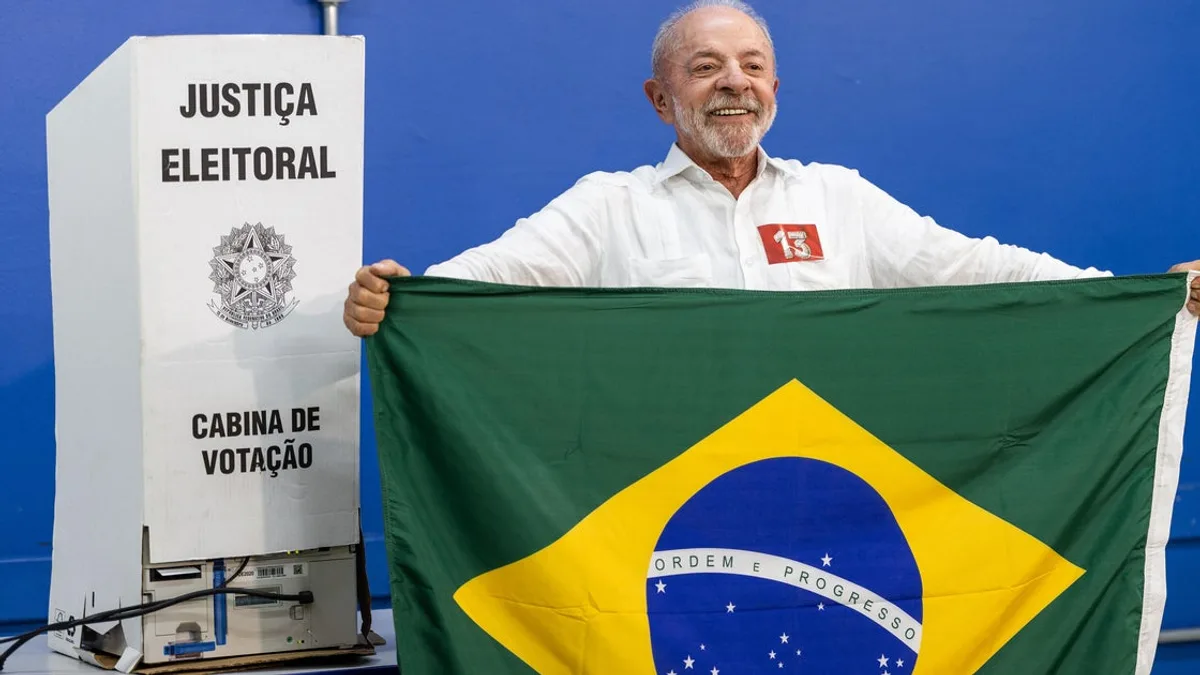
Peru runoff too close to call as Fujimori, Sanchez split count
Peru's presidential runoff ended without a clear winner, with the official tally favouring Fujimori while the quick count put Sanchez ahead, all inside the margin of error.

- The official ONPE count, with 80.99 percent of ballots processed, gives Keiko Fujimori 51.67 percent and Roberto Sanchez 48.33 percent.
- The Ipsos quick count flips that picture: Sanchez 50.3 percent, Fujimori 49.7 percent, a statistical tie inside the margin of error.
- Lima backs Fujimori decisively (63.6 to 36.4), while the provinces swing to Sanchez (57.4 to 42.6).
- A final official result is not expected until mid-July, with roughly 17.5 percent of votes still uncounted.
Peru’s presidential runoff, held on Sunday, June 7, ended in exactly the way the Andean nation had most dreaded: with no clear winner and two parallel sets of numbers pointing to two different people in front. For Belgrade, which follows Latin America through the lens of commodity prices, migration and China’s expanding footprint across the continent, Peruvian uncertainty is not merely an exotic dispatch. It bears on the stability of one of the region’s most open economies and on who will steer the country through a delicate balancing act between Washington and Beijing.
The official tally from the electoral body ONPE, updated late on Sunday with 80.99 percent of ballots processed, gives Keiko Fujimori the edge with 51.67 percent, or 8,040,623 votes, against 48.33 percent for Roberto Sanchez, or 7,520,293 votes. A gap of roughly 520,000 votes looks comfortable at first glance, and that is precisely where Peru’s paradox begins.
Why does Peru have two different results?
The answer lies in how the country tracks election night. Alongside the slow official ONPE count, the pollster Ipsos runs what is known as a quick count, a statistical projection drawn from a representative sample of polling stations. That quick count produced the mirror image: Roberto Sanchez ahead with 50.3 percent against 49.7 percent for Fujimori. With a margin of error of about one percent, this is a technical tie, a result in which neither candidate can claim victory.
The exit poll taken on voting day landed somewhere between the two: Fujimori 50.53 percent, Sanchez 49.47 percent, with a margin of around three percent. The reason for the gap is geographic. In Lima, the capital that holds a large share of the electorate, Fujimori leads decisively, 63.6 to 36.4 percent. In the interior, across the Andean and Amazonian provinces that have long felt overlooked, Sanchez dominates, 57.4 to 42.6 percent. As ballots from remote areas, where counting always lags, work their way into the totals, the overall balance could still shift.
It is worth recalling how the two reached this point. In the first round, held on April 12, Fujimori finished first with about 17 percent and Sanchez second with about 12 percent, sending two rivals with sharply different electorates into the final stage of a fragmented race.
What comes after election night?
Both candidates sent messages that, for now, have eased the tension. Keiko Fujimori said that whatever the result, it would be respected. Roberto Sanchez struck a victorious tone, declaring that, in his words, a constructive turning point begins today to end the mafia pact. Both statements speak to a country that has lived for years in chronic political instability, with a string of presidents who failed to finish their terms.
A final official result is not expected until mid-July, since roughly 17.5 percent of votes remain uncounted and some ballots from the diaspora and far-flung regions have yet to arrive. Until then Peru enters weeks of legal and political limbo, in which every new percentage of processed votes will be read as a possible turning point. For European chancelleries and observers in Belgrade, the Peruvian case is a reminder of how thin the line can be between an election held peacefully and an outcome clearly accepted. How would you read an election night in which the official count and the quick count point to two different winners?