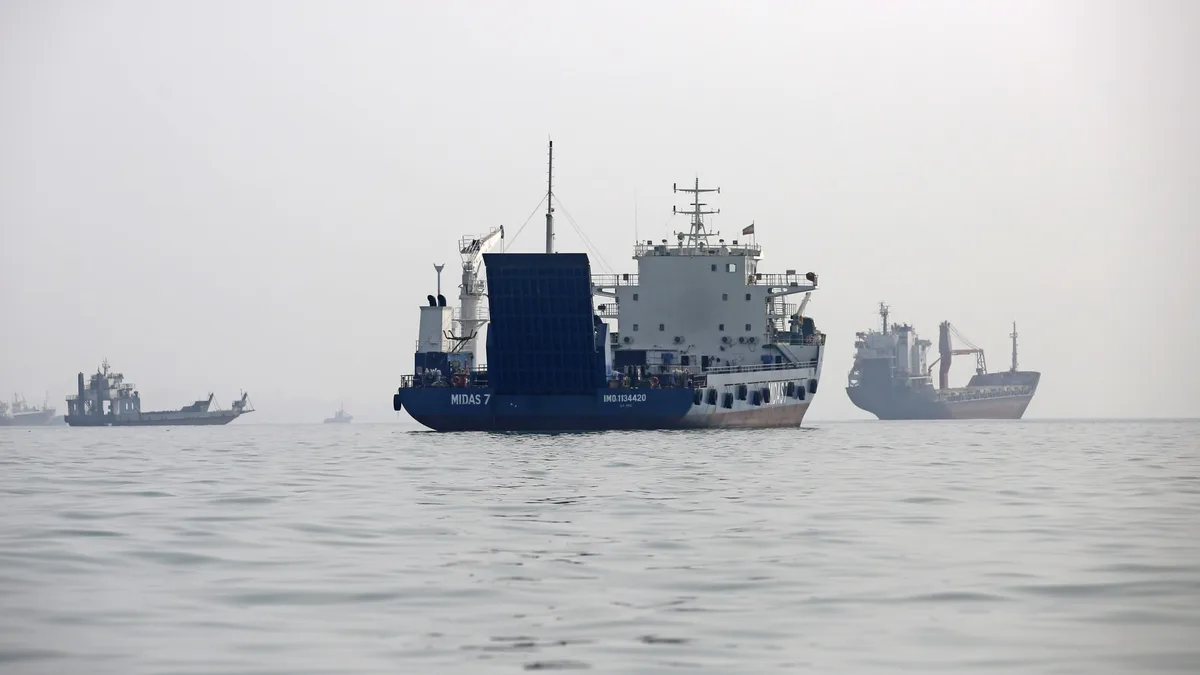
India Summons US Diplomat as Three Sailors Killed
After three Indian sailors died aboard the tanker Settebelo, New Delhi handed Washington a formal protest as the US naval blockade of Iran turns into a diplomatic crisis with India.

- Three Indian sailors were killed aboard the Palau flagged tanker Settebelo, while 21 were rescued from a crew of 24.
- India summoned the US charge d'affaires and handed over a demarche, demanding protection for civilian seafarers.
- CENTCOM says the vessel broke the blockade while trying to carry Iranian oil, the eighth ship disabled since the blockade began on 13 April.
- On Wednesday a third tanker with an Indian crew was attacked off the port of Sohar in Oman within the span of a few days.
For a country that keeps more than a million of its citizens aboard the world’s merchant ships, the news that three Indian sailors had died under American fire was not a distant war episode but a domestic drama, and New Delhi responded exactly that way. The Indian government confirmed the deaths of three of its seafarers aboard the tanker Settebelo, summoned the US charge d’affaires and handed over a formal demarche, marking the first time the US naval blockade of Iran has grown into an open diplomatic crisis with one of Asia’s largest powers. The bodies of the dead were recovered and identified, and an Indian minister ordered the immediate repatriation of the remains.
The Settebelo, a Palau flagged tanker, was carrying 24 Indian sailors at the time of the strike. Three died and 21 crew members were rescued. US Central Command said the ship had broken the naval blockade while attempting to transport Iranian oil, and that American forces had struck the vessel’s engine room with precision munitions. According to CENTCOM, it was the eighth ship disabled since the blockade began on 13 April, a figure that shows just how wide Washington’s pressure campaign against Tehran has become and how deeply it now reaches into global merchant shipping.
Why does the death of Indian sailors matter for Serbia too?
The shipping lanes through the Persian Gulf and the Gulf of Oman are not an abstraction on a map. Through them flows the oil that shapes prices at European pumps, Serbian ones included, and the crews of those ships most often come from India, the Philippines and other Asian countries that export labour to the sea. When one power begins striking the engine rooms of tankers, the risk does not stay confined to the warring sides. It spills onto civilian seafarers who have nothing to do with the geopolitical reckoning between Washington and Tehran, and indirectly onto the stability of energy markets on which this part of Europe also depends.
India’s reaction shows how thin the line is between a sanctions regime and open conflict. New Delhi has traditionally balanced its attention between Washington and Tehran, buying Iranian and Russian oil despite pressure while building an ever firmer transatlantic tie with the US. The death of three of its citizens now puts that balance in question. A demarche is the strongest diplomatic signal one state can send a friendly power before resorting to harsher measures, and India used it deliberately.
The third attack in a matter of days
The crisis does not stop at the Settebelo. On Wednesday a third tanker with an Indian crew was attacked off the port of Sohar in Oman, a vessel carrying 20 sailors, with a fire breaking out in the engine room. By India’s account, this is the third attack on ships with Indian crews in just a few days, raising the question in New Delhi of whether these are isolated incidents or a pattern that endangers the entire Indian maritime workforce in the region.
A spokesman for India’s Ministry of External Affairs condemned the attacks on merchant ships off Oman, saying strikes on civilian shipping and the endangering of crews should be avoided. Behind that diplomatic phrasing lies a serious demand: India wants guarantees that its sailors will not become collateral damage in the American campaign against Iranian oil exports. For now it is unclear whether Washington will offer such guarantees, or what the blockade will look like if the number of disabled ships keeps rising.
If a sanctions regime is enforced with fire into the engine rooms of tankers, how many more countries with crews aboard those ships must lose their citizens before the blockade carries a cost in allied capitals as well?