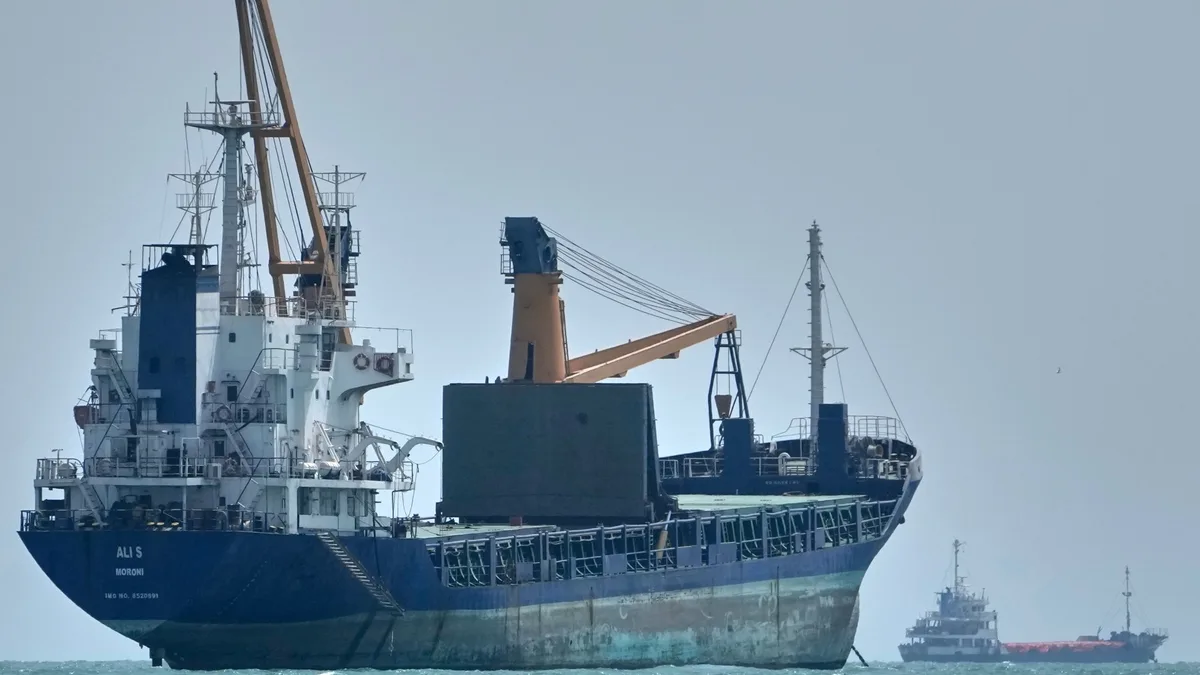
Iran closes Hormuz after two days of US strikes
Iran's Revolutionary Guard declared the Strait of Hormuz closed to all shipping on June 11 and struck two vessels, following a second night of US strikes on Iranian targets.

- Iran's Revolutionary Guard declared the Strait of Hormuz fully closed to all shipping on June 11 and has already struck two vessels.
- CENTCOM said US forces hit ammunition depots, command nodes and air defenses across Iran for a second consecutive night.
- Roughly 20 percent of the world's seaborne oil trade passes through Hormuz, yet crude held near 91 to 94 dollars, well below earlier forecasts of 200 dollars.
- The strikes tested a two-month truce for the third time in a week, effectively collapsing it.
For Serbia, an energy importer whose budget reacts quickly to swings in world oil prices, the closure of the Strait of Hormuz is not a distant Gulf headline but a direct signal for pump prices and the exchange rate. On Wednesday, June 11, Iran’s Revolutionary Guard declared the waterway closed to all shipping and confirmed that its navy had already struck two vessels, effectively shattering a fragile truce with the United States after two consecutive nights of American strikes on Iranian soil.
US Central Command (CENTCOM) said its forces had carried out further strikes on multiple targets inside Iran for a second night running, hitting ammunition depots, command nodes and air defense systems. Explosions were reported in Bandar Abbas, Qeshm, Gorgan and Hengam, while air defenses were activated in Fars province. Tehran responded that the region was entering open conflict, and the Guard’s statement said that, because of the prevailing insecurity, the Strait of Hormuz was being declared closed to all shipping, with a warning that any vessel attempting passage would be targeted.
Why does closing Hormuz matter to the whole world?
The Strait of Hormuz is a narrow maritime gateway between the Persian and the Gulf of Oman through which roughly a fifth of the world’s oil trade passes, including most exports from Saudi Arabia, Iraq, Kuwait and the United Arab Emirates. Any threat to close that corridor has historically pushed up the price of oil and marine insurance, because there are almost no alternative routes, and the ones that exist (pipelines toward the Red Sea) carry only a fraction of the daily flow.
Even so, markets reacted more calmly this time than many had expected. Crude held near 91 to 94 dollars a barrel, far below the 200 dollar scenario some analysts had projected for a full blockade. The reasons lie in two factors: a rise in US oil exports, which offset part of the shortfall, and a drop in Chinese demand, which eased the overall pressure on supply. For pumps in Belgrade, that means a sudden price spike is not certain in the first days, but any further escalation could move the dinar and the fiscal framework the government is preparing for the autumn.
How did it come to open conflict?
The escalation began when a US helicopter was shot down over the Strait of Hormuz, after which Iran struck American bases in Bahrain, Kuwait and Jordan, though without US casualties. Washington answered with two nights of strikes on Iranian territory and a warning that Tehran would pay a price for stalled negotiations. US Secretary of War Pete Hegseth summed up the message in a single line, that if it had to negotiate with bombs, it would negotiate with bombs, signaling that the White House sees escalation as leverage to bring Iran back to the table.
The two-month truce, reached after an earlier round of fighting, was tested three times in a single week and finally collapsed with the closure of Hormuz. In regional capitals, from Riyadh to Abu Dhabi, the chief worry is their own oil exports, which pass through the same maritime gateway, and Gulf states are seeking diplomatic channels to head off a further price surge. For Serbia, which feels the stability of world energy prices within weeks, the key question is not who fired first but how long the waterway stays shut. The coming days will show whether this is a momentary show of force or the start of a longer standoff that would also hit budgets far from the Gulf.
Will the closure of Hormuz remain a threat on paper, or will it change the price of fuel in Serbia too?