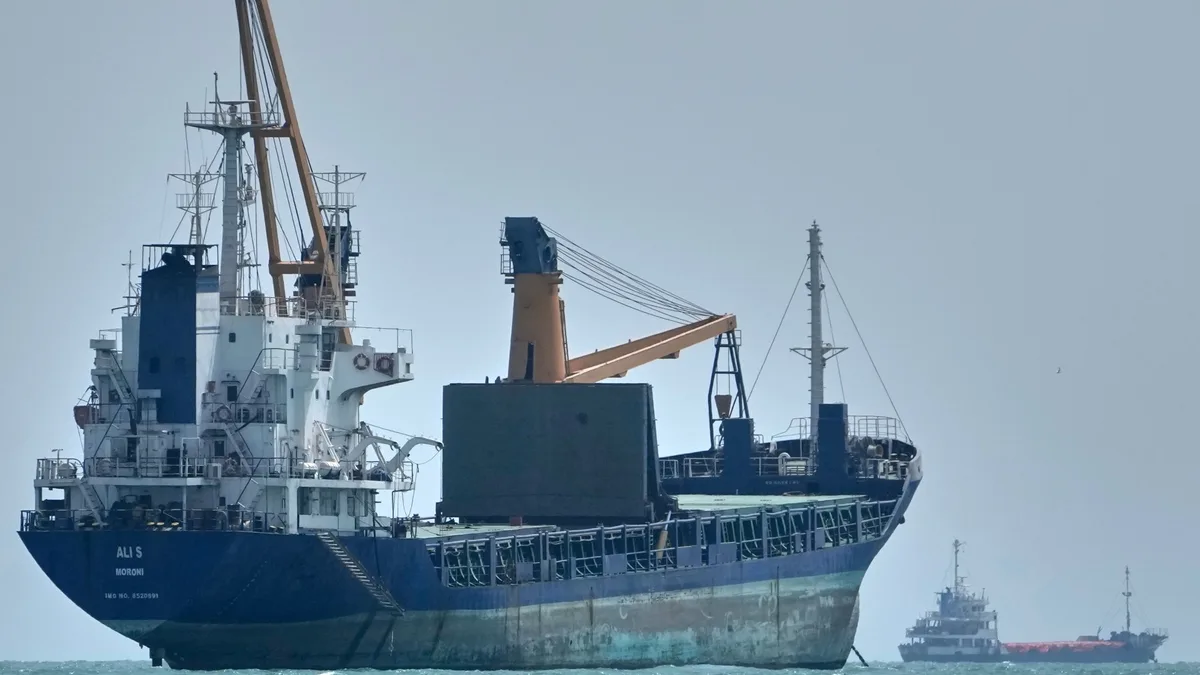
US downs Iranian drones over Hormuz again
US Central Command says it shot down Iranian attack drones launched at commercial ships in the Strait of Hormuz for a second straight night, as Tehran signals a memorandum with Washington.

- US Central Command says it downed multiple Iranian attack drones aimed at commercial ships in the Strait of Hormuz for a second straight night.
- The strait, which carries roughly a fifth of the world's oil, remains open to international trade traffic, according to Washington.
- Iran's foreign minister says a memorandum with the US could be signed remotely within days.
- The draft reportedly covers a 60 day ceasefire, reopening the strait, and a framework for nuclear talks.
For Serbia, whose heating and driving costs track prices set in the Persian Gulf, every night of drones falling over the Strait of Hormuz is not distant, exotic news but a question of how much the next tank of fuel will cost. US Central Command, CENTCOM, said on Saturday, June 13, that for a second straight night it had shot down multiple Iranian one-way attack drones launched at commercial vessels passing through the narrow channel, a route that carries a large share of the world’s oil toward European and Asian ports each day.
According to the American command, all of the launched craft were intercepted before reaching their targets, and the shipping lane used by tankers has not been closed for now. “The Strait of Hormuz is open to international commercial traffic. We shot down the attack drones Iran launched at commercial ships,” CENTCOM stated, tying two consecutive night-time incidents into a single pattern of pressure on the maritime corridor.
The geopolitical reality, however, is more complicated than a statement about downed drones. Iran’s Revolutionary Guard had earlier declared the strait closed and intercepted tankers, so these new incidents show that even with talk of de-escalation, the truce remains fragile. Each strike on a commercial ship pushes up insurance premiums and shipping costs, and that expense spills over to refineries and pumps far from the Gulf, including the markets of southeastern Europe.
Is a diplomatic channel closer than it looks?
Alongside the military incidents came an unexpectedly conciliatory tone from Tehran. Iran’s foreign minister, Abbas Araghchi, said a memorandum of understanding with the United States could be signed digitally and remotely within a matter of days. “We are closer to a deal than ever,” Araghchi said, signaling that Tehran is keeping a diplomatic channel open even as its forces test the limits at sea.
According to Western sources, a signing in the presence of the US vice president is under discussion, with Geneva floated as a possible venue, something Tehran currently denies. The draft under discussion reportedly covers a 60 day ceasefire, the reopening of the Strait of Hormuz, and a framework for talks on Iran’s nuclear program. If such a document were actually signed, it would mark a tectonic shift after months of escalation, though the difference between a memorandum of intent and a binding agreement remains decisive.
What this means for Serbia and the region
Belgrade has no navy in the Gulf and no voice in the talks between Washington and Tehran, but it has direct exposure through the price of energy. The stability of the Strait of Hormuz is more a condition for the functioning of the Serbian economy than an abstract foreign-policy theme, because a rise in oil prices quickly reaches the costs of production, transport, and heating. European chancelleries are watching closely to see whether the announced memorandum will calm the maritime corridor or whether downing drones will become a new routine.
For now there are two parallel tracks that do not line up: at sea drones are being shot down, while at the negotiating table a signature is promised within days. Which of these two tracks will decide the price of fuel at Serbian pumps by the end of the month?