Montenegro closes two more chapters in its EU talks
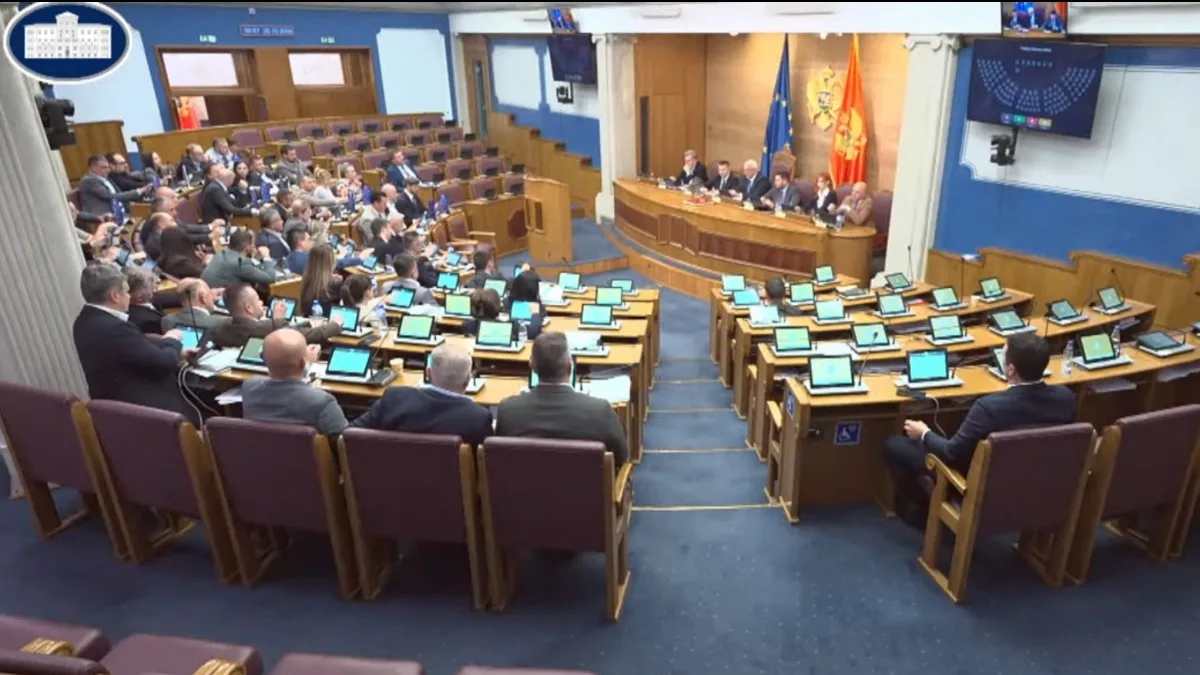
At an intergovernmental conference in Luxembourg, Podgorica closed the chapters on free movement of workers and consumer protection, reaching sixteen of thirty-three closed.

- On June 15 in Luxembourg, Montenegro closed chapters 2 (free movement of workers) and 28 (consumer and health protection) at an intergovernmental conference.
- Podgorica now has 16 of a total 33 negotiating chapters closed with the European Union.
- Prime Minister Milojko Spajic led the Montenegrin government delegation.
- It was the third such conference held during Cyprus's presidency of the Council of the EU in the first half of the year.
While Belgrade has spent years measuring its European prospects by how many chapters it opens rather than closes, Montenegro showed a different rhythm in Luxembourg. At an intergovernmental conference on June 15, Podgorica closed two new negotiating chapters: chapter 2 on the free movement of workers and chapter 28 on consumer and health protection. That brought the number of closed chapters to sixteen out of thirty-three, giving Serbia’s neighbour concrete, measurable progress in a process that remains the central geopolitical frame for the whole region.
The Montenegrin government delegation was led by Prime Minister Milojko Spajic, and the fact that the head of government chaired the team signals the weight Podgorica attaches to the step. Closing a chapter is no technical formality: it means the European Commission has judged Montenegrin legislation in those fields to be aligned with the Union’s body of law, and that the commitments are being applied in practice.
What does closing a chapter actually mean?
In accession talks a chapter is first opened, when the conditions are set, and later closed, when the candidate state meets the benchmarks. Closing is therefore a more reliable measure of how mature the process is than opening alone. Montenegro had already opened all its chapters, so it now enters a phase where results are gauged by closures rather than by the number of areas begun. Chapter 2 touches on workers’ rights and the coordination of social security systems, while chapter 28 governs product safety standards and the protection of consumer health, areas citizens feel directly.
Speakers at the conference included Cyprus’s deputy minister for European affairs, Marilena Rauna, and the European commissioner for enlargement, Marta Kos. Their presence was not ceremonial: Cyprus currently holds the presidency of the Council of the EU, and the enlargement commissioner is Brussels’s institutional voice at every step toward membership. The message from Luxembourg was that enlargement is regaining political momentum after years in which the process looked frozen.
Why does Montenegro’s pace matter for Serbia and the region?
This was the third intergovernmental conference during the Cyprus presidency in the first half of the year, and at the same meetings Ukraine and Moldova opened their accession talks with the Union. That sketches a new enlargement map in which the Western Balkan candidates are compared not only with one another but also with eastern neighbours who entered the process under the pressure of war. For Serbia, which shares the same regional frame, Montenegro’s rhythm becomes an awkward reference point: it shows that closing chapters is possible when there is political will and alignment with Brussels.
Podgorica openly sets itself the goal of membership by the end of the decade, and every closed chapter makes that deadline less rhetorical. The question is whether the rest of the region will read this pace as encouragement or as further proof that the European prospect is not shared evenly. How do you see Montenegro’s progress: as a signpost for the whole Western Balkans, or as the exception that confirms how selective the process has become?