Montenegro Starts Constitution Change With 56 Votes
A committee has four days to draft amendments on integrity checks for the prime minister and ministers, while EU official Gert Jan Kopman points to December to close talks.
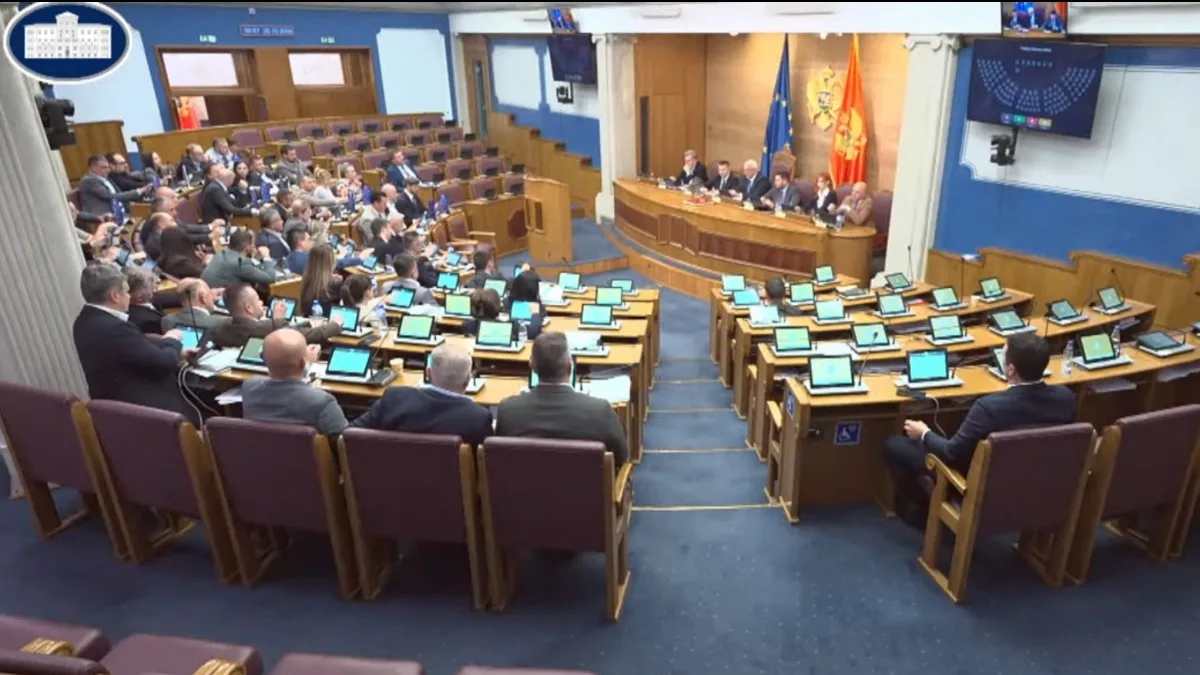
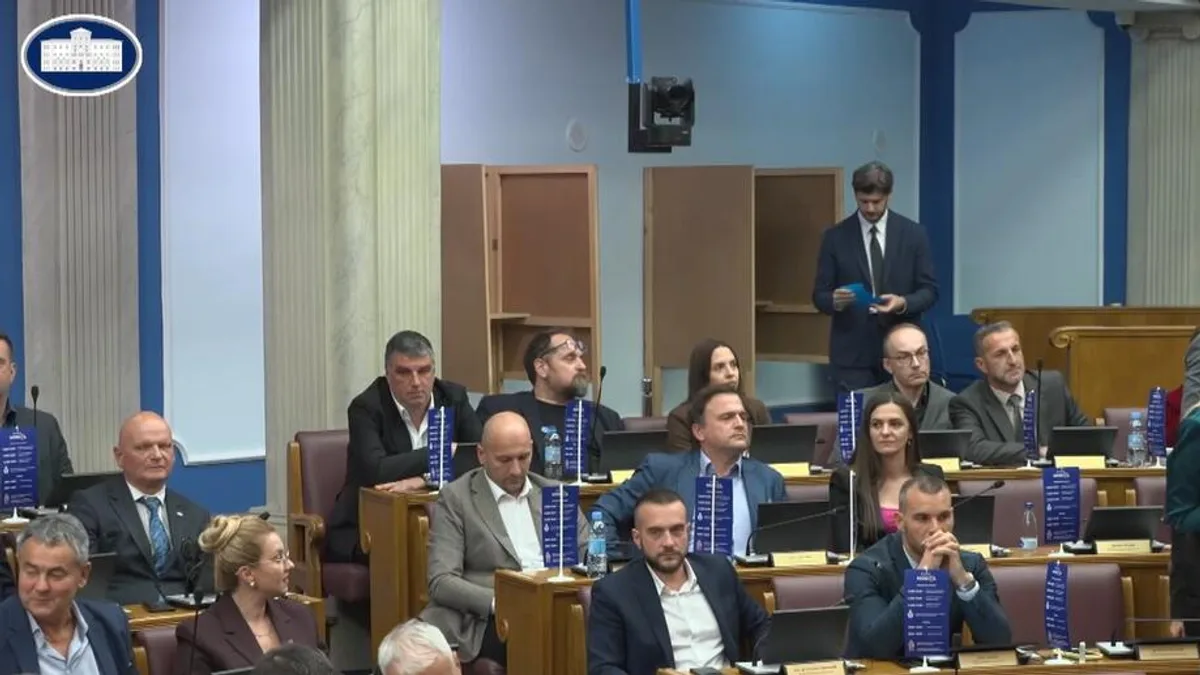
The Montenegrin parliament started a constitutional change after midnight under which candidates for prime minister and ministers would have to pass an integrity check before being proposed. 56 lawmakers voted in favor, two more than the two-thirds majority of 54 required. This is a neighbor of Serbia whose parliament speaker, Andrija Mandic, says his country will be the next member of the European Union, and whose deputy speaker, Boris Pejovic, ties these changes to the condition for closing Chapter 23. The same day, Gert Jan Kopman, the European Commission’s director-general for enlargement, said negotiations could be completed in December.
What changes in the Montenegrin Constitution?
The proposal touches two articles. Under the text lawmakers backed, an amendment to Article 103 means a person who does not meet the integrity conditions set by law cannot be proposed as prime minister or as a member of the government. An amendment to Article 91 means a special integrity law, along with the laws on the electoral system and on property rights of foreigners, would be adopted by a two-thirds majority of all lawmakers. That amendment was proposed by independent lawmakers, the Social Democrats and the URA Civic Movement, and it was agreed after a break of several hours in the session.
Sources differ on the wording. The public broadcaster RTCG reports the provision on integrity conditions set by law. The portal N1 writes that the government proposed the broader rule in August, and that in October the text was narrowed to establishing and removing conflict-of-interest risks, with a provision that a person finally convicted of a criminal offense involving corruption cannot be a member of the government. This is therefore the text of the proposal, not the final wording: detailed rules for the check will be set by a special law, and the final draft of the amendments is still to be set by the Constitutional Committee, which has four days to do it. The vote is thus the first stage of constitutional reform, not a final change to the Constitution.
The chronology is also disputed. In its first report RTCG says the vote took place “tonight,” in a later one “late last night,” while N1 writes that it happened this morning, after midnight. All sources agree that it followed a session lasting several hours.
The idea of a qualified majority for the special law came from independent lawmaker Nikola Janovic. “I think that would dispel doubts,” he said in the debate, and the deputy prime minister for justice, anti-corruption and the political system, Momo Koprivica, replied that such a solution is acceptable:
“It is acceptable to us that the question of integrity is defined by a special law adopted by a qualified majority. It is important that with these qualified majorities we also show democratic capacity and maturity, and that we build solutions in the interest of all citizens.”
Koprivica also said the proposed solution does not narrow democracy: “The right to vote is not being restricted.”
Who voted for and who voted against?
Support came from:
- lawmakers of the governing majority,
- independent lawmakers and representatives of minority parties,
- Branislav Nenezic of the European Alliance.
The DPS voted against. The Democratic People’s Party did not back the changes, and its lawmaker Vladislav Bojovic gave as his reason that the Serbian language is not codified as an official language in Montenegro.
The minority parties decided to vote together. Albanian Alliance lawmaker Ilir Capuni announced before the vote that they had received guarantees of talks on changes to electoral legislation, to guarantee parliamentary seats for Albanian and Croatian parties, as well as on changes to the law on maritime property. He later added that the Bosniak Party, the Croatian Civic Initiative and lawmakers of the Albanian parties are seeking four guaranteed seats for Albanians and one for Croats.
Pejovic said in the debate: “Anyone who does not vote for the constitutional changes and the Judicial Council, after this many warnings from Brussels, is not truly for the EU.” The Judicial Council is left without two candidates from among eminent lawyers, because Darko Hajdukovic and Klaudija Pejovic did not receive the required support from lawmakers.
DPS president Danijel Zivkovic rejected the constitutional solution, asking why the check does not also apply to the heads of the police and the National Security Agency:
“Why an integrity check only for ministers and the prime minister. Why not for the director of the National Security Agency, the police director, or lawmakers. Why do this when voters have their say? It only makes sense to do this before elections, not otherwise. What is there left to tell citizens once they have made their choice.”
Koprivica replied that the election of a government is indirect, because “here citizens do not vote, lawmakers do,” and added that he agrees lawmakers should also be covered by the check.
What did Mandic and Kopman say?
Mandic described the vote as a victory in a fight he called decisive for membership in the European Union. On the social network X he wrote that “those who embody the dark political past of Montenegro” had failed to stop the European path: “We succeeded despite all obstacles.” He ended with the message: “Montenegro will take its place in the European Union!”
Kopman told Television of Montenegro that the deadlines are realistic, meaning closing negotiations by the end of 2026 and membership in 2028. Asked whether the deadlines are really sustainable, he answered:
“I think the deadlines are realistic, and the reason for my confidence is that Montenegro has done a great deal of work and carried out most of the necessary reforms. If I look at the work we are doing here in the Commission, we are finalizing our assessment, and that means it is possible for the Council to complete the negotiations in December.”
The same interviewee said Montenegro has made progress without precedent in carrying out reforms. Asked what would happen if a member state nevertheless blocked the path for bilateral or political reasons, he noted that all member states of the Union must back the decision:
“There are 27 member states that need to give their approval, but I believe that will not happen, given that Montenegro has made significant efforts in relations with the member states individually.”
Kopman also said the work does not end with accession: “Hard work must continue until accession, and after it as well.” The Commission, as he put it, wants to see progress continue until the end of the year.
Two deadlines now set the pace. The first is short: the Constitutional Committee has four days to settle the draft amendments and deliver them to parliament. The second is December, when the EU Council, according to Kopman, could close the negotiations if the Commission completes its assessment.