EU Scraps Tariffs on US Industrial Goods Before Deadline
Two days before the July 4 deadline set by Washington, Brussels implemented its trade deal and removed all duties on US industrial imports, defusing the threat of far higher tariffs.

- As of July 1, 2026, the European Union removed all tariffs on imports of US industrial goods and eased access for a range of agricultural products.
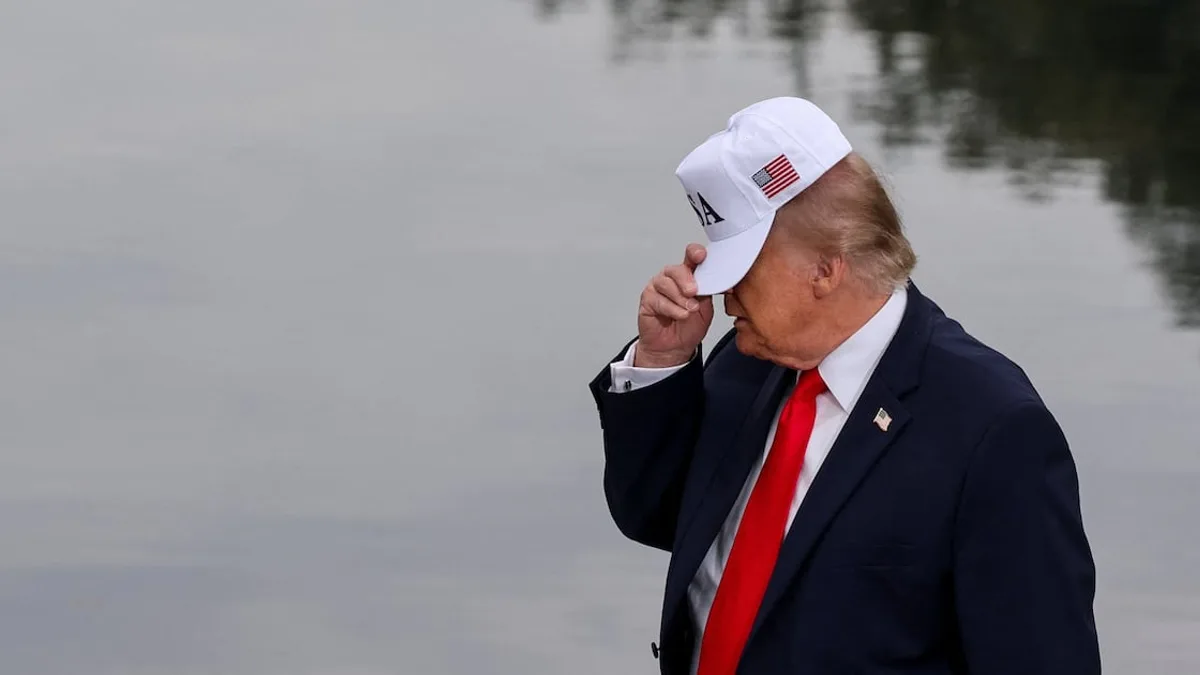
- The decision came two days before the July 4 deadline set by Donald Trump, who had warned that duties would immediately jump to a much higher level.
- The threat included raising tariffs on EU cars to 25 percent, a move that would have hit Europe's automotive industry hard.
- The deal introduces a single rate with a ceiling of 15 percent across most sectors, including vehicles.
For Serbia, whose economy sits in the hinterland of European supply chains and whose component exports end up on the assembly lines of German and French factories, the decision taken in Brussels last week is no distant dispatch from the world of great powers. As of July 1, the European Union implemented its trade agreement with the United States and scrapped all duties on imports of American industrial goods, two days before the July 4 deadline set by President Donald Trump, the day America marks its 250th birthday. That defused the threat of duties jumping to a substantially higher level, with the heaviest burden lifted from the automotive sector, where Washington had signaled a levy of 25 percent.
The agreement, negotiated over the past year by European Commission President Ursula von der Leyen and the US president, introduces a single rate with a ceiling of 15 percent for most sectors, including vehicles, semiconductors and pharmaceuticals. Instead of the erratic stacking of duties that in recent months threatened to spill over into an open tariff war across the Atlantic, Brussels accepted a predictable framework with a clear cap. For certain categories, such as aircraft parts and generic medicines, a near-zero regime was set out.
Why did Brussels concede two days before the deadline?
The answer lies in a calculation European chancelleries make more coolly than public statements suggest. Bilateral trade in goods and services between the Union and the United States is worth roughly 1,600 billion euros a year, and the estimated savings for European importers and consumers under this arrangement run into billions of euros. A jump to 25 percent on cars would have struck at the heart of German industry, the very sector that also drives part of Serbia’s plants tied to the production of parts and components.
Von der Leyen had earlier said good progress was being made toward reducing tariffs, and the withdrawal of European duties was presented as a step that restores stability and predictability to the transatlantic relationship. Formal approval came from the European Parliament and the Council of the European Union, averting a scenario in which both sides would have entered the summer with a string of retaliatory measures. For a Union simultaneously navigating hard bargaining over its position toward both Washington and Beijing, avoiding conflict on one front leaves room to maneuver on another.
What the concession means for Serbia and the region
Serbia is not a party to this agreement, but it will feel its consequences indirectly, through the channels that link the domestic economy to the European market. More stable transatlantic trade means more predictable orders for factories in Germany and France, and therefore for suppliers from candidate countries working to their standards. Had a tariff war erupted, the first blow would have been felt by the export-oriented economies of the hinterland, those without the strength to absorb sudden disruptions in supply chains.
There is also the open question of how Belgrade will position itself at a moment when Brussels increasingly defines its trade relations through its stance toward two great powers. The European perspective entails alignment with the Union’s external trade policy, and arrangements of this scale show how firm that framework is and how little room it leaves for independent moves. What looks like a remote diplomatic episode is in fact drawing the map along which Serbian exporters will travel in the years ahead.
Whether this agreement delivers lasting stability or amounts to a truce that holds only until the next deadline Washington sets is a question yet to be answered. And do you believe that peace on the transatlantic tariff front will last?