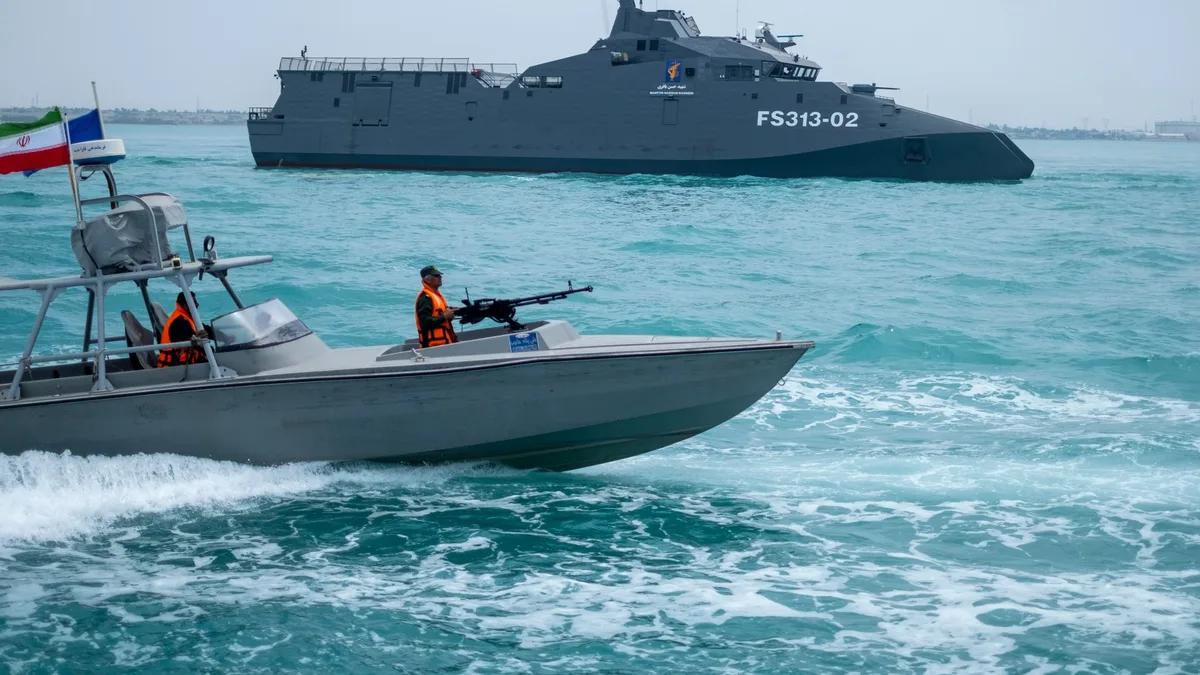
House Passes Record Military Budget for Iran War
The Republican majority pushed through a roughly 1.15 trillion dollar war bill funding continued strikes on Iran and deeper cooperation with Israel, as the Pentagon requests an additional 70 billion.

- On July 23, the House of Representatives passed a military bill worth about 1.15 trillion dollars.
- The bill funds continued war against Iran and expands security cooperation with Israel.
- Defense Secretary Pete Hegseth requested an additional 70 billion dollars for operations.
- The war has entered its 11th night of US strikes, at a cost so far of roughly 37.5 billion dollars.
For Serbia, where every jump in the price of a barrel is felt at the pump and in heating bills, a decision taken in Washington is not distant news. On July 23, the US House of Representatives passed a military bill worth about 1.15 trillion dollars, a document that funds continued strikes on Iran and further ties Washington to Israel. Every new round of escalation in the Middle East pushes up the price of oil on the very markets on which the Serbian economy depends.
The bill passed largely along party lines, on the votes of the Republican majority, and stands as one of the most expensive defense packages in recent American history. Republicans presented it as confirmation that the United States will not abandon its campaign against Tehran until it achieves what it calls a lasting weakening of Iranian military capacity. Democrats, for their part, warned that Congress was signing a blank check for a war whose end no one in Washington can define.
What exactly does the new bill fund?
The money in the package is directed along three main lines. The first is the continuation of the air campaign against Iran, which has now entered its eleventh night of US strikes and, by current estimates, has already cost around 37.5 billion dollars. The second line is the expansion of security cooperation with Israel, including reinforcement of air defense systems and the sharing of intelligence. The third part covers logistics and a strengthened US military presence in the Gulf, where the Pentagon has in recent weeks moved additional aircraft carriers and squadrons.
Alongside the bill’s passage, Defense Secretary Pete Hegseth asked Congress for a further 70 billion dollars, arguing that the existing sum will not be enough if operations run into the autumn. That request opened a new debate even within Republican ranks, where some members fear that an initially limited operation is turning into a conflict with no clear exit strategy. The Pentagon, in turn, warned that any slowdown now means a costlier and longer campaign later.
For European capitals, including Brussels, the move signals that the transatlantic bond is shifting ever more toward the Middle East, while questions on which the Western Balkans depend remain in the background. The EU High Representative has already, through a discreet diplomatic channel, urged restraint on Washington, aware that a prolonged war could set off a new wave of refugees toward Europe’s borders and further strain the continent’s energy market.
Uncertainty in the Senate and the cost for the region
Although the House has done its part, the fate of the bill is far from settled. In the Senate, where the Republican advantage is thinner, several senators from both parties have signaled they will seek amendments limiting the duration of operations and requiring regular reporting to Congress. Without their support, the package in its current form is unlikely to pass, and weeks of negotiation over the final text are expected.
For Serbia and the region, the uncertainty itself is already a factor. Markets dislike open questions, and a prolonged campaign in the Middle East keeps the price of oil high regardless of how the Senate vote ends. Belgrade, balancing between energy dependence and geopolitical pressure from several directions, is watching every move in Washington closely, because the consequences of decisions taken thousands of kilometers away are, as a rule, first felt in the most vulnerable parts of the domestic budget.
The question posed in Washington as much as in European capitals remains: has Congress just approved a budget for a war whose final cost, both financial and geopolitical, no one is yet ready to calculate?