Spain Declares Emergency as Wildfires Uproot 250,000
A third heat wave turned parts of Iberia and the French coast into an inferno: more than 250,000 people evacuated, Madrid declares a national emergency, Paris asks for help.

- More than 250,000 people have been evacuated in Spain and France as wildfires consume tens of thousands of hectares.
- Spain has declared a national emergency, while France has requested international help through the EU mechanism.
- In Spain more than 30,000 hectares have burned, with a fire north of Madrid covering roughly 29,000 hectares in Guadalajara.
- The blazes are raging during a third heat wave, with temperatures forecast above 40 degrees Celsius.
The heat dome that has clamped down on southwestern Europe this July is no distant abstraction for Serbia: the same synoptic pattern that is igniting Iberia is pushing hot air masses across the Balkans as well, and the European Union’s civil protection mechanism, in which Serbia takes part as a participating state, has just been activated after France requested international help. For Belgrade that carries a concrete diplomatic and logistical signal, because European firefighting assets are being deployed these days from the Atlantic to the Mediterranean, and every major fire season in the south of the continent tests the solidarity that our region also relies on.
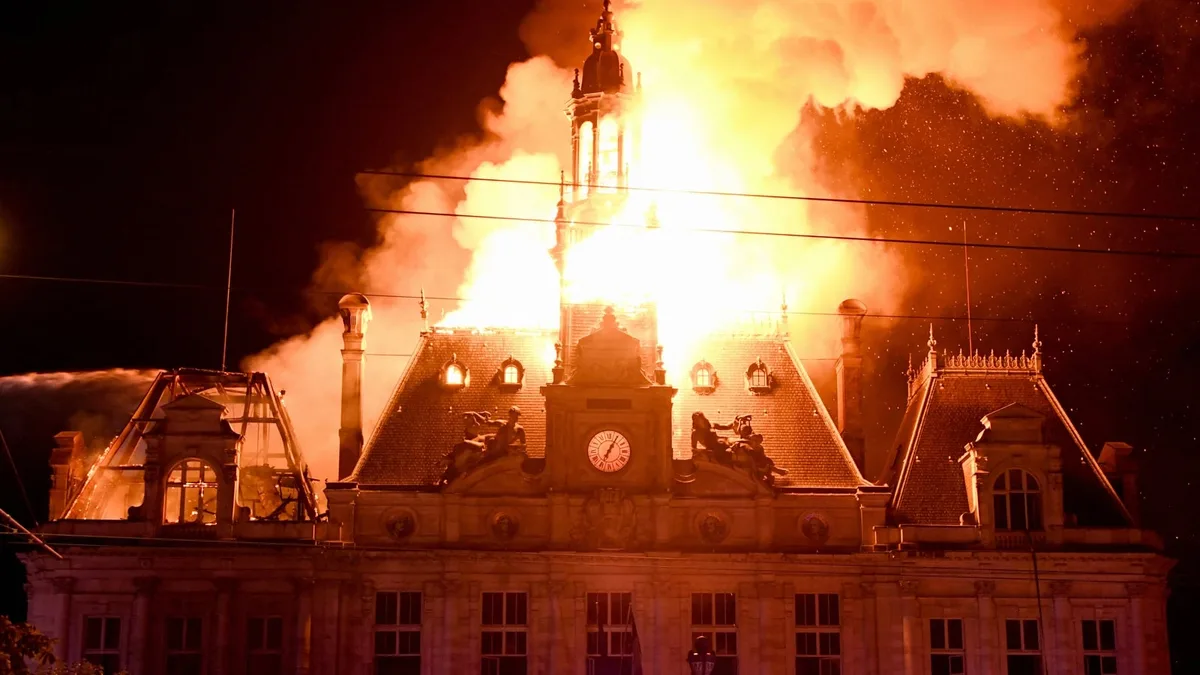
Spain has declared a national emergency after the third heat wave of the summer turned parts of the country’s center and north into a fire line. Authorities estimate that more than 30,000 hectares have burned nationwide, with a blaze north of Madrid, in the province of Guadalajara, accounting for roughly 29,000 hectares on its own. The province of Avila has also been hit, where the town of El Tiemblo was evacuated as flames neared settlements and smoke settled over a broad belt of Castile and Leon. In neighboring France the picture is no calmer: the western coast, including the Lege-Cap-Ferret region on the Cap Ferret peninsula, has been burning for days, with dozens of homes destroyed and vast stretches of pine forest lost to the flames.
Why is Brussels calling this a record fire season?
European fire-monitoring centers describe this season as exceptional in the scale of land burned, and French authorities have called the area scorched in the west of the country a historic record. That amounts to nearly 100,000 hectares in France, a scale that exceeds ordinary summer seasons and explains why Paris reached for shared European capacity rather than relying solely on national forces. The French army has been drawn into operations, and a hundred Paris firefighters have been sent south to reinforce local crews working without respite.
What makes this crisis politically sensitive is the mix of climate pressure and the human factor. Spanish police accuse one tractor driver of sparking one of the fires while working a field amid extreme drought, which raises questions of responsibility and prevention in years when a single spark in dried-out vegetation can grow into a catastrophe. The governments of both countries have convened emergency meetings, and evacuations have been carried out from tourist towns at the peak of the season, meaning that foreign guests are among the displaced, including travelers from southeastern Europe who traditionally holiday on the Atlantic and Mediterranean coasts.
What this means for European solidarity
For the institutions in Brussels, a season like this is a test of the readiness of the aerial firefighting fleet and of the mutual-assistance system built over years precisely for scenarios in which one member state cannot tame the fire alone. For Serbia, which itself enters the fire season each year with limited resources, it is a reminder of how important it is to sit inside that mechanism, because help in water-bombers, equipment and personnel moves through exactly those channels. Heat that respects no borders shows that the fire defense of one part of the continent increasingly depends on the response of the whole.
Will a record wildfire season in southwestern Europe push Brussels to accelerate the buildup of a common aerial firefighting fleet before the flames reach our part of the continent too?