Spain drops sea barrier at Ceuta as death toll hits 67
Spanish authorities say 67 people died in the Ceuta border crisis, some by drowning and others in a stampede on the breakwater. Work on a 500-metre barrier began on Saturday.

The Spanish government said on Saturday, August 1, that the death toll from the border crisis at Ceuta had climbed to 67, and on the same day crews began installing a 500-metre barrier along the breakwater that runs out into the sea. The story is closer to Belgrade than the map suggests, because pressure on the western Mediterranean route is eventually read on the Balkan one, and Serbia’s Commissariat for Refugees and Migration has already said there is no sign of a new inflow towards the country.
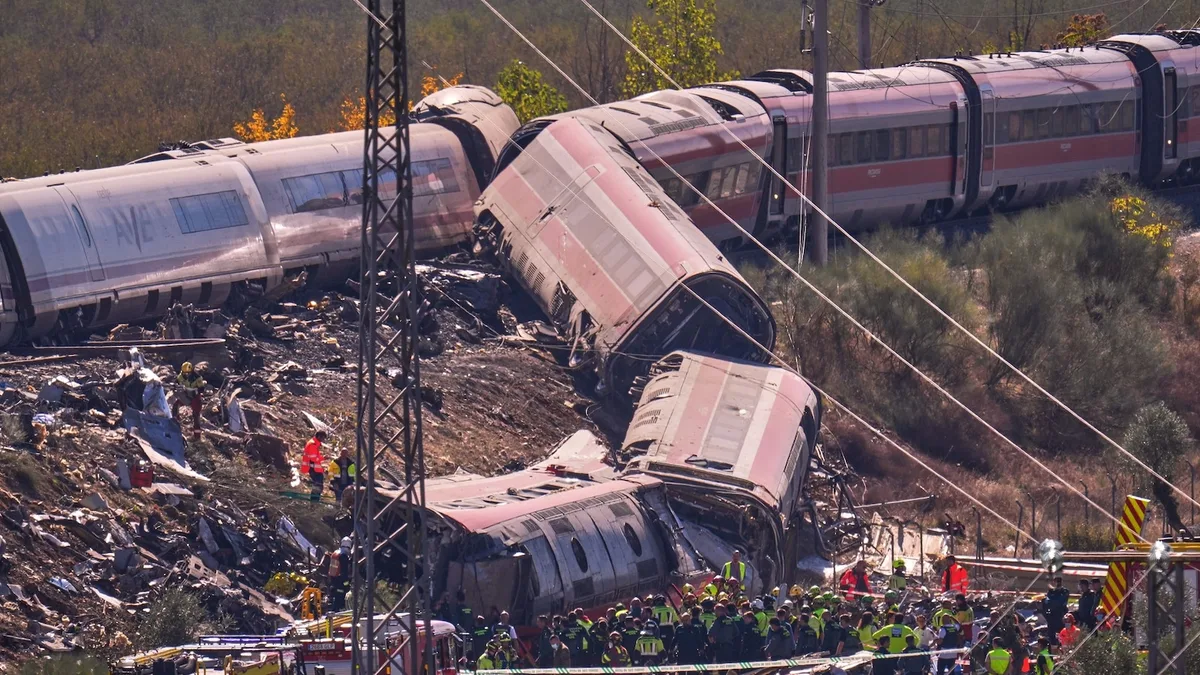
Some of the dead drowned. Others were killed in a stampede while crossing the breakwater. Spanish authorities have not yet set out the sequence of events, but the two causes of death belong to the same narrow strip of ground, where the land border ends and the water begins.
Between Thursday and Friday, 50,000 to 60,000 people entered the enclave. Most of them had already returned to Morocco, and hundreds more walked back on Saturday, in columns escorted to the crossing by Spanish army units and the Guardia Civil. Ceuta covers just 18.5 square kilometres and sits about 25 kilometres of open sea from mainland Spain, so an influx on that scale shut down ordinary life in a city of its size.
What is the 500-metre barrier?
It is a containment structure being fixed along the breakwater on the sea border between Ceuta and Morocco, over half a kilometre. Crews started the work on Saturday at the same spot where the stampede happened, and the aim is to block both the walk along the mole and the swim around its far end. Until now, people had been entering the water near the Moroccan town of Fnideq, roughly five kilometres from the Spanish shore.
Madrid defends its line towards Rabat
Interior Minister Fernando Grande-Marlaska said cooperation with Morocco made it possible to reverse the situation within 24 hours, and that Spain and Morocco will have to assess what happened together. Asked about those who organised the crossing, he told reporters: “We are relentless against those who break the law.”
He also rejected the idea that the neighbouring country is the source of the pressure. “Morocco is not a threat to Ceuta, nor to the rest of Spain. It is a reliable partner,” Grande-Marlaska said. The wording carries political weight, because in several European capitals the crisis was read as leverage applied by Rabat against Madrid.
Why is Brussels split?
Prime Minister Pedro Sanchez said the calls to suspend Spain’s rights in the European Union were driven by prejudice, fake news, ignorance or political interest. He asked for coordination at EU level and argued that securing the external border is a shared responsibility. Twenty-two member states signed a letter against uncontrolled crossings and requested an urgent meeting of interior ministers, while Italy temporarily reinstated checks on its borders with Spain. Rome was the first to raise the question of suspending Schengen, as we reported on July 31.
A city still counting
Juan Jesus Vivas, the president of Ceuta, described the state of the city after three days:
“Life in this city has been disrupted as a result of the border incident. The return of people has begun satisfactorily, but the process must be completed.”
His phrasing captures what the figures leave out, that the return is not finished even when most people have gone back. Mohamed Hatri, 23, said he intends to stay, hungry or not, while Ouail Lamzeiz spent eight days in Ceuta and walked back to Morocco on his own. Two answers on the same breakwater in the same week measure how hard the job is that Spanish officials describe as completing the return.
For comparison, in 2021, at the height of the dispute between Madrid and Rabat, more than 10,000 people entered Ceuta in two days, and that stood as the record. This year’s figure is at least five times larger, and for the first time it comes with a list of the dead. The 500-metre barrier answers one location, while the question of who pays for and polices the external border now lands on the table of EU interior ministers, summoned at the request of twenty-two member states.