Petrovacka Cesta: 31 Years, Pilots Tried in Absentia
A memorial service was held at the roadside cross in Janjila for ten Serb civilians killed in a 1995 Croatian air attack on Petrovacka Cesta, as four pilots stand trial in absentia in Belgrade.

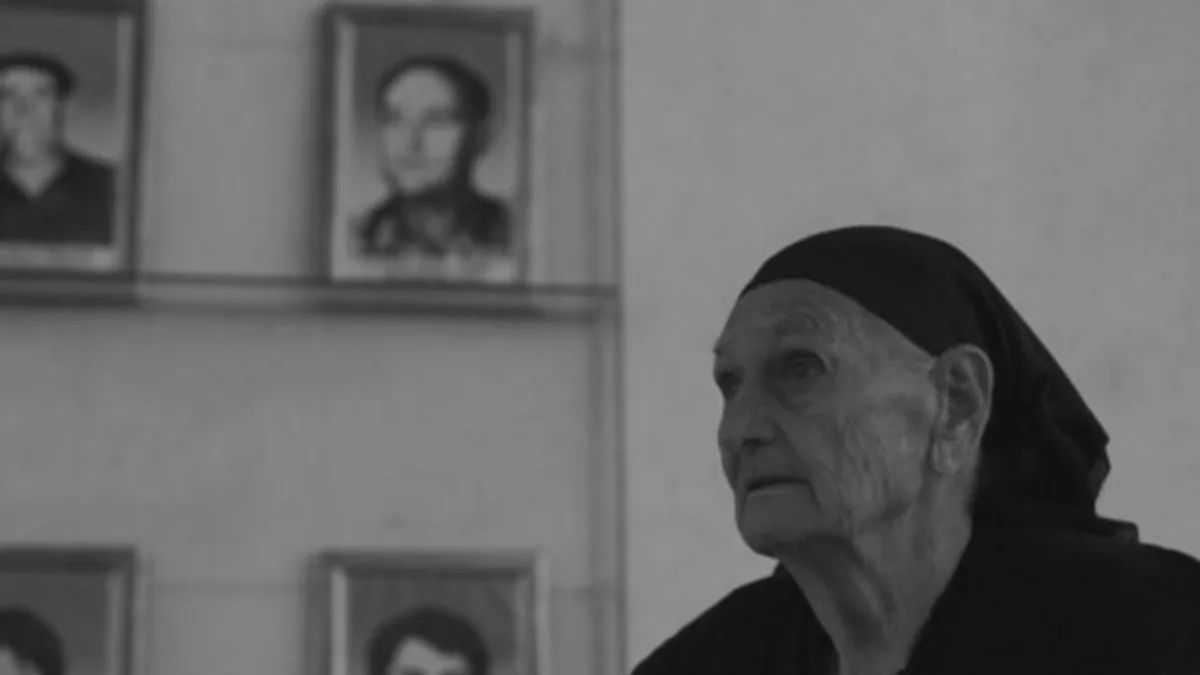
At the memorial cross in the village of Janjila, on Petrovacka Cesta near Bosanski Petrovac, a memorial service was held today at 11 a.m. for ten Serb civilians who were strafed in a low altitude pass by Croatian aircraft on August 7, 1995. For Serbia this is not just a date on the calendar of remembrance: the only legal proceeding ever opened over the attack is underway in Belgrade, before the War Crimes Department of the Higher Court, and it is being conducted in the absence of the accused pilots.
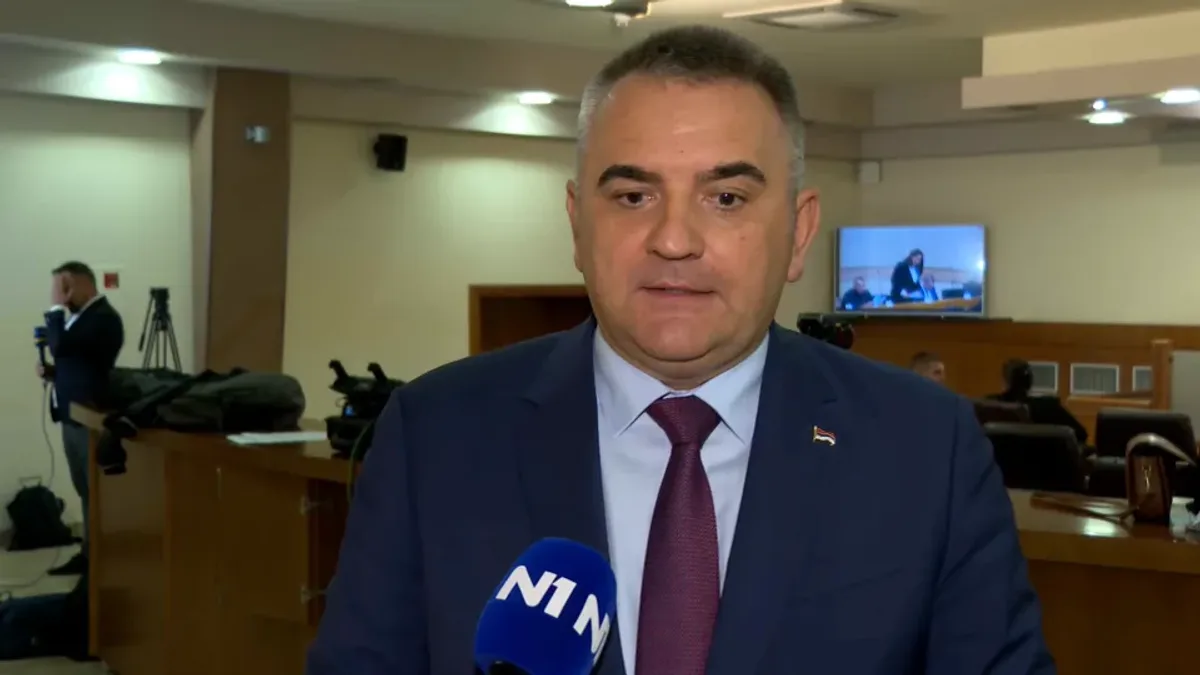
Wreaths and flowers were laid by the cross beside the road along which a column of refugees from the Republic of Serbian Krajina passed thirty one years ago. The ceremony was attended by Radan Ostojic, Republika Srpska’s minister of labor and veteran and disability protection, while those gathered were addressed by Viktor Nuzdic, acting director of the Republic Center for the Investigation of War, War Crimes and the Search for Missing Persons, and Dr. Milovan Kerkez, the war surgeon who treated the wounded at the Petrovac hospital that day.
What Happened on Petrovacka Cesta
The column was on territory controlled by the Army of Republika Srpska, three days after Operation Storm began on August 4, 1995. According to Novosti, two Croatian MiG 21 jets fired on vehicles, tractors and people on the open road. Ten civilians were killed, among them four children:
- Nevenka Rajic (12) and her brother Zarko Rajic (10)
- Krstan Vukovic (45) and Darko Vukovic (13)
- Branko Stijelja (72) and Mirko Stijelja (34)
- Darinka Drca (68) with her grandchildren Jovica Drca (6) and Mirjana Dubajic (21), who was pregnant
- Mika Kovacevic (83)
Dr. Kerkez speaks of around thirty seriously and more than ten lightly wounded who were brought to the hospital in Bosanski Petrovac that afternoon, while casualty records list more than fifty wounded civilians.
“There were ten dead, four children and six adults. I remember a five year old boy who had no head. It was terrible to see,” Kerkez said.
Kerkez also described a case he says he has carried with him for three decades.
“I remember an elderly woman who was severely injured, with burns, some parts of her body were charred. When she was in the operating room and we were treating her, we did everything to save her. At that moment, all she asked for was water. We tried everything to save her. Unfortunately, we did not succeed,” Kerkez said.
Nuzdic dismissed at the ceremony the interpretation that this was a mistaken target.
“No military targets were struck at that spot, only a column of refugees made up of women, the elderly and children, people who were leaving their homes in search of safety. History unfortunately repeated itself here: in the Second World War, German aircraft attacked Serb refugees, and in the 1990s it was Croatian aircraft,” he said.
Why Are the Pilots on Trial in Belgrade, Not Zagreb or Sarajevo?
The crime took place on the territory of Bosnia and Herzegovina, so jurisdiction naturally fell to the judiciary there. In 2010 the Interior Ministry of Republika Srpska (MUP) handed the Prosecutor’s Office of Bosnia and Herzegovina reports and evidence on the attack, but no case was ever opened. In Croatia, which has since become a member of the European Union and invokes the rule of law in Brussels, no one has answered for Petrovacka Cesta.
The indictment was therefore filed by the prosecution in Belgrade on March 31, 2022, against four pilots of the Croatian air force: Vladimir Mikac, Zdenko Radulj, Zeljko Jelenic and Danijel Borovic. They are charged with co-perpetrating the war crime of an offense against the civilian population, accused of ordering the strafing of the column. In August 2024 it was decided that they would be tried in absentia, and the main hearing began during 2025. None of the four has been found guilty.
“Serbia has taken on the obligation to prosecute those responsible, but the proceedings are being conducted in absentia because the defendants are not available to the judiciary,” Nuzdic said.
A trial in absentia is legally possible, but it is the most fragile form of proceeding when it comes to evidence: the verdict cannot be enforced until the convicted person comes under the court’s jurisdiction, and the defense has grounds to request a retrial. Every lost witness therefore costs more than it would in an ordinary case. Sputnik reports that the last hearing was postponed to September 25, after three witnesses withdrew from testifying.
An Attack Repeated the Next Day
Petrovacka Cesta was not an isolated case. Already on August 8, 1995, two Croatian MiG 21s attacked another refugee column, near the village of Svodna on the Prijedor road, killing three civilians.
“The tragedy did not end on Petrovacka Cesta. The very next day, the attack was repeated in Svodna, where Serb civilians were killed again. That is why we cannot view these crimes in isolation, but as part of the broader suffering of the Serb people across both Krajinas,” Nuzdic said.
Both attacks were part of the same operation, after which more than 220,000 Serbs were displaced from Banija, Lika, Kordun and northern Dalmatia. Records compiled around the anniversaries put the toll at 1,904 killed and missing, of whom 1,250 were civilians. The International Court of Justice, ruling in February 2015 on claims filed by Zagreb and Belgrade, found that Operation Storm bore the hallmarks of ethnic cleansing but declined to qualify it as genocide.
While Croatia’s central commemoration of the operation’s anniversary was held these days in Knin, attended by delegations from across the region, Janjila drew only a few dozen people and a single cross by the road. The next occasion for that road to receive a legal, not just a memorial, word will come on September 25 before the court in Belgrade, at a hearing the defendants will not attend.