Hercegovina Wildfires: 1,292 Hotspots in 13 Days
NASA's satellite system detected 1,292 fire hotspots in Bosnia and Herzegovina in the first 13 days of August, three times last year's count. Four fires are active: Trebinje, Nevesinje, Konjic, Neum.

Wildfires in Herzegovina have produced a number that captures the scale of this fire season: detection systems run by the American space agency NASA have registered 1,292 fire hotspots in Bosnia and Herzegovina in the first thirteen days of August, with the largest concentrations around Trebinje and Nevesinje, municipalities in Republika Srpska where the Republika Srpska Helicopter Service is fighting the flames from the air. The comparison is stark: in the same period last year, the same satellite system logged just 414 detections, roughly a third of this year’s count.
Four major fronts remain active today, in Trebinje, Nevesinje, Konjic and Neum. The first wave, between August 1 and 6, was concentrated around Trebinje, where fire burned on inaccessible terrain for nine straight days before being extinguished on August 8. Since August 7, villages around Nevesinje have been burning at several locations at once, with the fire moving toward Mount Crvanj. The satellite detection count peaked between August 10 and 12, then jumped again on August 13, driven almost entirely by the Nevesinje fires.
Konjic: seven days of fire, eight square kilometers of ash
The fire near Konjic is in its seventh active day, centered on Dzepska Planina, near the village of Brdjani. The city’s Civil Protection Headquarters says about eight square kilometers have burned, while the satellite-measured perimeter of the scorched area is about 11 kilometers.
Unfortunately, the situation is as difficult as it has been in previous days. Fires are still active in Brdjani, Zivasnice and on Dzepska Planina. The fires still have a tendency to spread, helped by high temperatures and wind in the area. This morning a helicopter of the Armed Forces of Bosnia and Herzegovina was in action, assisting with aerial firefighting.
That is according to Haris Hondo of the Konjic City Civil Protection service, who adds that crews on the ground have been stretched thin since day one and that local capacity, both human and material, is practically exhausted. The cause, according to the Federal Civil Protection Administration, is most likely mundane: investigators believe sparks from a braking train on the railway line running through the area ignited the fires at several locations.
Who is fighting the fires in Herzegovina?
Under a decision by the Presidency of Bosnia and Herzegovina and an order from the defense minister, a helicopter from the Air Force and Air Defense Brigade of the Armed Forces of Bosnia and Herzegovina (AFBiH) has been operating over Konjic since August 6, coordinating with helicopters from the Interior Ministry of Zenica-Doboj Canton (MUP) and the Interior Ministry of Republika Srpska (MUP). The same order sent an additional helicopter to the Bosansko Grahovo area, while 30 AFBiH personnel were deployed to the municipality of Nevesinje to fight the fire from the ground.
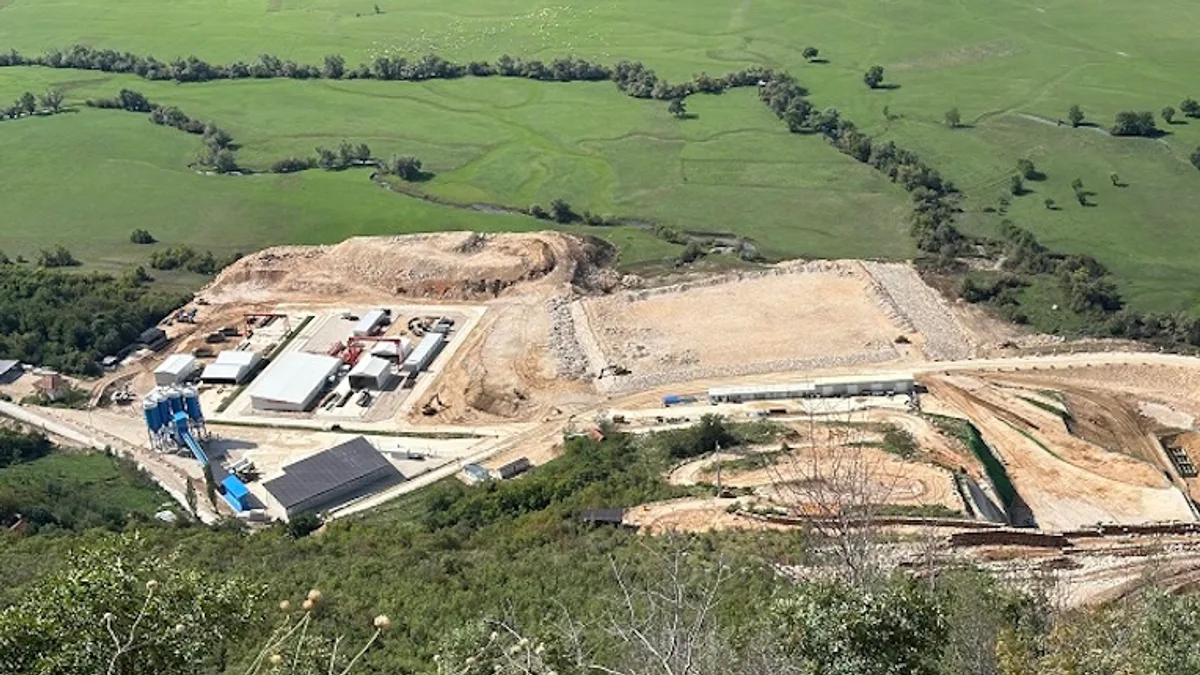
Over Trebinje, the Republika Srpska Helicopter Service is operating in the Poljice and Luke areas, where fire has once again threatened the asphalt plant belonging to the “Hercegovina putevi” road company.
For the second day in a row, a helicopter crew has been supporting the local fire brigade in fighting the fire in the Trebinje area. During last night’s operations alone, around 10 tons of water were dropped from the helicopter onto the fire near the village of Poljice. Firefighting efforts continue, based on an assessment of conditions on the ground.
That is according to the Republika Srpska Helicopter Service. Neda Cuk, deputy commander of the Trebinje Territorial Firefighting Unit, says that besides firefighters, ground crews include workers from the “Putevi Srpske” road company, Civil Protection members and staff from the Trebisnjica hydroelectric plants, and that the fire is not currently threatening populated areas. Also on the fire lines are the Sarajevo Canton Professional Firefighting Unit, firefighters from Nevesinje and local Civil Protection teams.
Nevesinje defends homes, Neum awaits planes from Mostar
A state of emergency was declared in Nevesinje earlier, and in recent days fires have been burning at two locations. Miroslav Jonlija, commander of the local fire brigade, describes a night in which the front line closed in on villages below Mount Crvanj.
Humcani, here the fire came close to the settlement and the village. We are protecting the houses. We also have a second fire at Zalom, where firefighters are working alongside local residents to put it out. The situation there is not simple either. Houses are close by, so we expect to be on the ground all day. The biggest problem is the inaccessible terrain, because the village is close to the forest.
We wrote earlier this week about the front line moving toward Humcani, and that line remains the most sensitive point in eastern Herzegovina. In Neum, according to Ante Dzono of the Professional Firefighting Unit, most fires are under control and no buildings are threatened, with aerial support expected from air tractors based in Mostar.
A request for international assistance was sent earlier, but the response remains uncertain. After initial unofficial signals that two Canadair aircraft might be approved, wildfires in Croatia claimed the same aircraft, so Konjic is still waiting. This is the point where the season shifts from a local story into a regional one: when Dalmatia and Herzegovina are burning in the same week, firefighting aircraft become a resource everyone is competing for.
Human factor and unremediated burn scars
Dalibor Ballian, a professor at the Faculty of Forestry in Sarajevo, says human negligence is the main cause of the fires and estimates that timely prevention measures and the construction of firebreak roads could cut the number of fires in half. He also points to the flood that hit Jablanica almost three years ago, which he traces back to a burn scar that was never remediated beforehand.
“The fire devastated the forest. The forest was gone. A forest would have held back most of that water. There wouldn’t have been as much suspended rock sediment carried by the water if the forest had still been there,” Ballian said.
Kemal Cacan, retired commander of the Sarajevo Canton Professional Firefighting Brigade, counts eleven causes of wildfires and says the human factor is by far the most dominant, noting that little has been invested in firefighting equipment over three decades and that entity-level regulations make coordinated action harder.
The forecast for the coming days remains unfavorable, with high temperatures and wind that has been shifting direction over Nevesinje and Konjic for days. The next snapshot of satellite detections will show whether August’s curve has broken, or whether the number of fire hotspots in Bosnia and Herzegovina keeps climbing toward a new record.