Trebinje Fire Doused From Air, Helicopter Heads to Service
Bosnia's Defense Ministry says the fire threatening Trebinje from the south is fully extinguished after an air operation by an Armed Forces helicopter, now headed back for maintenance.
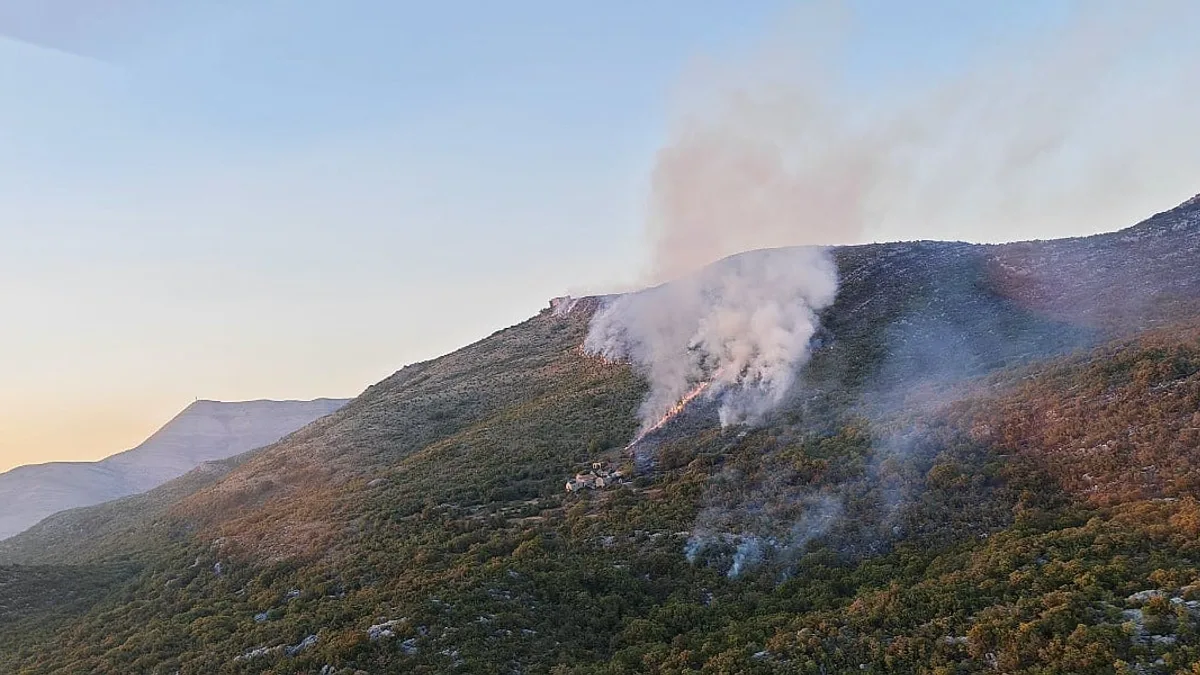
The fire that had been threatening the Bosnian city of Trebinje from the south, just a few kilometers from the border with Serbia and Montenegro, has been fully extinguished following an air operation, the Bosnia and Herzegovina Ministry of Defense announced. The news comes as fire continues to burn in seven municipalities in neighboring Montenegro, so the entire border region is still being treated as a hotspot that requires a constant aerial presence.
The firefighting effort was carried out by a helicopter from the 1st Helicopter Squadron of the Aviation and Air Defense Brigade of the Armed Forces of Bosnia and Herzegovina, working alongside an air tractor, firefighting crews and volunteers. According to the ministry, timely aerial intervention prevented the fire from crossing a road, which stopped it from advancing further toward the inhabited parts of the city.
The new fire moved toward Trebinje in the afternoon hours of August 25, after a power line wire snapped south of the city. That fire line went on to directly threaten the city from the south for the following days, until the helicopter crew managed to bring it under control. According to the ministry, the operation was carried out in extremely difficult conditions.
“The helicopter crew reacted immediately and, despite extremely difficult conditions, strong wind, high temperatures and the proximity of numerous power lines, began containing the fire,” the Bosnia and Herzegovina Ministry of Defense said in a statement.
The proximity of the power lines made the maneuvering even harder, since flying over the wires in strong wind carries risk for both the crew and the equipment. Even so, the operation continued without interruption until the fire on the southern side was fully brought under control.
Why Do the Water-Drop Figures Not Match?
Figures on how much water the helicopter dropped vary from report to report. The August 26 statement put the total dropped over six hours of flying at 73 tons, while the August 27 report cites a total of 56 tons dropped on the fire sites. Everything points to these being two separate flight operations carried out on different days, but neither statement spells that out explicitly, so both figures remain in circulation for now.
A similar discrepancy exists for Monday’s operation, on August 24, when the crew flew for four hours and dropped 41,000 liters of water. Earlier reports on that same stage of the firefighting effort had cited a total figure of 53,000 liters dropped that day.
Besides Trebinje, the helicopter also intervened during the same period at a fire near Lake Gorica, where it likewise took part in bringing the fire under control.
Around Twenty Fire Sites Still Active
The Bosnia and Herzegovina Ministry of Defense also said that ground firefighting on the terrain remains difficult.
“Ground firefighting at around 20 active fire sites remains difficult due to inaccessible terrain and a lack of road access,” the ministry said in the statement.
The inaccessible terrain and the absence of a road network are why the aerial component, the helicopter and the air tractor, has remained the main line of defense in this part of Herzegovina, while ground crews work the areas they can actually reach.
This outlet previously reported on how helicopters were defending Trebinje while seven municipalities in neighboring Montenegro burned at the same time, so today’s update continues the same story: the fire line kept moving toward the city from the south, and after several days of aerial engagement it has finally been brought under control.
Under the Defense Ministry’s plan, the helicopter will return to its home unit for routine maintenance once this stage of the firefighting effort is complete. The Armed Forces of Bosnia and Herzegovina said they will keep supporting civilian authorities in protecting people and property from fire for as long as weather conditions and the situation on the ground require it.