Washington Endorses Mecca Defense Pact of Three Nations
Trump praised the Mecca Defense Pact on Truth Social, backing the agreement in which Turkey, Saudi Arabia and Pakistan treat an attack on one country as an attack on all three.

US President Donald Trump publicly threw his support behind the Mecca Defense Pact on Sunday, the mutual defense alliance that Turkey, Saudi Arabia and Pakistan signed in the holy city of Mecca on August 7, 2026. The endorsement marks the first time the White House has backed a military arrangement that brings together NATO’s second largest army, the world’s biggest oil exporter and the only nuclear arsenal in the Muslim world. For Belgrade, this is not a distant story: one signatory is Turkey, a NATO member and an active political player in the Balkans, another is Saudi Arabia, whose oil exports help supply the market Europe draws on, and the third is Pakistan, the only Muslim majority state with nuclear weapons.
Trump’s endorsement came nine days after the signing itself, in a post on Truth Social.
I am very happy to see that Saudi Arabia, Turkey and Pakistan have recently, and finally, signed the Mecca Defense Pact. This shows how the Middle East is coming together, and how these countries will finally be able to defend themselves in a more meaningful way.
In the same post, written in capital letters, Trump added: “THIS IS A BIG, BOLD, AND IMPORTANT FIRST STEP, WOW!”
What Does the Mecca Defense Pact Say?
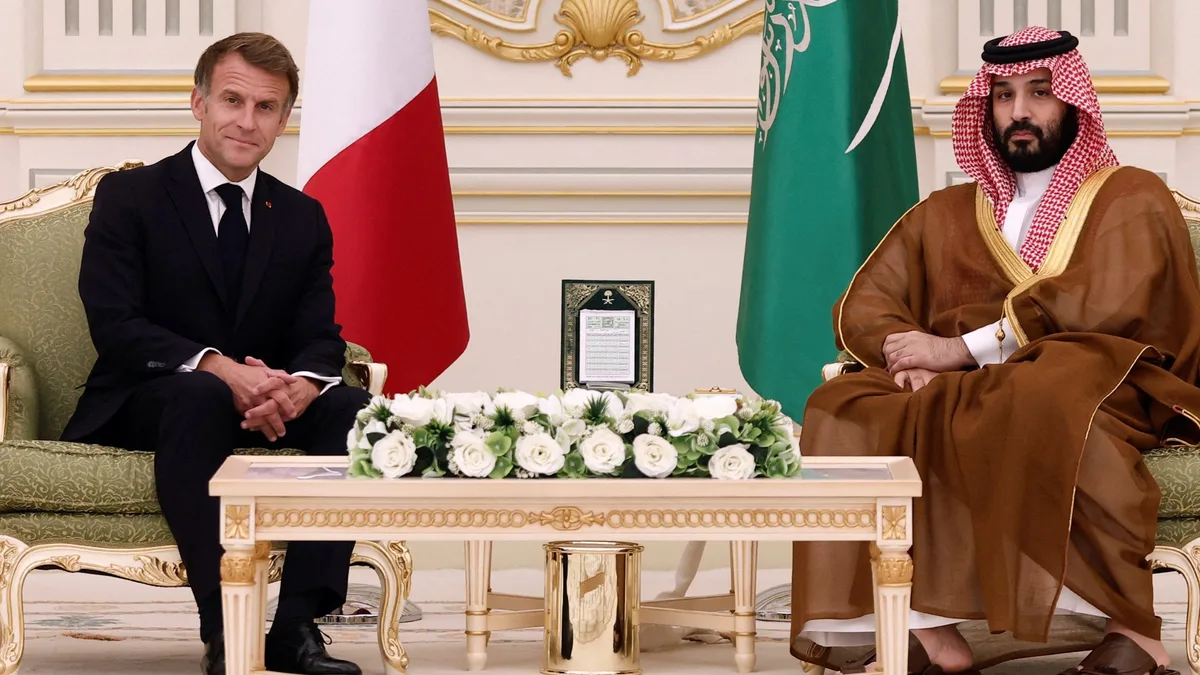
The document was signed in Mecca by Turkish President Recep Tayyip Erdogan, Saudi Crown Prince and Prime Minister Mohammed bin Salman, and Pakistani Prime Minister Shehbaz Sharif. Its central provision is a classic mutual defense clause: an armed attack on any one of the three countries is treated as an attack on all three.
Pakistan’s Ministry of Foreign Affairs described the arrangement as a boost to collective deterrence. Pakistan’s top diplomat, Ishaq Dar, repeated that the alliance is not directed against anyone.
The agreement is purely defensive in nature.
Dar added that the pact is open to other countries willing to accept its principles, meaning the three capitals are not ruling out a wider circle of signatories.
Alongside the defense clause comes a commitment that may matter even more: the three countries have pledged to work together on resolving the conflict between the United States and Iran. The alliance was built as both a shield and an offer to mediate.
Why These Three Countries, and Why Now
The signing followed nearly a year of negotiations, so the Mecca Defense Pact is not a response to a single event but the outcome of a long process that gained momentum as tensions between Washington and Tehran escalated. The pact was signed in the middle of that escalation, at a moment when the violence from the Iran conflict is spilling over into countries that are not party to it.
The division of roles within the alliance is visible in its very makeup:
- Turkey brings NATO’s second largest army and its own defense industry
- Saudi Arabia brings financial strength and its position as the world’s top oil exporter
- Pakistan brings the only nuclear arsenal in the Muslim world and battlefield experience
That combination is why the White House statement does not read as a routine congratulatory note. Washington welcomed a security arrangement built without it, between three partners, two of which, Riyadh and Islamabad, have relied on American weapons and American guarantees for decades.
What the Alliance Means for Europe and Serbia
For European chancelleries, the Mecca Defense Pact marks a shift in the security architecture of a region that supplies part of Europe’s energy and drives much of its migration pressure. Turkey is at once a NATO member and a signatory to a defense alliance outside the NATO framework, which means Ankara is now formally bound by a defense clause toward two countries that are not part of the Alliance.
For Serbia, the most concrete part of the story is price and supply security: any easing of the US-Iran conflict, which the three signatories have now pledged to work toward, is felt at home mainly at the pump and in utility bills.
Tehran has not issued an official response to the pact itself. The next thing to watch is whether any of the countries Dar left the door open to decide to join, and whether US support stays at the level of a social media post or takes the shape of concrete cooperation with an alliance Washington itself did not sign.