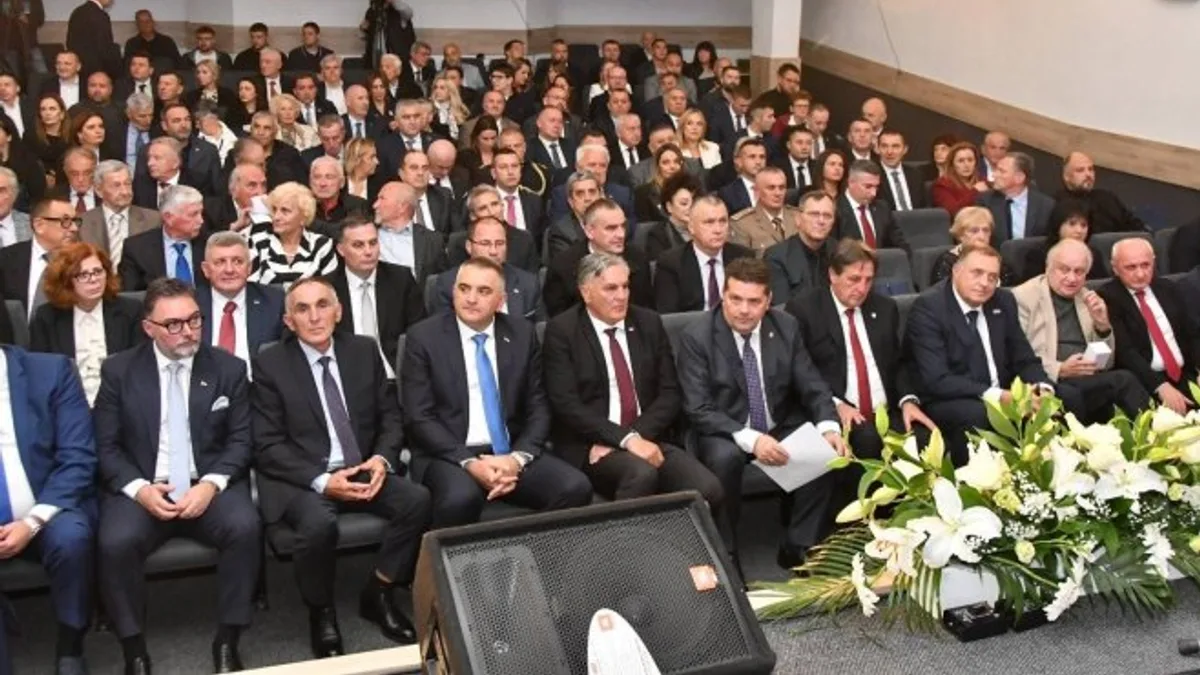
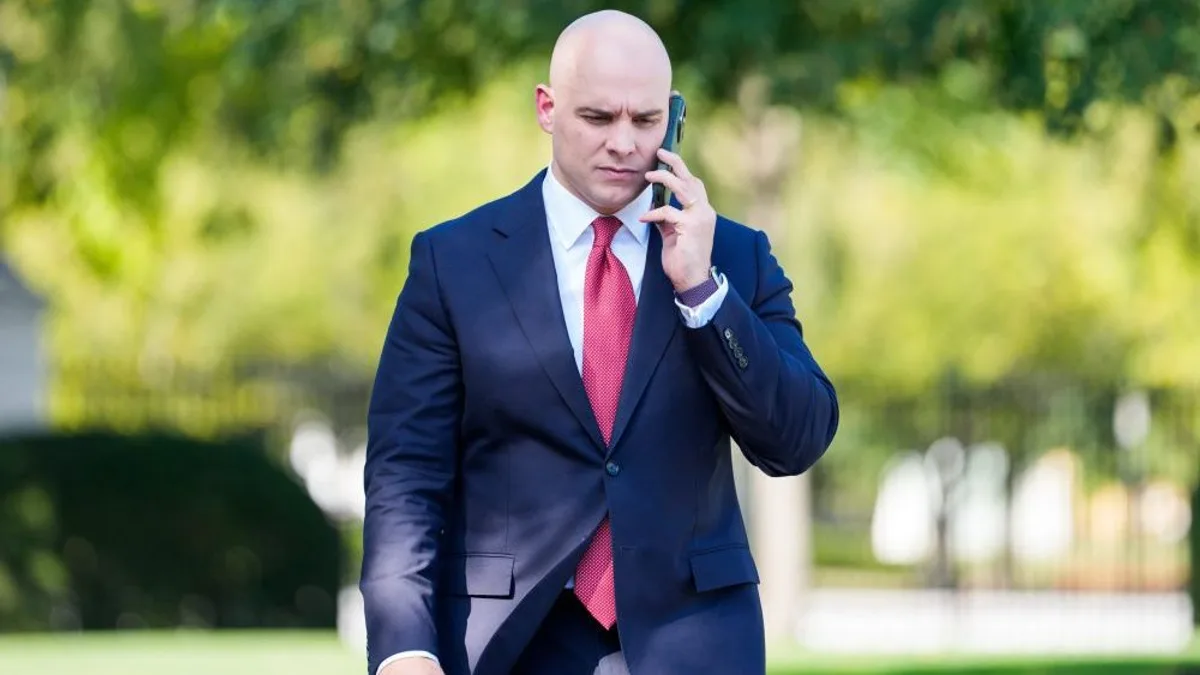
Igor Dodik: Srpska Gave Up Nothing for Sanctions Relief
Igor Dodik tells ATV that Republika Srpska conceded nothing to Washington to get sanctions lifted, and announces plans to build data centers for Meta and Google.

Igor Dodik, son of Republika Srpska President Milorad Dodik and organizational secretary of the SNSD, has given the first public account of how talks with the new US administration over lifting sanctions on his father and his closest associates actually unfolded. For Belgrade, the story is not just an internal matter for Banja Luka: Republika Srpska is the entity with the largest Serb population outside Serbia, and any shift in Washington’s stance toward its leadership directly reshapes the political space Belgrade has in the Western Balkans.
Dodik spoke on August 24 on the ATV program “U prvom planu,” where he named, for the first time in public, the people who led the talks with the Americans. According to him, progress came only once President Donald Trump’s administration took office.
“We had tried before to find people to talk to in Washington,” Igor Dodik said, adding that under the new administration they finally found counterparts who, he claims, understand that a people should be represented by leaders chosen in elections, not by “illegitimate high representatives.”
He singled out Zeljka Cvijanovic, the Serb member of the Bosnia and Herzegovina Presidency, as the key figure in the negotiations.
“I have to mention President Zeljka Cvijanovic, who worked, negotiated and talked around the clock. I say around the clock because the time difference meant it wasn’t always possible during the day, and I know we talked through the nights too. Ana Trisic Babic, Nemanja Kovacevic and a great many people who helped with all of this were certainly part of it as well,” Dodik said.
Dodik added that the shift in Washington’s position also brought an end to what he called the “cowboy politics” of former US envoys Murphy and Schmidt, who he said had pressured Republika Srpska’s leadership for years.
Why Were the Sanctions on Milorad Dodik Lifted?
Sanctions on Milorad Dodik and his associates were lifted last October, and Igor Dodik insists Republika Srpska paid no price for it.
“We haven’t given up any part of Republika Srpska, absolutely not,” Dodik said, arguing that the new administration simply acknowledged that an injustice had been done to Republika Srpska’s previous leadership.
As proof that the sanctions were never really about fighting corruption, he pointed out that the US blacklist also included, alongside his father, the president of the Academy of Sciences and Arts of Republika Srpska, the president of the Republika Srpska Constitutional Court, and the director of the entity’s public radio and television broadcaster, people whose only connection to Milorad Dodik was sitting on the committee that organizes Republika Srpska Day celebrations.
The story is not closed, though. The legal team representing Milorad and Igor Dodik had until today, August 25, to file a response with a Florida district court to the US administration’s request to dismiss the lawsuit the Dodik family filed back in April. The outcome of that case, not just the statements made in the Banja Luka studio, will show how legally final the lifting of sanctions really is.
Data Centers for Meta and Google
Dodik also devoted part of the interview to plans for closer economic ties with American companies. He said Republika Srpska’s energy potential should be used to build data centers that the world’s largest tech firms could lease.
“We can build data centers and have companies like Meta, Google and others come here and lease space,” Dodik said.
The idea, he said, took shape after Donald Trump Jr.’s visit to Banja Luka in April, and talks about Republika Srpska’s energy potential continued later in Budapest. Dodik said the younger Trump has shown particular interest in artificial intelligence, and that Republika Srpska could serve as a base for American and global investors in that field.
According to Dodik, Republika Srpska has issued bonds on foreign markets twice since the sanctions were lifted, and part of its investment funding now comes from American and European funds that, he said, were completely closed to the entity until a year ago. He listed proximity to the European Union’s border, the price of electricity and an educated workforce as advantages for investors.
Neither of the two outlets that carried Dodik’s remarks reported any reaction from official Washington or Brussels to his claims about the lifted sanctions and planned investments. The deadline before the Florida court expires today, the same day the interview was published, so the coming days will show whether Washington confirms on paper what Igor Dodik has been repeating in Banja Luka studios for days.