Qatar's PM Heads to Tehran as Hormuz Oil Flow Drops
Sheikh Mohammed bin Abdulrahman Al Thani arrives in Tehran on Thursday to continue mediation, as oil flow through the Strait of Hormuz falls to a three month low of five million barrels a day.

Qatar’s Prime Minister Sheikh Mohammed bin Abdulrahman Al Thani travels to Tehran on Thursday, August 27, to continue mediating between Iran and the United States. The visit comes as oil flow through the Strait of Hormuz has fallen to a three month low of five million barrels a day. This is not a distant story for Serbia: the price of crude oil on world markets feeds directly into fuel prices at domestic pumps, and every new bottleneck in the Gulf, which before the war carried a fifth of the world’s oil supply, adds fresh uncertainty to an already disrupted global energy market.
The war between Iran and the United States has been going on since February 28, 2026. A truce reached in June has since collapsed, and the last reported American strikes on Iranian territory came almost a month ago. Instead of military strikes, Washington is now pushing economic pressure. US Treasury Secretary Scott Bessent has announced tighter sanctions, this time aimed at Iran’s trading partners as well, not just the Iranian government itself.
Srpske novine reported a few days ago that Iran and Oman had agreed on a corridor through Hormuz and that oil had grown cheaper as a result. What is new is that Qatar is now taking over the mediation, while sources still disagree on the Iran-Oman deal itself.
What Qatar wants in Tehran
Iranian Foreign Ministry spokesman Esmail Bagai said at a regular briefing that the visit will focus on “the continuation of Qatar’s mediation efforts and other developments.” Qatar has served as an informal channel between the warring sides since the start of the war and played a direct role in brokering the June truce, which collapsed a few months later.
Qatari foreign ministry spokesman Majed Al Ansari said on X that Sheikh Mohammed will discuss with Iranian officials freedom of navigation through the Strait of Hormuz and a return to the situation as it stood before February 28, as well as ways to ease tensions and create conditions for dialogue.
Why has oil flow dropped to a minimum?
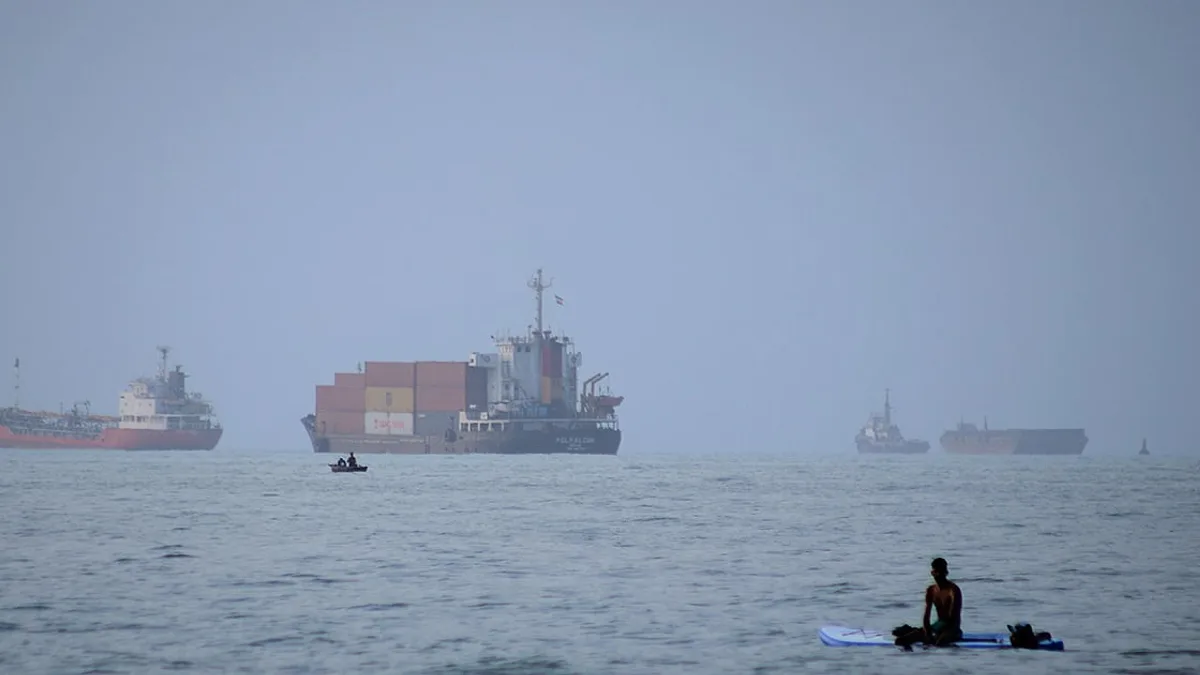
Oil flow through the Strait of Hormuz fell to five million barrels a day on Monday, according to the latest ship tracking data, the lowest level in three months. Before the war, about twenty million barrels of crude passed through the strait each day, roughly a fifth of global supply. The drop stems from Tehran holding control over part of the strait as leverage and trying to charge tankers a toll, while Washington, for its part, keeps up a naval blockade of Iranian ports.
Brigadier General Hossein Mohebi, spokesman for the Islamic Revolutionary Guard Corps (IRGC), said the strait will stay closed until Washington meets the conditions of the memorandum of understanding signed in June, before the truce fell apart. Those conditions, Mohebi said, are:
“An end to the American blockade of Iranian ports, compensation, and the lifting of sanctions.”
The dispute over whether Iran and Oman actually reached a deal complicates the picture further. The IRGC said on Wednesday that Tehran and Muscat had agreed on how to share the waterway and its revenue, and Mohebi said the two sides had “achieved results acceptable to both sides” on control of the strait. A senior Iranian source, however, told Reuters that “the agreement with Oman on the Strait of Hormuz has not been finalized” and that the sides are still negotiating the details.
An attack on a tanker adds to that picture. An unidentified projectile struck a tanker near the Omani city of Khasab this Tuesday, sparking a fire that was put out without casualties among the crew, the UK Maritime Trade Operations (UKMTO) agency said. An investigation into the origin of the projectile is under way, and the agency did not give the vessel’s nationality or direction of travel. According to the UN’s International Maritime Organization, the Strait of Hormuz has seen seventy such incidents since February 28, killing nineteen sailors.
Fuel in Iran and sanctions to come
The blockade is already being felt inside Iran. Vice President Mohammad Jafar Ghaempanah said, in remarks carried by Iranian media:
“Gasoline production is insufficient, and because of the American naval blockade we cannot import it.”
Ghaempanah added that “the distribution of gasoline in the country is unfair,” since owners of multiple vehicles still get subsidized fuel while those without a vehicle get nothing out of it. Iranian President Masoud Pezeshkian responded that the new sanctions “will achieve nothing,” while in Washington, Bessent is signaling the opposite: a tightening ring around Iran’s foreign trade.
For Tehran, economic pressure is probably now more dangerous than whatever military options Washington has left. Despite an earlier air campaign that weakened its conventional forces, Iran has kept enough missile and drone capability to threaten its Gulf neighbors, home to American military bases, and to keep disrupting tanker traffic through the strait. That makes Doha’s mediation all the more important, since for now neither Tehran nor Washington has a reason to back down on its own.
Sheikh Mohammed arrives in Tehran on Thursday. Whether the visit produces any movement, or Washington and Tehran keep trading accusations, will become clear in the days after his visit, as the war heads toward its sixth month.