Missing Persons Day: Vukovar Seeks 1,725, Montenegro 50
On International Missing Persons Day, August 30, Croatia is still searching for 1,725 people from the Homeland War, Montenegro for 50, and the Serb National Council warns that Serbs are among them.

The central commemoration of the Day of Remembrance for Persons Missing in the Homeland War and International Missing Persons Day begins today, August 30, at Dr. Franjo Tudjman Square in Vukovar. The question of those missing from the wars of the 1990s remains open across the entire territory of the former Yugoslavia, from Vukovar through Podgorica to Sarajevo, and its regional dimension, including cooperation between the commissions of Serbia, Montenegro and Kosovo, directly concerns Belgrade as well, where institutions are still seeking answers for their own unresolved cases.
In brief:
- Croatia is still searching for 1,725 people from the Homeland War
- Montenegro is searching for 50 people, most of them from Kosovo
- Bosnia and Herzegovina carries the largest number in the region, 7,588 people
What’s Happening in Vukovar Today
The program in Vukovar begins at 9:15 am with a wreath laying at the memorial in the Borovo neighborhood, followed at 10:00 am by a wreath laying at the Memorial Cemetery for Victims of the Homeland War. Holy Mass follows at 11:00 am in the parish church of St. Philip and James, and the central commemoration takes place at Dr. Franjo Tudjman Square from 12:30 to 2:00 pm. At the same square, the Administration for Detained and Missing Persons presents its activities from 10 am to 5 pm. The event is organized by the Union of Associations of Families of Detained and Missing Croatian Defenders and the Mothers of Vukovar association, together with the Association of Croatian Civilian War Victims of the Homeland War and the Association of Children of Killed and Missing Croatian Defenders.
The Croatian Ministry of War Veterans still keeps its records according to the fourth edition of the Book of the Missing, current as of May 1, 2015: 1,341 people of unknown fate and 384 people killed whose burial site is unknown, for a total of 1,725. That figure is circulating in Croatian media today, though at the end of August 2025 a higher number, 1,774 people, was in circulation, and the Serb National Council, in an earlier statement marking this date, cited 1,792 missing and deceased persons based on the same ministry’s records at the time. The discrepancy stems from the fact that the official book was last updated more than a decade ago, while individual reports have shifted the total over the years.
The Serb National Council, the top representative body of Serbs in Croatia, noted at the time that both women and men of Serbian nationality are among those still being sought in Croatia, and said: “Every family has the right to learn the fate of their closest kin.”
What Do Montenegro’s Numbers Show?
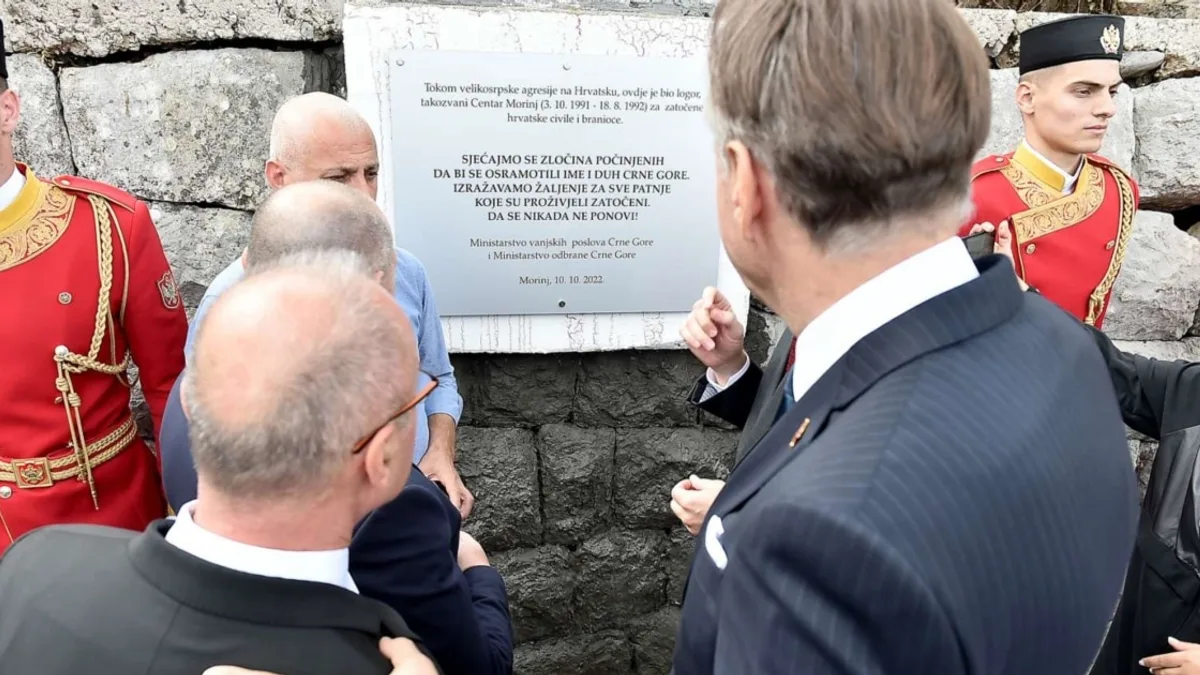
In Podgorica, the Centre for Civic Education (CGO) announced today at 8:02 am that, according to data from the Government of Montenegro’s Commission on Missing Persons, 50 people are still being sought: 38 who went missing in Kosovo, nine in Bosnia and Herzegovina and three in Croatia. Maja Marinovic, a program associate at CGO, said:
“According to data from the Government of Montenegro’s Commission on Missing Persons, 50 people are currently being sought, 38 who went missing in Kosovo, nine in Bosnia and Herzegovina and three in Croatia.”
Marinovic added that this number is lower than in most other countries in the region, but that behind each one stands a person and a family that has waited decades for identification. “For the families of the missing, the passage of time does not close the case, nor does it diminish their suffering or their right to know the truth,” she said.
At the end of 2024, one case was closed from Montenegro’s list of missing persons: the remains of R.S., a civilian victim who went missing in Djakovica in 1999, were buried in April 2025. In July this year, following a repeated exhumation in Niksic and DNA analysis, the identity of Hasan Klapuh, the third member of the Klapuh family, was preliminarily confirmed, and his remains were handed over to the Missing Persons Institute of Bosnia and Herzegovina. The remains of Ferida and Sena Klapuh, identified earlier, were handed over to the family in December 2025.
The importance of regional cooperation is also confirmed by data from a meeting of the missing persons commissions of Montenegro, Serbia and Kosovo, held in February 2026. Representatives of the International Commission on Missing Persons (ICMP) stated at the time that over the previous year they had received 58 reference bone samples, 170 family blood samples and 62 DNA reports, on the basis of which 26 victims were identified.
Why Is Bosnia and Herzegovina Still the Region’s Biggest Open Question?
Bosnia and Herzegovina is searching for 7,588 people, by far the highest number in the region. The Missing Persons Institute of Bosnia and Herzegovina held its commemoration on August 28 in Sarajevo, under the motto “Where is he? Break the silence.” The institute has also launched a procedure to release 600,000 convertible marks in operating funds, earmarked as rewards for information leading to the discovery of remains, on condition that the money is paid out only once the information provided proves accurate.
Combined, the three countries today still list more than 9,300 people as missing, from Vukovar through Podgorica to Sarajevo. “Srpske novine” has previously written about this same legacy of the 1990s wars in connection with the killings in Gosic and Varivode, where a final verdict is still missing 31 years later. Further progress depends on archives that have yet to be opened and samples that have yet to be compared, and the next joint meeting of the regional commissions has not yet been scheduled.