Milatovic Signs Laws on Morinj Plaque and Kotor Pool
Montenegro's president proclaimed amendments to the laws on memorials and sport, opening the way for a plaque in Morinj and a new name for the Kotor swimming pool.
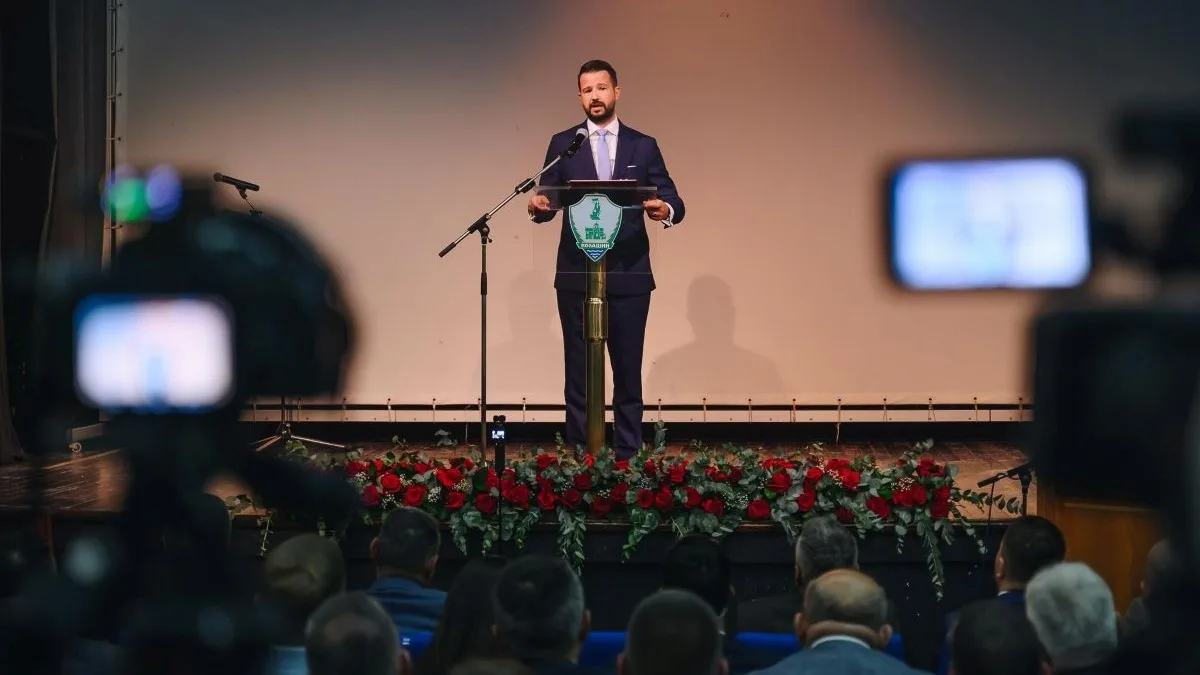
Montenegrin President Jakov Milatovic signed decrees on October 16 proclaiming amendments to the Law on Memorials and the Law on Sport, which the parliamentary majority adopted on October 13. For readers in Serbia this is more than neighborly news: Croatian demands on Podgorica spill over into the history of the 1990s wars and the legacy of the shared state. The same dispute is playing out in Montenegro these days over the training ship “Jadran,” whose story also involves Serbia.
What exactly changes?
The amendment to the Law on Memorials lets the Montenegrin government, on the proposal of the competent ministry, retroactively legalize memorials that were put up without the procedure the law requires. That opens the door for the government to approve the memorial plaque in Morinj after the fact, one of the demands Croatia has made.
The changes to the Law on Sport introduce uniform criteria and a procedure for naming sports facilities, carried out by the government with the ministry’s consent. A facility may bear the name of a person who died at least 40 years ago. Water polo player Zoran Gopcevic, after whom the Kotor pool is named, died 26 years ago. Gopcevic was reportedly a guard at the Morinj camp during the wars of the 1990s, which is why Croatian clubs refused to play at that pool.
What does the president say?
The president’s office said both laws were adopted without broad public and expert debate, and that such a practice does not contribute to the transparency or quality of the legislative process. Responsibility for lawful and consistent application, it said, lies with the government and the line ministries. The statement also includes this:
“The President will pay particular attention to the implementation of these laws, expecting the competent institutions to ensure, through their decisions and actions, full respect for the rule of law, institutional accountability and transparency toward citizens.”
The laws are now proclaimed, but with a public objection to the way they were passed.
What do critics say?
Milun Zogovic, vice president of the Democratic People’s Party (DNP), said before the proclamation that the amendments amount to an attack on the legal system and that the Constitutional Court should review their constitutionality. He argues that a final decision to remove the Morinj plaque already exists:
“The decision of the cultural heritage protection inspector is final, binding and enforceable.”
That is Zogovic’s claim, made as a member of a party that opposes the amendments.
DNP leader and MP Milan Knezevic went further. In a parliamentary speech this week he called for an uprising if the government accepts Croatia’s conditions, and said of the vote:
“Last night you turned parliament into a marketplace.”
He described the defense of sovereignty this way: “This has never happened anywhere, that we have to defend sovereignty from our own government.” Knezevic also mentioned the 2.7 billion euros that Croatia claims for the military property of the former Yugoslavia.
How does this fit into the road to Europe?
Croatia has set eight conditions for Montenegro in its European Union accession talks. Croatian Prime Minister Andrej Plenkovic repeated at the European Council summit in Brussels that Podgorica must meet them if it wants to close the negotiations by the end of the year. We described Croatia’s demands on Morinj, the “Jadran” ship and the border in an earlier article. With the decrees signed, two of those demands, the plaque and the pool, now have a legal basis.